Student disengagement
I'd Like to Apologize to Every Teacher I Ever HadStudent disengagement at Northeast High School appears not as simple laziness but as a shifting distance between students and the work, routines, and expectations of school. It can look like a late arrival, a missing pencil, a roomful of students staring through a teacher, or an entire day spent avoiding class. Yet the same students may pay close attention, respond to subjects that matter to them, or accept help when it arrives without humiliation. The account’s central tension is therefore not whether students are capable of participating, but what makes participation possible—and how easily institutions mistake absence, silence, or resistance for a fixed lack of interest.
Forms of Withdrawal
In the early classroom, disengagement first registers through small acts of refusal. Al G arrives late, moves slowly, keeps his backpack on, and offers no work: he has not completed the previous homework and has not started the prompt on the board. When Tony Danza gives him another day to hand in both assignments, Al G answers the kindness with a look that unsettles the teacher. The episode shows how missed work and contempt can become a performance of distance. Al G presents school as something imposed, and being visibly serious about learning as a risk to his standing among peers. His posture is not merely individual noncompliance: the account connects it to a social code in which sounding uninterested helps protect a student from being marked as someone who cares.
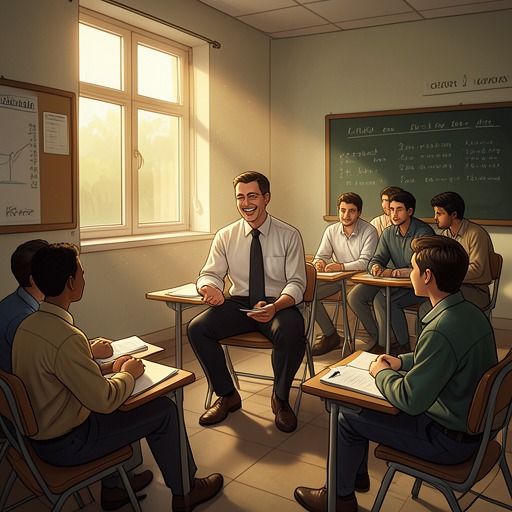
The larger class offers a different, collective image of withdrawal. As Tony Danza tries to hold their attention with a story about his own childhood, students doodle, pick at split ends, pull into their hoodies, and gaze past him. One student bends so far sideways that his head nearly touches the floor; another momentarily alarms the teacher before it becomes clear that he is bored. The bodies in the room make disengagement visible before any test or attendance record can measure it. Danza recognizes that his own tangents are part of the problem: while trying to connect, he keeps losing the thread of the lesson. The scene complicates the idea that inattention belongs only to students. A teacher can want to engage a class and still fail to give its attention a clear destination.
More consequentially, disengagement can become a pattern of physical avoidance. Phil belongs to a group of four students who roam the school instead of attending class. They arrive, swipe their student IDs to confirm they are on campus, and then use their knowledge of Northeast High School’s many hidden corners to evade lessons. Phil’s record is not a brief lapse: one teacher reports that he has cut class every day since school began, and another counts more than sixty unexcused absences. By the time Danza asks for his assignments, Phil is failing all his courses. The distance between being present in the building and taking part in education becomes literal.
Different Students, Different Barriers
The account resists treating these behaviors as proof that students do not want to learn. David Cohn distinguishes unwillingness to work from unwillingness to learn, and reminds Danza that a teacher cannot learn on a student’s behalf. Interest matters, but it is not the same thing as popularity: a student may find a teacher likable and still not become involved in their own education. That advice redirects Danza from seeking approval toward creating reasons for students to participate.
Phil’s circumstances make the need for that distinction plain. When asked what his father thinks about his skipping class, he says he has no father; his mother is alone, and his older brothers have all been in trouble. His challenging question about what could be expected from him conveys how little a routine reprimand would answer. The other Wanderers dismiss Danza’s attempts, but Phil begins coming to his classroom at lunchtime. Danza gives him half a sandwich, asks for his class roster, and visits his teachers. Even with their own 149 students to manage, they supply the work Phil has missed so that he can try to catch up. This effort does not erase his absences or guarantee a change: just as Danza believes he may be making progress, Phil is charged with credit card fraud after he and friends use a stolen Visa card. The episode presents support as necessary but not magically sufficient, especially when school disengagement sits alongside serious personal and behavioral difficulties.
Howard’s reading difficulties reveal another barrier: a student can possess the ability to read and still avoid reading. David Cohn shows Danza a list of students identified as gifted, with Howard near the top, leaving Danza unsure whether Howard’s complaints signal a longstanding problem or an attempt to play him. The uncertainty matters. A label such as gifted does not explain the student’s experience, and it does not make reading engaging. The school’s literacy initiative assigns articles, stories, informational texts, and tests, but these scripted exercises consume whole periods and, in Danza’s view, often fail to interest the class. He describes some students as able to read but unwilling to choose reading for themselves. The distinction shifts attention from basic capacity to motivation and habit.
Making Participation Possible
Danza’s responses increasingly try to give students a reason to enter the lesson. When he sees students respond to sports and celebrity stories, and hears them discuss the film adaptation of Twilight, he brings in thirty copies of its first book. The romance between Bella and Edward gives the class a story its students can relate to; even the boys begin to take part. Eric Lopez openly admits that he likes the book, Howard laughs at the love scenes and handles the quizzes, and Howard complains less about Steinbeck. Danza does not present the choice as a replacement for demanding literature. Rather, an accessible, popular story helps him make the case that books contain stories worth following, and he hopes the resulting interest will carry into reading beyond class.
The classroom also changes when the work begins from students’ own opinions. A planned prompt on fitness and nutrition gives way to a discussion of the uniform policy after students raise the issue themselves. Danza asks them to write their views, then divides them into debate teams. Their compositions show more energy and conviction than most of their earlier work, and they eagerly read them aloud. The contrast suggests that participation grows when an assignment gives students room to make an argument about a matter they already care about. In another lesson, students create myths in pairs and perform them; one group’s paper button marked DO NOT PUSH becomes the center of a comic origin story, and the class cheers. Elsewhere, a discussion prompted by rap leads students to argue over social justice. These activities do not establish that disengagement has disappeared. They show that students who may resist routine tasks can contribute ideas, performance, and interpretation when lessons make space for their voices.
Danza also gives Monte a period to design and teach his own lesson, allowing a student who feels the class’s pace and standards are too lax to take responsibility for instruction. The Student Teacher program turns his criticism into an opportunity to act. Monte prepares a worksheet of legal terms from To Kill a Mockingbird and a lesson on the characters’ conduct during the trial. His peers do not simply fall into line: Matt walks around, other students talk, and one student remains upside down in his seat. The lesson demonstrates that authority and high standards alone cannot command engagement, while giving Monte a concrete encounter with the difficulty of teaching a class whose members do not automatically attend to the work.
Beyond the Classroom
Disengagement is also tied to what school can and cannot provide outside formal lessons. Danza’s unofficial advisory students turn up in his classroom before school, at lunch, and whenever they can obtain a pass. Some come for air-conditioning or the half sandwiches he offers, and some bring problems that reach beyond academic work. A student arriving late may explain that the electricity was turned off at home and the family could not sleep in the cold. The response is sympathy and a note to the teacher, not a solution to the underlying hardship. Danza understands that counseling and care can occupy as much of a teacher’s work as instruction, while also recognizing that individual willingness to help cannot meet every need. Against that background, wandering, lateness, and missed assignments cannot be read only as choices made inside school.
The school’s accountability pressures create another tension. After Northeast High School misses its 2009 Adequate Yearly Progress target, the Pennsylvania System of School Assessment becomes an urgent focus. The school’s 2010 results show gains in every tested category except writing, but it again misses its target. The consequence is tighter scrutiny, additional professional development, district walk-throughs, more reading and math assessments, and pressure on teachers to perform. Families are told they may move their children elsewhere. The account questions whether these mechanisms capture the conditions of learning: the school may be held responsible for students in its designated region who do not attend it, while teachers describe constant monitoring as exhausting and counterproductive. Testing measures achievement, but it does not by itself explain the varied reasons students withdraw or reveal what makes them willing to return to the work.
The ending offers a limited but concrete counterweight to that institutional anxiety. Danza gives his class a comprehensive examination even though Northeast High School has no required finals week for lower grades; most teachers base grades on work completed during the quarter. After two hours of grading, he finds that no one has failed, and that many students—including all three of his IEP students—have done better than he expected. Their final essays use correct form and carry phrases from the year’s lessons, but what moves him most is that students identify lessons not scripted in a book as the most powerful. Nakiya writes that the lesson was to make the best of a bad situation. This result does not prove that every student’s disengagement has been overcome. It shows, instead, a year in which students who sometimes resisted school could learn, retain ideas, and express what mattered to them when teaching connected formal work to sustained participation.