The Teach reality-show project
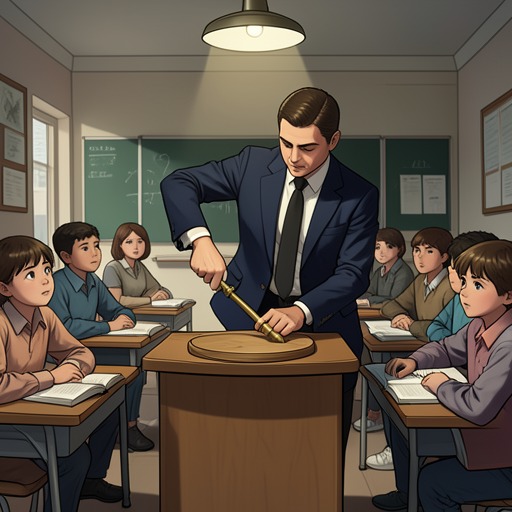
I'd Like to Apologize to Every Teacher I Ever HadThe Teach reality-show project was the media framework through which Tony Danza attempted to make a genuine third-act transition from television performer to public-school teacher. Its decisive significance lies in the conflict between two definitions of reality: the slow, difficult reality of educating students and the commercially attractive reality of television drama. Tony Danza insisted that the students had to come first, yet the project repeatedly forced him to defend that principle against producers who wanted conflict, momentum, and a show that audiences would watch.
Origins in a Career and Personal Turning Point
The project emerged after the cancellation of Tony Danza’s live, one-hour talk show in New York City. The ending came during a period of personal disruption: after the show ended, Tony Danza and his wife separated after twenty years of marriage, and only their youngest child remained at home in Los Angeles. Approaching sixty, he began to feel time as a limit rather than an abstraction. His father had lived only to sixty-two, and that awareness prompted him to reconsider the road not taken.
Teaching was not an arbitrary reinvention. Tony Danza had originally planned to teach after college and held a history degree, but his career moved first into boxing and then acting. His television character on Who’s the Boss? eventually became a teacher, allowing him to continue performing an early vocational identity without entering a classroom. The schoolroom makeovers on his talk show had also connected him with underfunded public schools. When a school’s music department had only six instruments for four hundred students, the program secured keyboards and brass instruments from Casio and C. G. Conn; the rebuilt department later had a jazz orchestra. The Teach reality-show project therefore grew from a longer desire to contribute to public education, not merely from a search for a new television vehicle.
A documentary produced by Teach For America supplied the immediate emotional catalyst. It showed teachers in Baltimore and ended with a production of Bye Bye Birdie whose young performers received applause from only about seven people. Tony Danza contrasted that nearly empty audience with the packed family, friend, and teacher audiences he had seen at his own children’s private-school performances. The absence of public support for the inner-city students affected him deeply and made him want to help. He learned that he technically qualified for Teach For America, but the prospect of beginning a third-act career frightened him almost as much as it attracted him. Telling friends about the plan became a way of preventing himself from retreating.
The Responsible Reality Premise
The television idea was first proposed by the executive producer of Tony Danza’s former talk show, who asked whether his teaching plan might become a reality show. Tony Danza initially rejected the suggestion because he wanted to teach instead of acting, not combine teaching with show business. He regarded reality television as especially dangerous in a classroom: producers might compromise or exploit actual students because dramatic “sizzle” would take priority over educational quality. He stated that even excellent ratings would represent failure if students did not receive the teaching they needed and deserved.
Leslie Grief made the same proposal a few weeks later, but treated Tony Danza’s objection as a challenge rather than a conclusion. Tony Danza told Leslie Grief that a responsible teaching program would never sell to a network; Leslie Grief bet that he could sell it within half an hour. Twenty minutes later, he called back to announce a meeting with A&E about a new teaching show. The speed of the sale altered Tony Danza’s resistance. If the project could serve students, teachers, the network, and himself at once, it might let him test his own classroom ability while showing what public-school teachers faced, what students needed, and why other people might enter the profession.
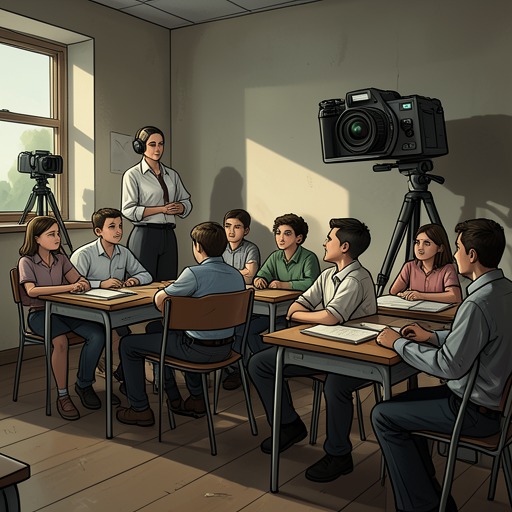
Tony Danza called the concept “responsible reality.” He imagined the real lives of real students combined with the visible uncertainty of a novice teacher: his mistakes, exhaustion, and “hyperreal flop sweat” would provide drama without requiring the production to manufacture it. His central rule was that the show should be filmed like a documentary. He rejected the standard reality-television practice of soft scripting, in which a storyline is devised first and participants are then induced to produce it. The cameras, in his model, would observe what actually happened, and the episodes would be created from the footage rather than the footage being forced to fulfill a prewritten plot.
Tony Danza also made a concrete commitment that separated the project from a temporary publicity experiment. He promised that, win, lose, or draw, he would remain in the classroom for at least one full school year. Even without cameras, he would attend every day because students would be expecting him to teach. The promise established a hierarchy of obligations: the school year and the students came before the television series. It also made the project personally risky, since success could no longer be defined simply by ratings or by an entertaining edit.
Finding a School and Entering an Institution
The project struggled to find a participating school. Production representatives approached districts and school boards in New York, Baltimore, Chicago, Dallas, Atlanta, Washington, D.C., Los Angeles, Pittsburgh, and Newark, but none initially agreed to admit a celebrity teacher accompanied by cameras. Philadelphia became possible through Sharon Pinkenson, who advocated for her city and brought the proposal to Mayor Michael Nutter. Tony Danza and Leslie Grief presented the project, and Mayor Michael Nutter encouraged it, but approval still required the support of District Superintendent Dr. Arlene Ackerman and the Philadelphia School Reform Commission. The process took months, while unfavorable press portrayed Tony Danza as using Philadelphia’s children to revive a stalled career.
The chosen institution, Northeast High School, made the project larger than a classroom experiment. Its campus dated to the 1840s, while its current brick building had been erected in 1953 and resembled a postwar factory, complete with a towering smokestack. It was the largest high school in Philadelphia, with three stories, trailers, multiple sports fields, its own football stadium, a large cafeteria, cavernous gyms, and even a Philadelphia police station. The scale of the school underscored the difference between television’s individualized celebrity narrative and the institutional world Tony Danza was entering.
Within Northeast High School, Tony Danza belonged to the Arts and Education Small Learning Community, one of eight subdivisions created to make the huge school more manageable. Lynn Dixon, a veteran English teacher who had taught for more than thirty years in some of Philadelphia’s toughest schools, led the community. Her responsibilities extended far beyond instruction: she taught, ran the community, advocated for students and the school, mediated with troubled students, distributed district directives, tracked deadlines, handled seminar and planning requirements, and even repaired the copy machine. The teachers’ daily meetings revealed an adult workplace full of competing attention, food, noise, paperwork, and practical improvisation. This institutional detail gave the proposed show a reality that could not be reduced to a celebrity’s classroom performance.
The Production Conflict
The central contradiction of the project became visible once filming began. Leslie Grief later complained that a day in which students visited Washington, D.C. had produced “a boring show.” Tony Danza saw the same day differently: the students had been engaged, had learned, and had loved the experience. For him, those outcomes were evidence that the project was working. For the production, they risked being unusable because learning without crisis did not automatically create a dramatic episode.
The show runner increasingly tried to pull the production toward conflict. During a review of Tony Danza’s teaching, David Cohn was directed to walk with him down a hallway rather than conduct the evaluation in his office, even though that was not how David Cohn normally worked. While the cameras were not showing him, the director made stabbing gestures urging David Cohn to criticize Tony Danza more aggressively. David Cohn objected that he had not agreed to become an actor and later threatened to quit if the production continued trying to make him perform. Tony Danza confronted Leslie Grief and kept David Cohn involved, but the incident permanently sharpened their awareness of the pressures surrounding the series.
The problem reached beyond one staged-looking evaluation. Whenever the principal summoned Tony Danza, he wondered whether a genuine school issue had arisen or whether the production had encouraged it. Katerina’s mother bringing an illicit birthday cake into the school seemed to him exactly the kind of situation the show runner might arrange in hopes of getting him into trouble. Even when Tony Danza admitted that he could create trouble without assistance, the larger damage remained: every student crisis became suspect. The cameras no longer simply recorded the school’s reality; their presence threatened to alter it.
Consequences, Ending, and Significance
By the end of the school year, the production’s institutional support had become unstable. At a wrap party in an art deco bowling alley, students, parents, teachers, and crew gathered expecting to see the first episode. The party’s upstairs speeches and screening were repeatedly drowned out by cheers from the bowling lanes below. The setting became a metaphor for the project: the serious educational experience was present, but the louder entertainment machinery overwhelmed it.
At that gathering, Tony Danza realized that teaching might actually be easier without the production team. The thought did not erase the value of the experiment, but it clarified its cost. The project had tried to expose the work of teaching while also converting that work into television, and the conversion encouraged precisely the sort of artificial conflict Tony Danza had opposed at the beginning.
A&E eventually premiered Teach on October 1, 2010, but the series lasted only six weeks and was placed in a late Friday-night time slot where failure was highly likely. Some teachers wrote to Tony Danza with recognition and encouragement; one teacher’s psychiatrist wife thought he appeared to be having a nervous breakdown in the first episode. Tony Danza interpreted that reaction not simply as criticism but as evidence of how emotionally grueling teaching could be and how specialized the profession’s demands were.
He nevertheless felt that a golden opportunity had been missed. The series was removed so abruptly that its story seemed to have no conclusion, and the footage of the teachers’ and students’ final group hug never aired. After cancellation, A&E head Bob DiBitetto told Tony Danza that he was proud of Teach but had never expected people to watch it. The remark crystallized the project’s unresolved irony: the network had acquired a program whose educational and documentary ambitions it did not fully believe in, while Tony Danza had entered television hoping to show why the ordinary work of teachers mattered. Even in its failure, the project preserved that argument by making the strain, uncertainty, and ethical difficulty of teaching impossible to separate from the question of who gets to define reality.