The only place success comes before work is in the dictionary
I'd Like to Apologize to Every Teacher I Ever HadThe classroom motto “The only place success comes before work is in the dictionary” makes effort the condition of achievement, not a promise that achievement will come easily. Displayed among Tony Danza’s first classroom decorations, it frames a year of teaching in which student participation and persistence are actively cultivated, while school policies and external pressures often make progress harder to secure.
Appearance and Meaning
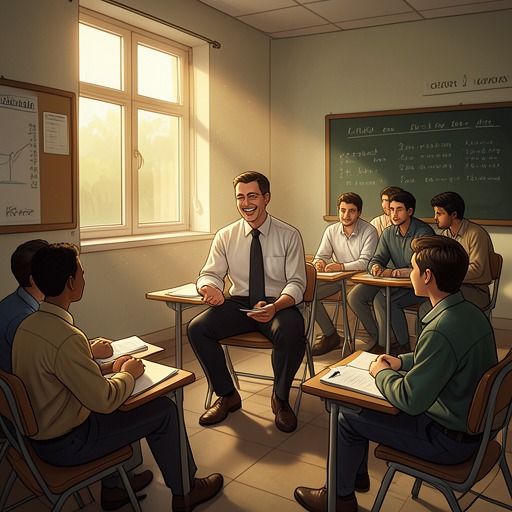
The motto hangs in a classroom Danza has spent a week preparing. He cleans the institutional beige cinder-block room, dusts the bookshelves, washes the windows, and places hand-sanitizer dispensers by the doors in response to the swine flu epidemic. Fadeless blue paper and encouraging banners soften the room; the dictionary line sits alongside a more playful appeal to stop complaining. Above the blackboard, large letters urge students to take part in their own education.
The aphorism’s joke depends on alphabetical order: in a dictionary, success can precede work; in life, the banner insists, effort must come first. Its placement makes that claim part of the classroom’s daily environment rather than an isolated piece of advice. Yet the surrounding decorations also show the limits of a slogan by itself. The work of learning must be made concrete, and students need opportunities and support to undertake it.
Effort Made Visible
Danza turns review for the class’s exam on Of Mice and Men into a scavenger hunt rather than a conventional recap. He divides the class into six teams and prepares bags containing school maps, team passports, challenge sheets, Post-its, and markers. Burlap bags filled with sand and borrowed live hamsters serve as props for the book’s dead mice. At six stations around the school, teams must complete a task, stay together, and demonstrate integrity to receive a stamp and the next clue. The activity makes preparation a shared, active undertaking, with effort required at each stage.
His poetry contest applies the same principle to memorization and interpretation. Each student must choose and memorize a poem of at least ten lines, prepare a poster about the poet and the poem’s context, and present before classmates and teacher judges. Danza offers a Flip Video camera and ten dollars for first prize, with eight dollars for second. The prizes generate enthusiasm, even as memorizing poetry proves less immediately appealing. The structure combines an external incentive with sustained work: students must learn, research, prepare, and perform before they can compete.
Effort also takes a more personal form in Danza’s work with Brittiny. As they read a book together over several days, her confidence grows and the reading becomes enjoyable for both of them. Danza does not ask about the difficulties at home that may be weighing on her; instead, he tries to keep her attention on positive possibilities. Brittiny tells him that few people believe in her, and he answers with his faith in her ability. The scene gives the motto a relational dimension: persistence is not only demanded of a student but encouraged through steady attention and belief.
Work Against Institutional Friction
The book repeatedly sets classroom ideals against the conditions in which teachers and students have to work. At a staff meeting, Lynn Dixon distributes notices and explains the many administrative tasks teachers must manage, from grade deadlines and seminar schedules to technology instruction. Danza recognizes that this work outside the classroom is rarely included in public discussions of the demands on teachers. His motto addresses student effort, but the surrounding account also makes visible the adults’ labor required to sustain learning.
Discipline and accountability offer another complication. As the Washington, D.C. trip approaches, Danza worries that students may disregard rules because school policies are not consistently enforced, even though behavior codes are posted and teachers regularly remind students of them. Later, Northeast High School fails to meet its Adequate Yearly Progress target despite improving in every category except writing. The designation brings closer district and state scrutiny, additional professional-development meetings and classroom walk-throughs, more reading and math assessments, and pressure on teachers to perform. Danza questions how teachers can make education enjoyable when they feel humiliated and constantly monitored. In this context, the motto does not erase the effects of weak enforcement or punitive oversight; it sits beside them as an aspiration whose fulfillment depends on more than individual will.
A Qualified Return
At the end of the year, student responses give Danza evidence that lessons from the classroom have stayed with them. Two hours into grading, he confirms that no one has failed his class; many students, including all three of his IEP students, have done better than he expected. When he rereads their final essays about the most important lesson they learned, he is struck by their correct essay form and by the appearance of ideas he had taught. Nakiya writes, “Make the best of a baaaad situation,” while Al G’s response takes up the classroom appeal to participate in one’s own education. Their words do not repeat the dictionary motto, but they register a related belief in agency and persistence.
The year’s celebration is not a simple victory lap. Free dress contributes to disorder, and a ceremony passing school leadership from seniors to juniors erupts into a water-balloon battle, then a rush of plastic bottles and students running for the exits. The episode keeps the motto’s promise in perspective: hard work can produce meaningful learning, but it does not make the school’s difficulties disappear. The banner’s importance lies in the standard it sets and in the practical efforts around it—not in any claim that success is automatic once effort is urged.