Underfunding of education
I'd Like to Apologize to Every Teacher I Ever HadUnderfunding of education is the structural problem that, in Tony Danza’s account, leaves schools and teachers responsible for children’s futures without the time, staffing, and sustained public investment needed to support them. His year at Northeast High School turns the issue from an abstraction into a daily imbalance: educators are expected to teach, counsel, comfort, coach, inspire, and document their work, while public debate more readily assigns blame than provides help.
A failure of priorities
Danza frames underfunding as a choice about what the country values. He contrasts education’s status as a cause that politicians and audiences can praise with the reluctance to invest the money, effort, and attention that student success requires. In his view, hoping that an entertaining or novel solution will rescue schools is not a substitute for sustained commitment. The problem is not simply that schools need more resources; it is that public expectations remain high while the willingness to support the work remains low.
That mismatch shapes how school problems are discussed. Parents and commentators can blame teachers for poor outcomes without taking part in the sustained work of keeping students on track or understanding classroom conditions. Danza argues that most educators he encountered were not incompetent but discouraged and overwhelmed. His criticism therefore resists a simple division between failing teachers and failing students: it points instead to the conditions under which both are expected to succeed.
Accountability without adequate support
At Northeast, the pressure to produce measurable results intensifies after the school misses its 2009 Adequate Yearly Progress target. The Pennsylvania System of School Assessment tests students in reading, writing, mathematics, and science, but the results also affect the school’s overall standing. Although the school makes gains in every category except writing in 2010, it again misses its target. Northeast is designated an Empowerment School and moves closer to Renaissance School status, bringing more district and state scrutiny.
The consequences include additional professional-development meetings, district-auditor walk-throughs, more reading and mathematics assessments, and pressure to perform. Parents are notified that the school has not made Adequate Yearly Progress and may move their children elsewhere. Danza describes teachers as feeling constantly monitored, an experience he considers exhausting and counterproductive. He also reports Principal Linda Carroll’s concern that the school’s scores may include children from its designated region who do not attend Northeast. In this account, an imperfect measure can intensify scrutiny without resolving the conditions that make teaching difficult.
The demands placed on teachers
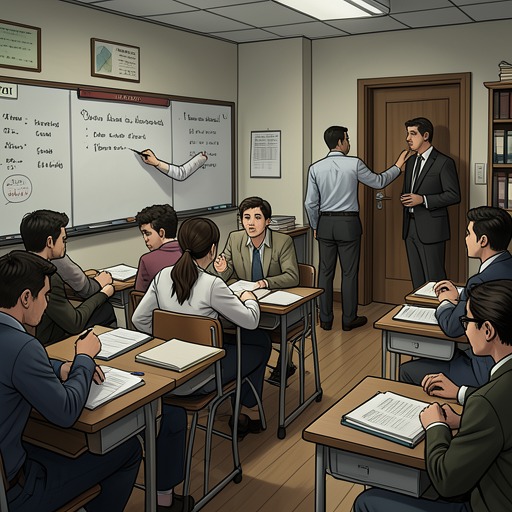
Danza emphasizes the scale and variety of the work expected of public-school teachers. In his description, a teacher may have to teach, counsel, comfort, coach, and inspire 150 students each day, while also documenting and evaluating the progress of both students and teacher. The work includes responding to changing district mandates and national policy shifts. These demands, he argues, exceed what most people can perform calmly and brilliantly every day, particularly when the job is compensated less generously than work such as plumbing, real-estate sales, or sales management.
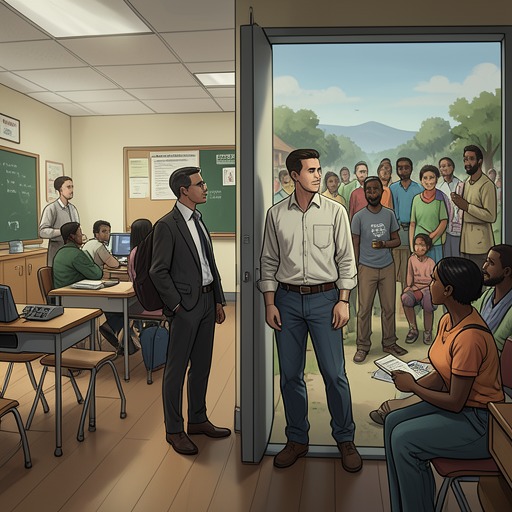
His account also shows why the effects of scarce support are not confined to budgets. At Northeast, educators work in a setting where students’ needs are varied and parental involvement may be limited, while teachers are still expected to maintain high standards and manage the practical burdens of instruction. Danza’s own experiments with lessons and examinations reveal the preparation that effective teaching requires, but he does not present individual ingenuity as a sufficient answer to systemic constraints. The demand that teachers continually adapt cannot replace the staffing, time, and institutional backing that would make that work sustainable.
Cuts and the loss of experience
After leaving Northeast, Danza continues to hear from students and colleagues as budget cuts loom over the School District of Philadelphia. Teachers with fewer than three years of seniority face the possibility of layoffs. Some of the teachers who entered the profession with Danza have already left because of cutbacks, frustration, or economic necessity. Joe Connelly remains, but more than twenty veteran teachers retire the following year, including Chuck Carr and Lynn Dixon.
Danza recognizes that those departures represent more than vacancies: the school loses experienced colleagues whose guidance helped him understand and survive the work. His closing argument links their absence to his larger indictment of public priorities. Teachers and students, he contends, need assistance rather than accusations and pay cuts; schools should be treated as a national priority rather than as experiments expected to succeed on diminishing support. Underfunding thus appears both as an immediate threat to jobs and as an erosion of the experience and continuity on which a school depends.