
Michelle and Patton’s Marriage Under the Case
I'll Be Gone in the DarkThis thread follows how Michelle McNamara and Patton Oswalt sustain their marriage as her investigation increasingly occupies their home, attention, and shared life.
increasing Bearing strength in each event
 decreasing
Bearing strength in each eventdecreasingA Shared Household

A Marriage Built on Different Worlds
Separate Fascinations
Michelle McNamara and Patton Oswalt shared a life without sharing many pop-culture enthusiasms. Patton collected stories, films, and serial-killer lore; Michelle was less interested in the mythology of killers than in the people who pursued them and the lives their crimes disrupted.
Their differences did not prevent intimacy. Patton’s account presents Michelle’s crime writing not as an exotic hobby but as a demanding part of the person he loved, something that gradually changed how he understood her work and himself.
Attention as Affection
Patton learned the rhythms of Michelle’s thinking: a conversation could turn into a theory, a drive could become a visit to a crime scene, and a quiet moment could find her deep in research. His willingness to listen made room for her work without pretending that it was ordinary.
That understanding became especially important as her investigation expanded. Their marriage would have to hold both everyday domestic life and an obsession that resisted being left at the office.
A Night Away from the Party
Choosing the Search
The Red Carpet Interruption
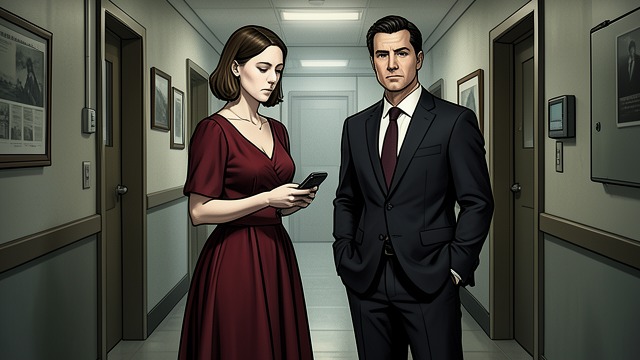
At the premiere of Funny People, Patton moved through a Hollywood event while Michelle received news that Joseph Henry Burgess, a fugitive she had followed, had been found after a shootout. She stepped away from the party and called a reporter who would understand the significance of the discovery.
The moment revealed how differently the evening registered for the couple. Patton was present at the premiere as an actor; Michelle’s attention had already shifted to the mystery she could investigate from a laptop.
Patton Makes Space
A friend assumed Michelle was leaving to return to their infant daughter. Instead, she was eager to get home and search for more information. Patton did not chastise her or insist that she perform enthusiasm for the event; he read her mind and agreed to leave with her.
His quiet accommodation gave the marriage room for a life that could look strange from outside. He recognized that the investigation was not a passing distraction and that being beside Michelle sometimes meant following her attention back to the work.
Work in the Playroom
The Family Sleeps
A Private Workspace
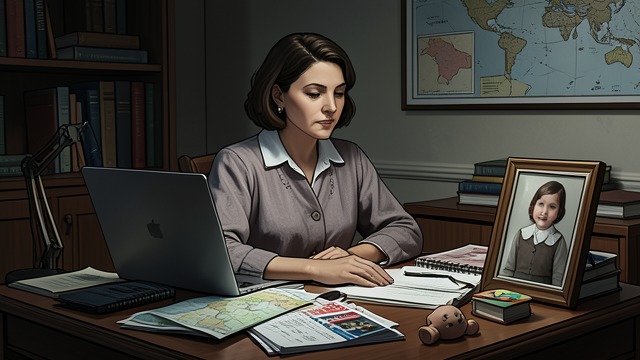
After her husband and daughter went to sleep, Michelle retreated to the playroom with her laptop and case files. The room held stuffed animals, children’s art supplies, and notes written in crayon alongside her research materials.
Patton’s presence in this domestic setting was both intimate and indirect. The household was quiet enough for Michelle to work, while the ordinary objects around her made clear that the investigation was unfolding inside a family life, not apart from it.
A Shared Obsession at Home
Michelle’s late-night searches could carry her through records, old reports, and digital traces for hours. Her husband did not need to ask which case she meant when she excitedly told him she thought she had found something important.
Their home became a place where Patton witnessed both the thrill and the cost of her commitment. The case did not simply take time away from their relationship; it became part of the life they were trying to share, even when its subject was frightening and its outcome uncertain.
Rocky’s Pep Talk

Encouragement Against Dead Ends
The Weight of Another No
By 2014, Michelle had endured a succession of promising leads that collapsed when evidence ruled out a suspect. She wondered aloud how many dead ends an ordinary person could face before giving up, voicing a fatigue that had accumulated through years of searching.
Patton answered with the image of Rocky training: the fighter keeps getting up, even when he is tired and the outcome is uncertain. He was talking about persistence in the investigation, but also drawing on his own experience of returning to comedy after hostile crowds and difficult performances.
Support Without False Certainty
Patton did not promise that Michelle would solve the case. Instead, he gave her a language for continuing after disappointment: clear the desk, make coffee, and begin again. His encouragement recognized that the work was not sustained by constant breakthroughs.
The advice offered companionship rather than a solution. He understood the emotional pattern of the investigation—hope, rejection, and renewed effort—and tried to keep Michelle from interpreting each failed lead as proof that she should stop.
The Anniversary Gift

The Case Enters the Marriage
A Personal Archive
For their anniversary, Patton gave Michelle a professionally bound copy of her magazine article about the case, set into a custom slipcase with a compartment for her notes. It was a thoughtful gift shaped around the work that had come to dominate her attention.
The gesture belonged to a larger pattern of his gifts: he commissioned objects that reflected Michelle’s habits and their shared history. This time, however, the investigation itself had become the subject of the present.
Affection and Unease
Michelle realized that for two years in a row her anniversary gifts had somehow been about the case. More painfully, she recognized that she had forgotten to get Patton even a card. The case had not merely entered their conversations; it was beginning to displace gestures that marked their marriage.
Patton’s gift was an act of love, but it also made visible the cost of that love. He had learned to support her pursuit, even as the pursuit claimed more of her energy and attention than either of them could easily measure.
Before Michelle’s investigation became all-consuming
July 20, 2009
Summer 2012
2014
2014, during their eighth wedding anniversary
