
Michelle and Alice’s Mother-Daughter Bond
I'll Be Gone in the DarkThis thread traces how becoming Alice Oswalt’s mother deepens Michelle McNamara’s understanding of her own mother and shapes the protective tenderness she brings to family life.
increasing Bearing strength in each event
 decreasing
Bearing strength in each eventdecreasingThe Newborn and the Old Letter
Love Recognized Through Motherhood
Alice’s Arrival
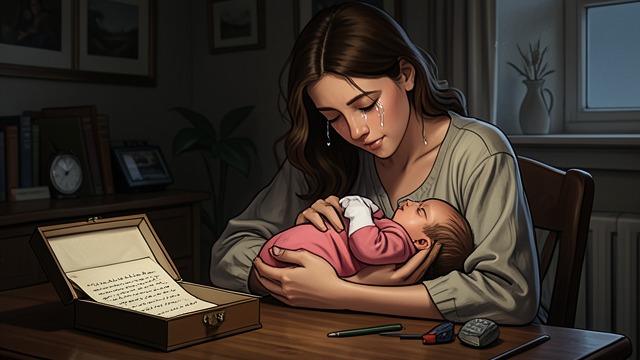
After Alice Oswalt was born, Michelle spent the first two weeks inconsolable. Her husband initially described it to friends as postpartum depression, but Michelle came to understand the grief as something older: holding her newborn made her newly comprehend the force of a mother’s love.
At thirty-nine, she felt she understood her own mother differently for the first time. The realization did not erase the difficult history between them; it changed the meaning of that history by letting Michelle imagine the responsibility and vulnerability her mother had carried.
Searching for Her Mother’s Words
Overcome by the connection, Michelle asked Patton to search the basement for a letter her mother had written after their worst wedding-related argument. He spent hours turning over boxes and papers, but the letter remained lost.
The search gave physical form to Michelle’s need to recover her mother’s voice. Alice’s arrival had made the past emotionally present, and the missing letter became a reminder that love can be recognized more fully after the person who offered it is gone.
A Nighttime Promise
Comfort at Bedtime
The Fear of Dreams
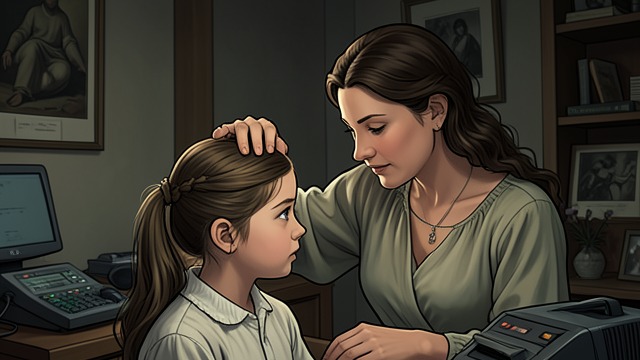
Alice was a troubled sleeper who sometimes called for Michelle because she did not want to have a dream. Michelle brushed her daughter’s sandy hair back, placed a hand on her forehead, and looked directly into her eyes.
She told Alice, with deliberate confidence, that she was not going to have a dream. The promise soothed her daughter, even though Michelle knew she could not control what would happen after Alice fell asleep.
Protection Without Control
The bedtime ritual captures the tenderness and helplessness at the heart of parenting. Michelle could offer reassurance and presence, but she could not guarantee that her daughter would be spared every fear.
That uncertainty echoed the book’s larger concern with promises of protection. For Alice, Michelle made the promise anyway, using steadiness and touch to help her feel safe enough to sleep. The ritual reveals a mother’s care not as perfect control, but as the effort to comfort someone she loves.
The Playroom Search

Motherhood Beside the Investigation
A Child’s Room After Bedtime
Michelle conducted much of her late-night research from Alice’s playroom. The small workspace was crowded with stuffed animals, miniature pink bongos, coloring paper, and legal pads, a child’s environment repurposed as a private room for investigating violent crimes.
The setting joined two otherwise distant parts of Michelle’s identity. During the day, the room belonged to a young family; after bedtime, it became the place where Michelle searched records and followed leads while the rest of the household slept.
The Cost of Attention
Michelle could spend hours moving through reports and online records, even as the room remained marked by Alice’s toys and art. The proximity did not make the work less dark; it made the contrast between her responsibilities more visible.
Her daughter’s presence helped define both the boundaries and the stakes of Michelle’s life. She was not only a writer pursuing an unknown offender but also a mother whose home and attention belonged, in part, to a child who depended on her.
The Missing Birthday Card

A Family Life Divided by Attention
The Anniversary Evening
At dinner for their eighth wedding anniversary, Patton tried to lift Michelle’s spirits as she struggled with the discouragement of dead ends. He described persistence through the story of Rocky, then gave her a carefully prepared anniversary present centered on her reporting.
Michelle recognized the affection in the gift, but also noticed what her concentration had displaced. She had forgotten to get Patton a card, an ordinary gesture that might have marked the day without reference to the case.
Alice in the Background
The same family life that sustained Michelle also competed with the investigation for her attention. Alice was still young, and her mother’s search increasingly occupied the hours that might otherwise have belonged to quiet household routines.
The missed card is not presented as proof that Michelle loved her family less. It registers the strain of trying to remain present in several roles while one consuming pursuit continually demanded more time. The emotional bond with Alice existed within that tension, not outside it.
The Little Detective

A Daughter Inherits Curiosity
A Question About Handwriting
After Michelle’s death, Alice opened a present from Santa and happily explored her new digital camera. Later that morning, she suddenly asked Patton why Santa Claus and her father had the same handwriting.
The question was small, observant, and unexpectedly investigative. Patton’s account presents it as a moment in which Alice’s curiosity seemed to echo her mother’s attention to detail.
An Unfinished Legacy
Patton calls Alice a little detective, not because she can replace Michelle, but because the habit of looking closely survives in her. The family’s grief remains present, yet the scene allows a brief connection between mother and daughter beyond the time they had together.
The question also closes the book’s personal frame with a mixture of sorrow and affection. Michelle is gone, but Alice’s alertness becomes one more sign of the life and sensibility that her mother left behind.
Two years after Michelle’s mother died
During Alice’s early childhood
Summer 2012
2014, during the eighth wedding anniversary
Christmas, after Michelle’s death
