
Jurisdictions Against the Pattern
I'll Be Gone in the DarkThis flow follows the struggle to recognize a statewide series as separate agencies weigh local evidence, competing theories, and eventual forensic links.
increasing Bearing strength in each event
 decreasing
Bearing strength in each eventdecreasingLocal Cases, Separate Files
A Pattern Without a Name
Sacramento’s Investigation
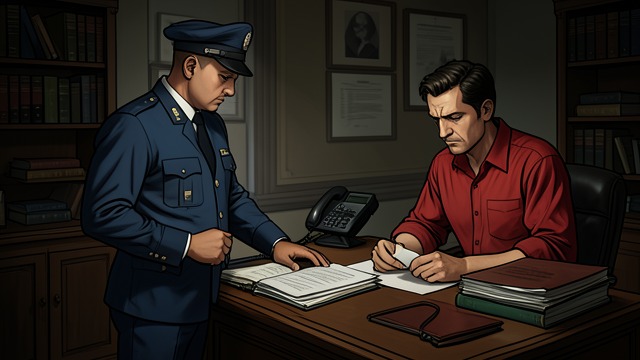
As assaults multiply in Sacramento County, Richard Shelby, Carol Daly, and colleagues recognize recurring details: masks, bindings, ransacking, and a distinctive approach to victims. The department can investigate those attacks as a local series, but reports from other jurisdictions remain outside its immediate view.
The Cost of Fragmentation
Separate agencies make decisions based on what they know locally. Similarities are easy to dismiss when physical descriptions conflict or when one crime includes details another lacks. The offender benefits from these boundaries, moving through communities whose investigators do not yet share a unified picture.
The central conflict is institutional as well as criminal. Detectives must solve crimes one by one while trying to determine whether the apparent similarities represent one offender or several unrelated cases.
The Visalia Dispute
A Contested Connection
The Ransacker Hypothesis
Visalia investigators see similarities between the earlier burglary series known as the Ransacker and the Sacramento attacks: stolen personal objects, ransacking, entry tactics, and a history of prowling. The possibility that the same offender evolved from burglary to rape gives the investigation a potentially important direction.
Incompatible Descriptions
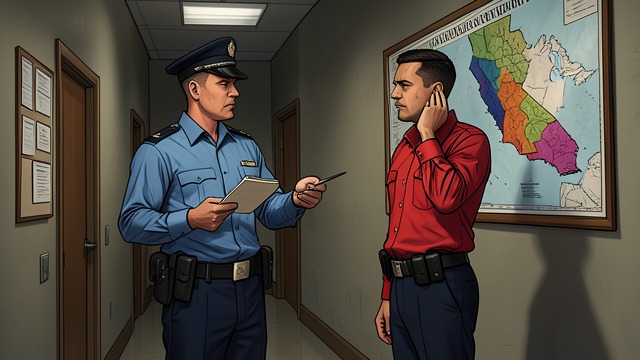
Sacramento investigators see serious differences in physical descriptions and methods, including disagreements over build and shoe impressions. The dispute becomes public, with Visalia officers arguing that the connection deserves attention and Sacramento officials accusing them of seeking publicity. No common forensic result settles the argument.
The conflict illustrates how a plausible theory can be weakened by evidence that does not fit. The agencies continue to hold different views, and the possibility of an early shared history remains unresolved in the book’s account.
Southern Murders Disputed
A Series in Pieces
Competing Local Explanations
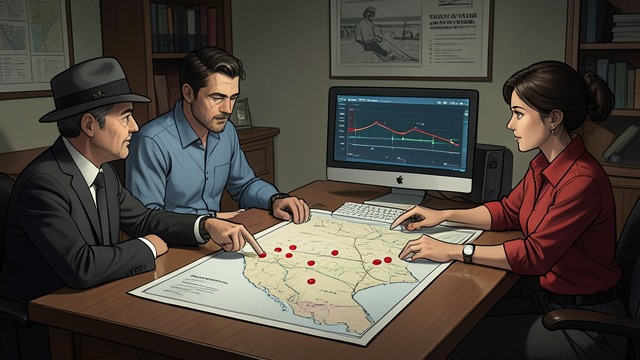
After murders in Southern California, investigators debate whether the attacks are connected. The Smith murders generate a strong but ultimately unsupported case against Joe Alsip, while the Goleta killings attract suspicion toward local figures, including Brett Glasby. In each jurisdiction, evidence is interpreted through the familiar relationships and suspects of that community.
The Link Resisted
Some investigators consider the possibility that Orange County, Ventura, and Santa Barbara cases belong to the same series, but others reject or downplay the connection. Differences among the scenes, the absence of DNA comparisons, and the pressure to solve each local homicide make a broader theory difficult to establish.
The conflict is not simply between right and wrong guesses. Local explanations can feel compelling because they make a crime legible within a community, while a statewide serial offender requires investigators to accept that the answer may lie outside the boundaries of their own case files.
DNA Overrules Boundaries
Forensic Reconciliation
The First Laboratory Links
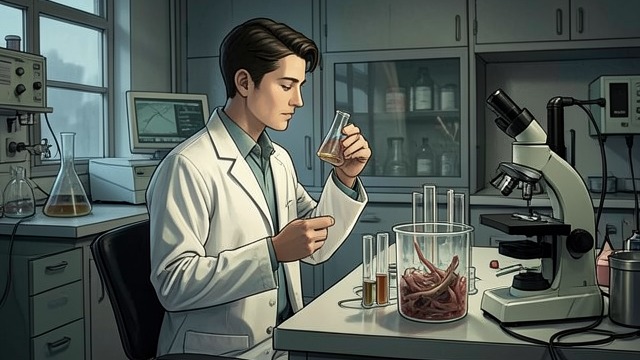
Mary Hong develops DNA profiles from old sexual-assault evidence and finds that the Harrington and Witthuhn cases share an offender. A match to the Janelle Cruz case expands the connection. Evidence from the Ventura Smith case then matches the same profile, linking cases that had been investigated separately and clouded by competing suspect theories.
Northern and Southern Cases Unite
In 2001, DNA testing links the Northern California East Area Rapist cases to the Southern California murders. What had been a collection of local mysteries becomes one long criminal series. The scientific result does not instantly solve the case, but it forces agencies to reconsider decades of assumptions and share an investigative frame.
The conflict between jurisdictional separation and a common offender is resolved at the level of linkage, not identity. DNA proves that the crimes belong together, but the person responsible remains outside the database and beyond capture.
A Shared Investigation

Cooperation Without Closure
A Statewide Task
The DNA link brings investigators into a more coordinated effort. Larry Pool becomes a central point of contact in Orange County, while Paul Holes and Sacramento investigators revisit old leads. Files, evidence, and hypotheses can now be compared across cases that once belonged to different departments.
The Remaining Divide
Cooperation does not erase uncertainty. Investigators disagree over the Visalia connection, the offender’s possible work, and the meaning of individual clues. Michelle McNamara’s research adds public attention and digital analysis, but the case remains unresolved when she dies in 2016.
The conflict changes shape: agencies are no longer arguing primarily about whether the crimes are connected, but about how to interpret an enormous and imperfect record. A shared theory of the series still cannot provide the one fact everyone needs—the offender’s identity.
1976–1977
1977–1978
1979–1981
1996–2001
2001–2016
