
Kathy and David’s Shared Trauma
I'll Be Gone in the DarkThis thread traces how Kathy and David’s marriage is marked by a shared home-invasion attack, diverges under its aftermath, and leaves a crucial memory that Kathy later brings back to investigators.
increasing Bearing strength in each event
 decreasing
Bearing strength in each eventdecreasingA Family Preparing to Move
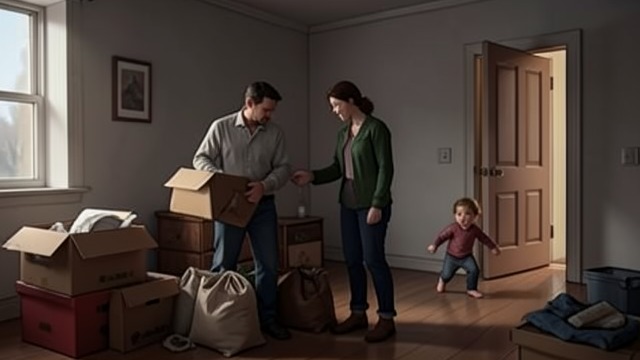
A Household in Transition
The Nearly Empty House
Kathy and David were preparing to move out of their home when the attacker entered during their last hours there. Drawers and closets were already empty because the couple was in the process of packing and leaving.
The timing made the attack especially unsettling. Their familiar home had become a temporary space, stripped of belongings and on the verge of change, yet the couple and their young son were still living inside it.
Shared Vulnerability
Kathy and David faced the intrusion together, but the assailant’s actions divided the household into distinct experiences: he restrained the adults while avoiding their son’s room. The family’s ordinary transition was abruptly replaced by a night of terror inside a home that had been expected to offer safety.
Their shared presence at the scene did not guarantee that they would experience or recover from the event in the same way. The attack created a bond through a common ordeal, while also introducing a trauma that would later become difficult for their marriage to carry.
The Failed Emergency Call

Seeking Help After the Assault
A Broken Connection
After the attacker left, Kathy tried to call for help, only to discover that the promised 911 service did not work in their part of the county. The failure added a new shock to an already frightening experience: the system she expected to reach in an emergency was unavailable.
She eventually contacted the sheriff’s office directly. The delay did not undo what had happened, but it meant that Kathy and David had to navigate the immediate aftermath without the dependable emergency response they thought they had.
Anger and Practical Justice
In a later newspaper interview, Kathy spoke matter-of-factly about hating her attacker and being angry at the phone company. She found one small, measurable response: having the monthly 911 charge removed from her bill.
Her insistence on that deduction expressed a desire for accountability after an experience in which control had been taken from her. It also showed a style of resilience that could be mistaken for emotional distance if someone expected trauma to appear in only one form.
A Marriage Under Strain
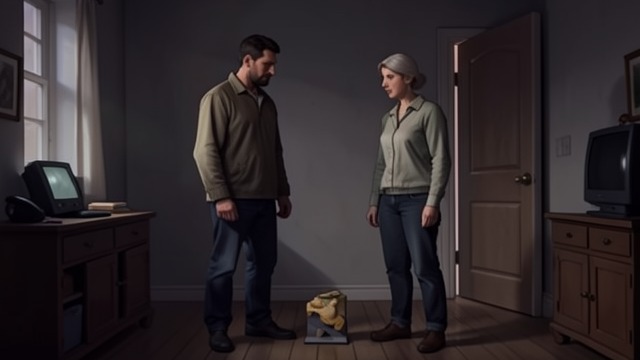
Trauma Continues at Home
Different Ways of Carrying It
The attack did not end when the intruder left. Many couples targeted in the series found that their relationships did not survive, and Kathy and David eventually divorced. The book places that separation among the long-term consequences of a crime that had bound them physically during the assault but could not ensure lasting emotional closeness afterward.
The surviving account does not reduce their divorce to one cause. It makes clear that the violence became part of the couple’s shared history, while leaving room for their private responses and accumulated difficulties to remain partly unknown.
The Cost Beyond the Scene
The loss of the marriage emphasizes that victimization can continue through ordinary life long after a crime scene has been processed. A couple may escape the immediate danger and still find that the experience has changed the conditions of trust, intimacy, and communication between them.
Their story broadens the meaning of survival. Kathy and David lived through the attack, but their relationship did not return to its earlier form; the assault remained one force among the pressures shaping what followed.
The Voice Remembered
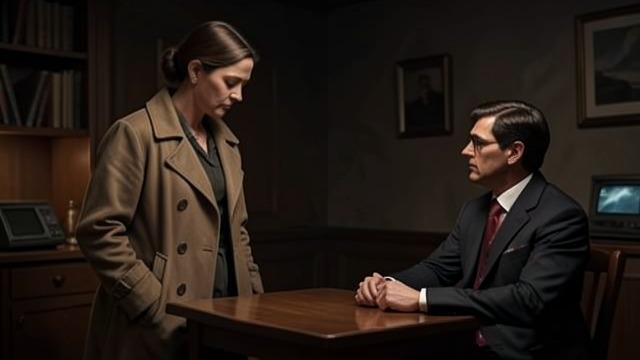
A Memory Re-enters the Case
A Difficult Meeting
After objecting to how she had been portrayed in Larry Crompton’s book, Kathy agreed to meet with Paul Holes and a female colleague. She arrived visibly shaken and barely made eye contact, signs that the old case remained more than a file to her.
Holes and his colleague let Kathy speak without pressing her with many questions. The conversation brought her back into contact with investigators who had studied physical evidence for years but had not previously heard directly from her in person.
David’s Unplaced Recognition
During the meeting, Kathy recalled that David had once told her he thought he recognized the attacker’s voice but could not place it. The memory was significant precisely because David had been unable to resolve it at the time; now it offered a possible connection worth considering.
Kathy’s recollection carried their shared past into the investigation again. Though their marriage had ended, what David noticed during the attack remained part of the knowledge Kathy could contribute, turning a private fragment of their life together into a lead investigators could examine.
The Survivor Becomes a Witness Again
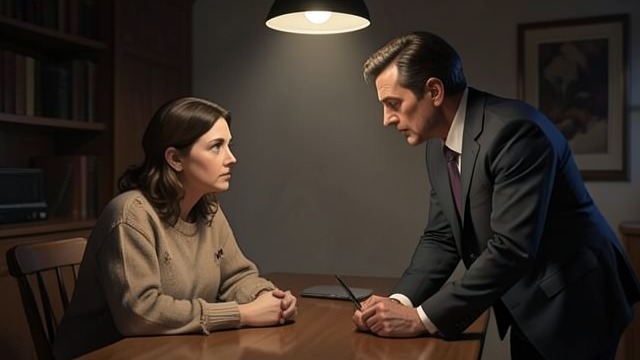
Reclaiming Her Account
Speaking on Her Own Terms
Kathy’s later contact with investigators followed her anger at an account that had portrayed her response in an uncharitable and reductive way. She wanted her experience treated with greater care, and the investigators’ meeting gave her a chance to provide information without being reduced to another person’s interpretation of her demeanor.
Her willingness to revisit the case was an act of effort. Recalling the attack and its aftermath meant reopening painful material, but it also allowed her to place details from her life and marriage back into the investigative record.
Memory as Connection
The fact that David had recognized the voice did not establish who the attacker was. It did, however, show that the couple’s shared experience contained observations that had not been fully explored when the case was new.
Kathy’s return to the investigation did not repair the marriage or eliminate the harm of the attack. Instead, it transformed a remembered detail into a contribution that could help others pursue the case, preserving a fragment of what she and David had experienced together.
October 1978, before the attack in San Ramon
The night of Kathy’s attack
The years after the 1978 attack
Years after the attack, at Kathy’s meeting with investigators
During the renewed cold-case investigation
