
Suspects and False Certainty
I'll Be Gone in the DarkThis flow traces how promising suspects and explanatory theories repeatedly gain force, collide with evidence, and are discarded or left uncertain.
increasing Bearing strength in each event
 decreasing
Bearing strength in each eventdecreasingThe Wrong Local Face
A Suspect That Almost Fits
Yearbooks and Recognition
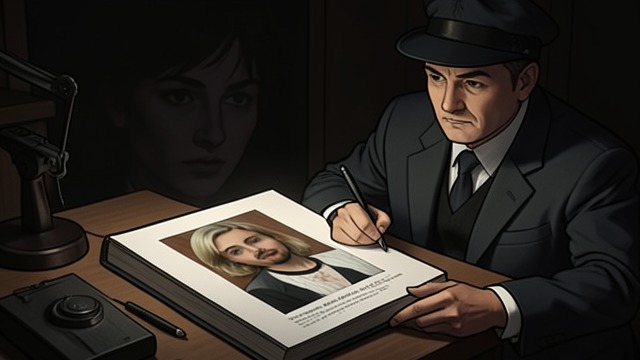
After an attack in Rancho Cordova, detectives use neighborhood yearbooks to test a victim’s recollection of the offender. One student’s image seems close enough to investigate, and his history appears to offer some suggestive details. The method is practical: a victim’s partial recognition is turned into a lead that can be checked against a real person.
Identification Falls Short
The victim cannot positively identify the young man when investigators arrange a closer observation. Suspicion cannot substitute for a reliable identification, and the lead does not establish who committed the attacks. The case returns to a larger pool of possible offenders.
The episode exposes the pressure investigators face to convert an indistinct face into a name. Each candidate promises relief from uncertainty, but a resemblance or unsettling personal history can also draw attention away from what the evidence actually proves.
The Alsip Collapse
A Confession Without Proof
A Strong Early Theory
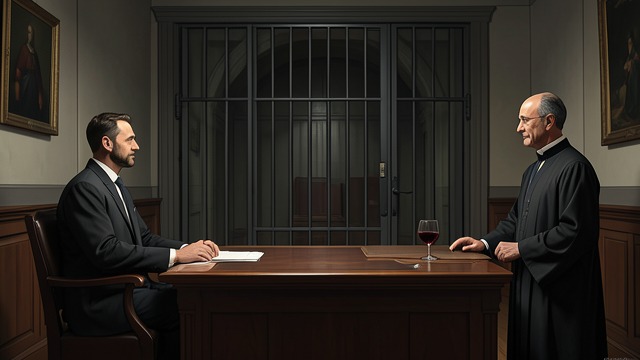
After Lyman Smith and Charlene Smith are murdered, investigators focus on Joe Alsip, a former business partner who visited the couple and whose fingerprint appears on a wine goblet. A minister’s account of an apparent confession adds to the prosecution’s confidence, and Alsip is arrested.
The Case Unravels
At the preliminary hearings, Richard Hanawalt’s defense investigation exposes serious problems in the minister’s credibility and behavior. The prosecution’s central narrative loses force, and Joe Alsip is released for lack of evidence. The investigators are left without a proven culprit and must return to the possibility of a stranger offender.
The failure matters because an apparently coherent suspect story can rest on fragile testimony. The case shows how a suspect’s apparent connection to victims may eclipse the need for evidence that withstands scrutiny.
The Local Punk Theory
A Familiar Suspect Persists
Glasby Under Suspicion
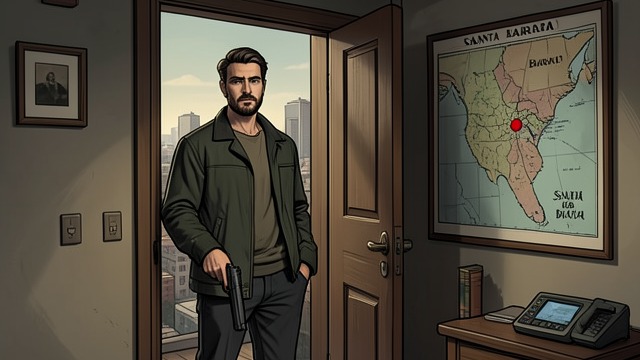
Santa Barbara investigators consider Brett Glasby, a local burglar with a violent reputation and an apparent connection to one victim’s professional circle. His access to a firearm of a relevant type and his presence in the region make him seem plausible, though ballistics and other physical evidence fail to connect him to the killings.
A Theory Outlives Its Basis
Brett Glasby is murdered in Mexico in 1982. Even after DNA evidence links the Goleta murders to the wider serial series, some investigators continue to favor the local theory. The later forensic connection makes the mismatch increasingly difficult to ignore: the suspected local offender is dead, while the linked series continues through crimes committed afterward.
The conflict is between a psychologically satisfying local answer and evidence that points to a mobile, unidentified offender. Glasby’s notoriety supplies a story, but it cannot supply the missing forensic link.
Walther’s Shadow

Reopening an Old Elimination
The First Suspicion
Jim Walther attracts attention after being found sleeping in his car near a Danville crime scene. His Sacramento address, prior police contact, and resemblance to the broad suspect description lead investigators to examine him. He resists providing a sample, then submits to testing that identifies him as a secretor, apparently unlike the offender’s known nonsecretor status.
A Modern Reassessment
Decades later, Paul Holes questions whether the older secretor test was reliable enough to exclude Walther. Walther’s geography and history seem to align with parts of the crime series, and Holes investigates him intensely. A new DNA test ultimately excludes him as the offender, though Holes describes him as the offender’s “shadow.”
The investigation dramatizes the tension between a suspect who fits a pattern and a test that contradicts it. Holes’s willingness to revisit an old exclusion is valuable, but the result also demonstrates why even a compelling investigative narrative must yield to reliable DNA evidence.
The One Keeps Changing
The Pull of a Suspect
A String of Candidates
Michelle McNamara and investigators pursue several promising candidates, including a man identified through public records and a suspect whose old police stop revealed disturbing items in his vehicle. In each case, geography, physical description, or behavior seems to converge into an answer. Each apparent breakthrough intensifies the desire to believe the case has finally narrowed to one person.
DNA Breaks the Spell
Testing excludes the candidates, including Doug Fiedler and Ron Greer. Earlier, Paul Holes also has a promising Y-DNA result that proves to be a false match because another researcher uploaded the same offender profile. The repeated failures reveal how easily partial evidence and confirmation bias can make a suspect feel inevitable.
The conflict is psychological as much as investigative: the need to end the uncertainty competes with the discipline required to eliminate anyone who does not match. Each negative result is painful, but it protects the investigation from replacing proof with conviction.
1977–1978
1980
1980–2001
1979–2014
2011–2016
