
Michelle McNamara’s Hunt for the Golden State Killer
I'll Be Gone in the DarkThis thread follows Michelle McNamara from a childhood encounter with an unsolved murder to her consuming investigation of the Golden State Killer, and the unfinished work her collaborators carried forward after her death.
increasing Bearing strength in each event
 decreasing
Bearing strength in each eventdecreasingThe Alley’s Question
The Alley’s Question
A formative encounter
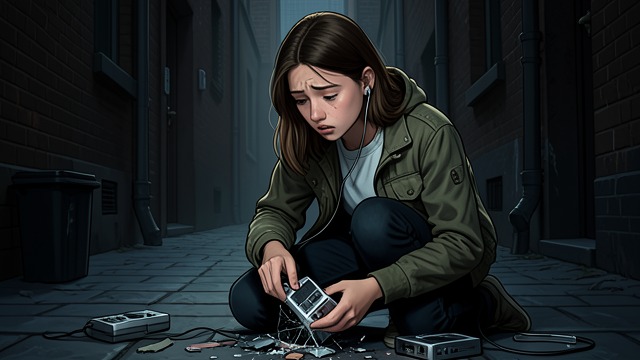
At fourteen, Michelle learned that Kathleen Lombardo, a young neighbor, had been murdered and left in an alley. Two days later, Michelle walked to the scene without telling anyone. She picked up pieces of Kathleen’s shattered Walkman and felt a searching curiosity rather than fear.
The killer’s unknown face became the center of the experience. The blank space where an identity should have been seemed powerful, and Michelle later described wanting to see the face because knowing it would diminish that power.
A lasting direction
Kathleen’s murder remained unsolved, and the absence of an answer stayed with Michelle long after the neighborhood’s immediate fear receded. Her interest in cold cases took shape around the conviction that unresolved violence left a question that could not simply be put away.
Years later, she would trace her investigative impulse back to that alley. The teenage girl collecting fragments had not yet become a writer, but she had found the mystery that would orient her adult work.
The Writer Finds Her Case
The Writer Finds Her Case
From fascination to practice
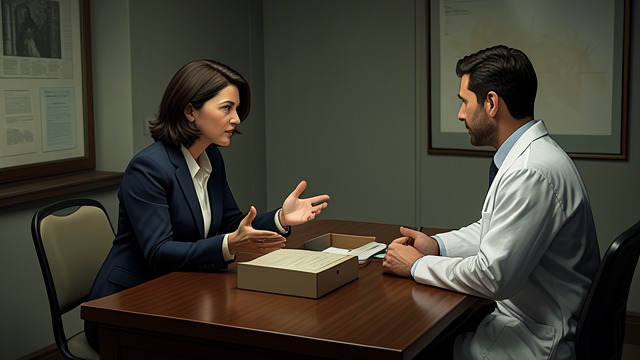
As an adult, Michelle turned her interest in unsolved crimes into True Crime Diary, a website launched in 2006. Online records and search tools let her pursue leads beyond the limits of conventional reporting, connecting public documents, yearbooks, and maps in search of details that might have escaped notice.
In 2007, she first encountered the East Area Rapist / Original Night Stalker case. Its reach across California, its many victims, and its still-unidentified offender offered an unusually large and difficult mystery. Michelle began following the case long before she had a book project or a settled theory about who the perpetrator was.
Naming the pursuit
She found investigators who had worked the case and online researchers who shared clues and theories. Their records and conversations gave her a way into a case spanning jurisdictions and decades, while her own writing helped bring renewed attention to it.
Michelle eventually gave the offender the name Golden State Killer. That name gathered the separate crime histories into one public narrative, but it did not solve the mystery. Her work moved from researching a distant case to pursuing a specific, personally consuming investigation.
An Obsession Takes Hold
An Obsession Takes Hold
Searching after bedtime
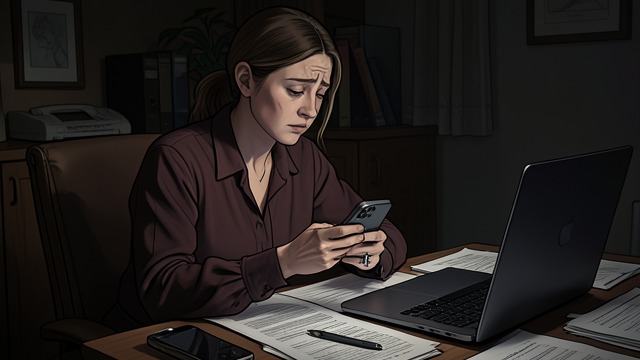
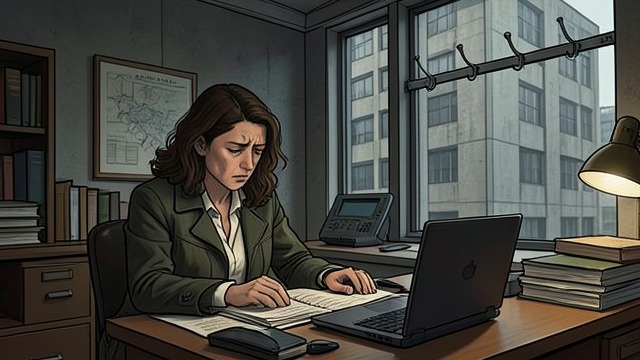
By the summer of 2012, Michelle was searching late at night from her daughter’s playroom, working through police reports, autopsy material, and online records while her family slept. She described the room as a private space for the investigation, scattered with legal pads and notes.
The research could overtake ordinary life. At one Hollywood premiere, she learned that a different fugitive had been found and left the festivities to follow the news. In her account, such moments showed how easily the hunt could draw her attention away from the world around her.
A small lead, a large hope
Michelle searched for a pair of distinctive cuff links stolen during an East Area Rapist attack. She found a similar pair for sale online and bought them, believing they might connect the investigation to someone identifiable. The purchase produced a rush of conviction: she told her husband, Patton Oswalt, that she thought she had found the killer.
The cuff links proved not to be the stolen pair. Yet the episode showed both the energy and risk of her approach: minute details could open new avenues, but the hope attached to them could outrun what the evidence actually established.
The Investigator’s Personal Cost
The Investigator’s Personal Cost
The case enters home life
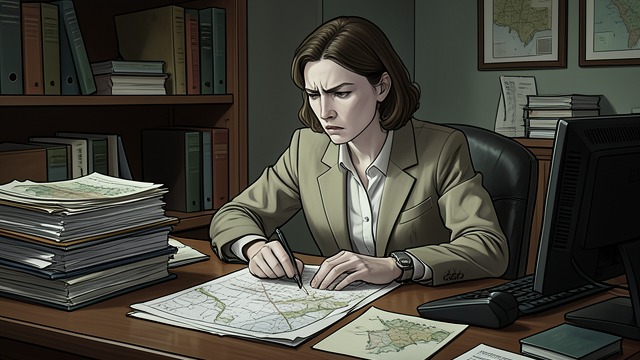
As Michelle’s research deepened, she described a compulsive rhythm of searching: files, names, maps, and possible suspects repeatedly drew her back to the case. The work brought her into close contact with survivors and investigators, but it also narrowed her attention and affected her sleep and sense of safety.
She acknowledged that the pursuit could be frightening and disorienting. Her writing included moments when she startled awake and mistook her husband for an intruder, then returned to the reports. The details that made the investigation compelling also made it difficult to leave behind.
A large cache and unfinished plans
In January 2016, Michelle and Paul Holes gained supervised access to a major collection of Orange County case files, which she called the Mother Lode. She and her collaborators digitized records so that details could be searched, shared, and compared more easily.
Michelle believed the files might contain a neglected clue to the offender’s identity. She continued making lists of questions and research tasks, including leads she hoped to revisit. She died on April 21, 2016, before she could complete the book or determine whether those leads would resolve the case.
An Unfinished Investigation
An Unfinished Investigation
Others take up the files
After Michelle’s death, Paul Haynes and Billy Jensen examined her hard drives, notes, and the extensive records she had collected. They found completed chapters alongside unfinished drafts, research lists, and questions that she had planned to pursue.
The book’s final sections preserve some of that material, including her interest in mapping the offender’s movements and using genetic genealogy. Rather than pretending that her investigation had reached a final answer, her collaborators made the incompleteness part of the account.
A continuing public search
Michelle had wanted readers to engage with the clues and the unfinished mystery. Paul Haynes and Billy Jensen organized her research so readers could see how she assembled evidence and where the investigation still had gaps.
Her work left investigators and amateur researchers with more material, more attention, and a clearer record of the search. The killer’s identity remained unknown within the book’s account, but Michelle’s investigation had become a shared undertaking rather than a private pursuit.
August 1984, Oak Park, Illinois
2006–2011, Los Angeles
Summer 2012, Los Angeles
2012–2016, Los Angeles
April 2016–2017, after Michelle’s death
