
Paul Holes’s Path from Lab to Investigation
I'll Be Gone in the DarkThis thread traces Paul Holes’s development from a forensic scientist drawn to old case files into a persistent investigator who uses DNA, archival evidence, and geographic analysis to pursue the East Area Rapist / Original Night Stalker.
increasing Bearing strength in each event
 decreasing
Bearing strength in each eventdecreasingA Scientist Drawn to Stories
A Scientist Drawn to Stories
Beyond laboratory work
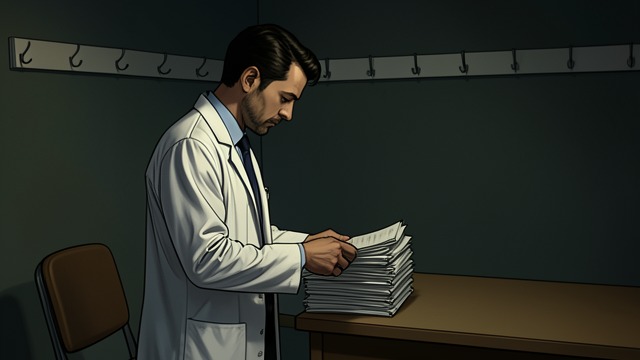
After studying biochemistry, Paul Holes joined the Contra Costa County Sheriff’s Office as a criminalist. His early work centered on forensic science, but he was increasingly drawn to the narratives and ambiguities inside old case files.
He explored unsolved cases in the Property Room, where physical evidence sat alongside incomplete reports and questions left by earlier investigators. For Holes, the files were not just laboratory material; they were puzzles that could be approached from new angles.
The East Area Rapist files
During a flight to a forensic conference, Holes asked retired lab chief John Murdock about folders marked with the initials EAR. Murdock explained the history of the East Area Rapist and the terror his attacks had caused.
Holes had been a child when the crimes took place, and the case was new to him. The account changed the old files from a curiosity into a challenge: a long, unresolved series of crimes with evidence that might still yield answers.
DNA Reopens the Case
DNA Reopens the Case
Testing old evidence
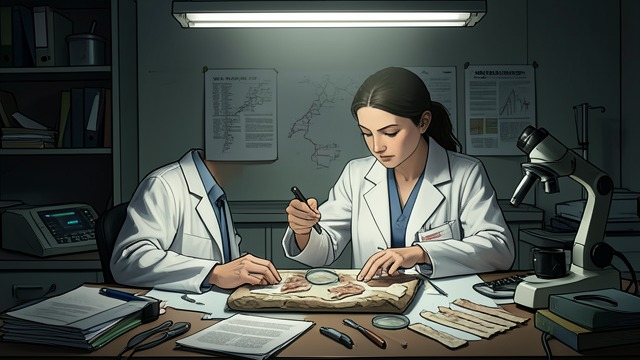
In 1997, Holes began examining rape kits from Contra Costa County cases suspected of belonging to the East Area Rapist. The laboratory’s DNA program was developing, but several kits appeared capable of producing a profile.
The results confirmed that the same offender was responsible for the three Contra Costa cases Holes tested. That scientific link gave investigators a firmer basis for treating the attacks as a connected series rather than relying only on similarities in method.
From match to investigation
Holes began reading the case files closely and compiling old suspect names. He contacted retired investigator Larry Crompton, whose reports and experience made him a valuable link to the original investigation.
Crompton urged Holes to pursue a possible connection to crimes farther south. That suggestion widened the investigation beyond Contra Costa County and eventually helped connect the Northern California rapes to murders in Southern California.
Following the Geographic Trail
Following the Geographic Trail
A statewide series emerges
In 2001, improved DNA comparison connected the East Area Rapist evidence from Contra Costa County with profiles from cases in Orange County. The finding linked the rapist to a series of murders and assaults across California, renewing the investigation and drawing media attention.
Holes could not devote himself full-time to the case while managing laboratory responsibilities and family commitments. Even so, the expanded series stayed with him, and he continued to consider what the locations and evidence might reveal about the offender.
An unconventional clue
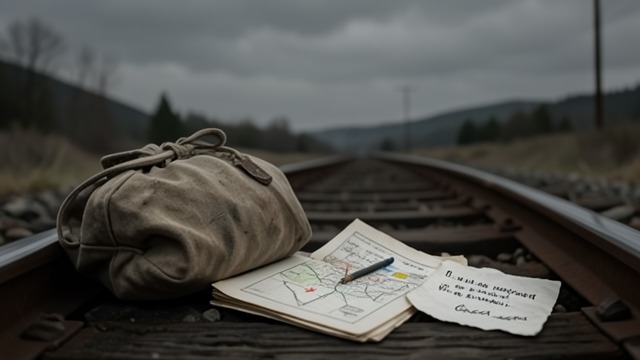
In 2011, while looking for a ski mask associated with a suspect, Holes noticed a bag of papers collected near railroad tracks in Danville. The pages included a hand-drawn map and a handwritten complaint about a sixth-grade teacher. The material was not self-explanatory, but its location and contents gave Holes a new line of inquiry.
He consulted people with expertise in development and landscape design. Their observations suggested that the map could reflect professional knowledge rather than an ordinary school exercise. The possibility redirected his thinking toward the offender’s work and access to resources, without yet identifying him.
The Suspect Eliminated
The Suspect Eliminated
Revisiting an old lead
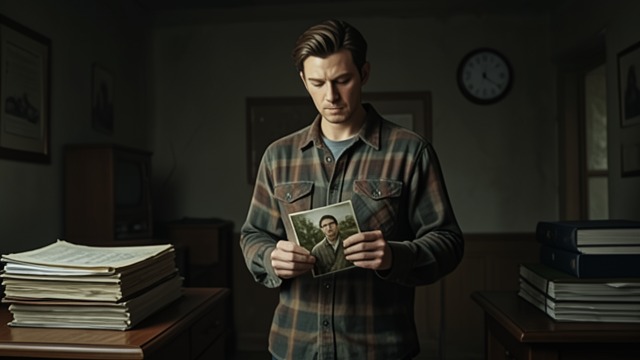
Holes reconsidered Jim Walther, an early suspect who had been eliminated in the original investigation. Walther’s past included contacts near crime scenes, and old testing had classified him as a secretor, unlike the offender’s reported nonsecretor status.
Holes knew that older laboratory methods had limitations. He examined the circumstantial pattern, pursued Walther’s background, and sought to find him after the man had disappeared from ordinary records. The effort reflected Holes’s belief that an earlier exclusion deserved scrutiny when the science behind it was uncertain.
DNA supplies the answer
After locating Walther, investigators obtained a DNA sample and compared it with the offender’s profile. The test eliminated him as the East Area Rapist. The answer closed a substantial investigative path, but it did not resolve the larger case.
Holes called Walther the offender’s “shadow”: a person whose history and coincidences seemed to echo the case without matching the biological evidence. The result was a difficult but necessary reminder that compelling patterns could not substitute for a forensic match.
The Work Continues After a False Match
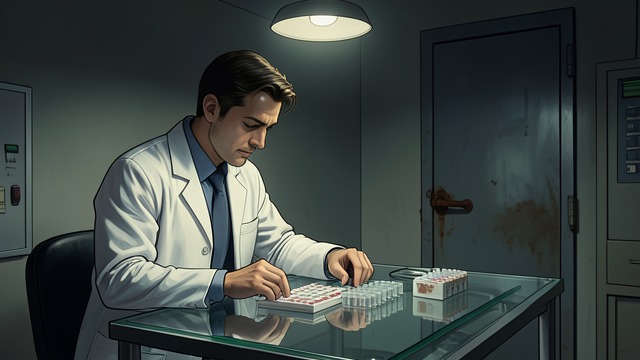
The Work Continues After a False Match
A genetic lead misfires
In 2013, Holes entered the offender’s Y-DNA markers into a genealogical database and saw a close match. The result appeared to offer a promising route toward a surname and a family line, but another amateur investigator had uploaded the same crime-scene profile. The apparent match was a mirror of the same data, not a connection to the killer.
The episode demonstrated how easily a promising result could become misleading when the database and comparison process were not understood. Holes continued exploring genetic genealogy as a tool, while recognizing that it could not, by itself, establish a person’s identity.
Persistence without certainty
Holes also pursued the Danville paperwork, geographic patterns, and old investigative files. He worked alongside other investigators and researchers, including Michelle McNamara, whose writing and persistence helped renew attention to the case.
By the end of the book’s account, the investigation still lacked a confirmed identity. Holes’s work had expanded the evidence base and tested old assumptions, but its defining discipline remained the same: leads had to be followed, and then eliminated when the evidence required it.
1990s, Contra Costa County
1997, Contra Costa County
2001–2013, California
2011–2014, Sacramento and Contra Costa County
2013–2017, California
