Charlene Smith
I'll Be Gone in the DarkCharlene Smith was Lyman Smith’s second wife and former secretary. Her murder with Lyman in their Ventura home became a long-unsolved case, first clouded by suspicion of someone in their circle and later understood as part of a wider pattern of serial crimes. The eventual connection reframed her death: the apparent intimacy of the crime scene did not establish that the killer knew her.
Identity and Background
Lyman Smith was a prominent Ventura attorney on the verge of becoming a superior court judge. Charlene, his former secretary, had become his second wife. They lived in a hilltop home overlooking Ventura Harbor, a setting that seemed to investigators to promise stability but concealed personal and business complications.
The couple’s household included Lyman’s twelve-year-old son, Gary Smith, from his first marriage. Charlene’s place in the family is recorded through this blended household and the circumstances in which the case came to light; the account gives little independent detail about her life beyond her marriage and former work.
Discovery and Investigation
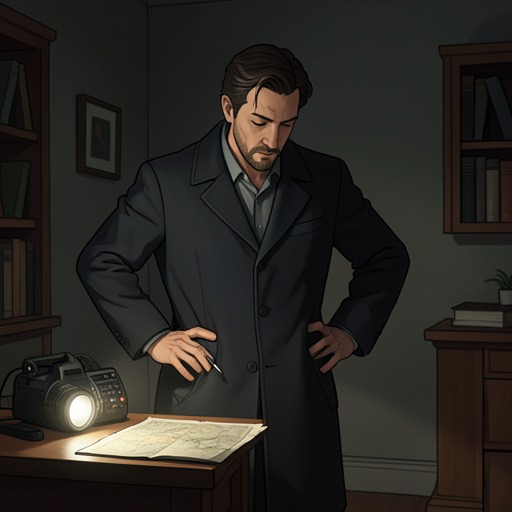
On Sunday, March 16, 1980, Gary rode his bicycle to his father’s house to mow the lawn. He found the front door unlocked. A buzzing alarm clock drew him toward the master bedroom, where bark fragments lay across the carpet and a narrow piece of firewood rested at the foot of the bed. Beneath the covers were the bodies of Lyman and Charlene.
Investigators received a flood of leads, including information about affairs and questionable business dealings. They focused on Lyman’s friend and former business partner, Joe Alsip, who had visited the couple the night before the murders. His fingerprint on a wine goblet and a minister’s account of what Alsip had said strengthened suspicion. Alsip was arrested, and prosecutors entered the preliminary hearing confidently. His defense attorney, Richard Hanawalt, nevertheless presented the scene as the work of a stranger: the house was dark, the couple had been bound with drapery cord, and a log from the nearby woodpile had been used in the killings. A bathroom window overlooked the bedroom, offering a possible vantage point from outside.
After the hearing, the Ventura County district attorney released Alsip for lack of evidence. Investigators returned to square one. Some believed the killer knew the Smiths; others considered the murders a random, sexually motivated crime. The file remained in the investigators’ bullpen for years before being moved to an evidence vault.
Reconsidering the Crime
Detective Russ Hayes later recalled a theory that someone outside the bathroom window had watched the couple in the bedroom, become enraged, and entered the house. The window did provide a view into the room, and the killer may indeed have watched from there. But the later account distinguishes that possible vantage point and rage from Hayes’s assumption of personal familiarity: the killer need not have known the Smiths.
Instead, the narrative interprets Charlene as a target onto whom the killer displaced hostility formed elsewhere. In that reading, she was not singled out because of a known grievance between her and the murderer; she became another woman caught in his private pattern of resentment. The distinction changes the meaning of the apparent domestic setting: the scene could look personal without reflecting a personal relationship.
Forensic Link and Significance
Larry Pool noticed a Ventura Police Department case number in the margin of a report in another homicide file and followed it to the Smith murders. He asked that surviving forensic material be sent to the Orange County Crime Lab. Mary Hong opened the package and found only a couple of glass slides. Such slides could help detect sperm from swabs taken during a rape examination, but the swabs themselves would have supplied more biological material. The sparse submission made the remaining evidence especially consequential.
Later forensic comparison connected the Smith case to the serial-crime investigation. Some Ventura investigators, including Hayes, initially struggled to accept the DNA connection. The case thus moved from a locally focused inquiry, dominated by speculation about the couple’s acquaintances, into a broader pattern associated with the East Area Rapist / Original Night Stalker. Charlene’s murder became one of the cases through which investigators recognized that the apparent signs of a private motive could obscure a stranger’s repeated methods.