Janelle Cruz murder
I'll Be Gone in the DarkThe Janelle Cruz murder was both a devastating loss and a major turn in the investigation: a DNA profile developed from the crime eventually matched profiles from two earlier, apparently unrelated murders. Cruz was eighteen when she was killed in her family’s home in Irvine, California. The discovery of the match forced investigators to reconsider a connection that geography alone had not made obvious, while the account of the days around her death restores the young woman’s life to a case often reduced to evidence and comparison.
Life and final evening
Cruz’s childhood had been unsettled. Her biological father was no longer present, and she experienced a succession of stepfathers and other adult stand-ins, several of whom abused her. In Michelle McNamara’s reconstruction from her notes, Cruz understood her mother as more invested in parties and drugs than in raising her. The account places her later life against that difficult background without treating it as an explanation for the crime.
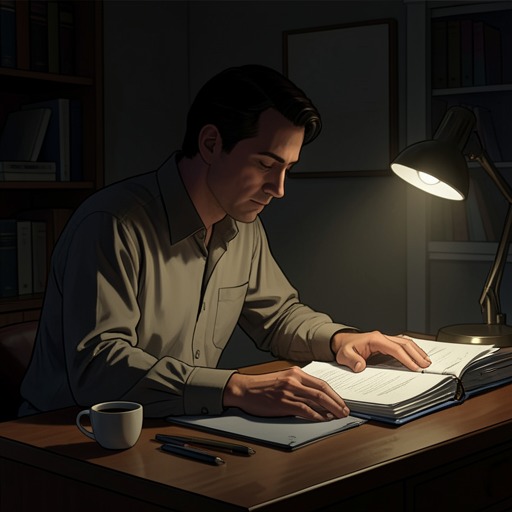
Cruz earned her high school diploma through Job Corps, returned to Irvine, and enrolled in classes at a local college. She worked as a hostess at Bullwinkle’s Restaurant, a family restaurant, and wrote poems. Her social and romantic life was unsettled, and the account describes her as searching for affection that did not arrive. These details matter because they give the case a life beyond the circumstances of her death: Cruz was a young adult making plans and trying to find connection, not simply a name on a laboratory spreadsheet.
On May 3, 1986, Cruz’s mother and stepfather left for a vacation in Cancún. The following evening, a male coworker from Bullwinkle’s spent time with her after she told him she felt lonely with her parents away. They sat on her bedroom floor, and she read him some of her poems. She also played a recording of a counseling session in which she spoke about her family. A noise outside startled them. Cruz looked out and closed the shutters, then dismissed the sound as probably caused by cats. Later, when another noise came from the direction of the garage, she attributed it to the washing machine. Her coworker left because it was a school night; they exchanged a friendly hug. This is the last evening described in the account before her body was discovered the next day.
Discovery at 13 Encina
On May 5, real-estate agent Linda Sheen visited 13 Encina, a three-bedroom, single-story house in Northwood, to show it to a prospective buyer. Although the home had been on the market for months, its owner and family still lived there. It stood near a park, toward the end of a cul-de-sac, beside the hedge-lined edge of the developed neighborhood. The house’s ordinary appearance was part of the account’s unsettling contrast: it resembled many others in a community whose development had replaced the orange groves that once occupied the area.
After receiving no answer at the door, Sheen used the property’s lockbox and entered. She noticed everyday signs of an inhabited home, including a light on in the dining room, milk on the breakfast table, and a newspaper open to the Employment section. A bedroom door was locked. In another room at the end of the hall, she saw a young woman lying motionless in bed, with a blanket over her head. Unsure whether the woman was unconscious or dead and afraid that someone else might be in the house, Sheen left and reported what she had found to her supervisor. She tried calling the residence twice, without an answer.
Sheen and her supervisor then informed colleagues at the real-estate company handling the sale. They went to the house, confirmed that the young woman was dead, and called the police. Irvine Police Department officer Barry Aninag was the first to respond. Cruz was found on the bed, and the scene showed that she had suffered a fatal assault. Investigators also documented evidence relevant to the inquiry, including semen, blue fibers, and tennis-shoe impressions outside the house. No ligatures or weapons were found at the scene. The account records these details as investigative observations rather than as a complete explanation of who entered the home or when the killing occurred.
A connection hidden in the profiles
For years, Cruz’s case was not proposed as connected to the murders of Patty Harrington and Manuela Witthuhn. Cruz was ten years younger than those women, and more than five years separated her death from the earlier crimes. Yet she lived in Northwood, the same subdivision as Witthuhn, and the two homes were only about two miles apart. The closeness of the locations had not been enough to overcome the apparent differences in the victims and the timing.
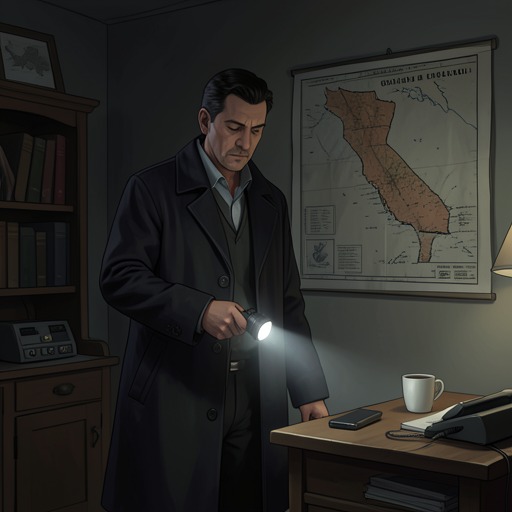
Near the end of 1996, a laboratory analyst, Mary Hong, was reviewing a spreadsheet of roughly twenty unsolved cases for which DNA profiles had been developed. The chart compared victims and case numbers against profiles built from five PCR markers then used for typing. Hong already knew that the Harrington and Witthuhn profiles matched. While scanning the spreadsheet, she noticed that Cruz’s profile appeared to match as well. She checked the sequence repeatedly against the other two profiles and concluded that the match was real. What had been treated as a separate case now belonged to a three-case pattern supported by forensic evidence.
The spreadsheet moment was quiet, but its consequence was substantial. The comparison redirected attention from the differences that had kept the cases apart—the victims’ ages and the years between the crimes—to evidence that joined them. Cruz’s case became part of an investigation linking murders across time and place, and the discovery gave investigators a new way to understand what had happened in her home. It did not, on the evidence recounted here, identify the killer by name; its importance lay in establishing the connection and changing the questions the cases could ask together.