Joe Alsip
I'll Be Gone in the DarkJoe Alsip became the central suspect in the investigation of the 1980 murders of Lyman and Charlene Smith, but the case against him unraveled during a preliminary hearing. His story in the book is one of suspicion built from circumstantial details, a dramatic allegation by a minister, and a defense investigation that unsettled the prosecution’s account. Alsip was released for lack of evidence, leaving investigators without a resolution and the case open to competing interpretations.
Identity and Connection to the Smiths
Alsip was a friend and former business partner of Lyman Smith, a prominent Ventura attorney who was close to a superior court judgeship. Charlene Smith, Lyman’s second wife, had formerly been his secretary. Their public standing did not describe the private tensions investigators encountered after the killings: the investigation drew attention to affairs and questionable business dealings around the Smiths, creating a range of possible explanations without establishing who had killed them.
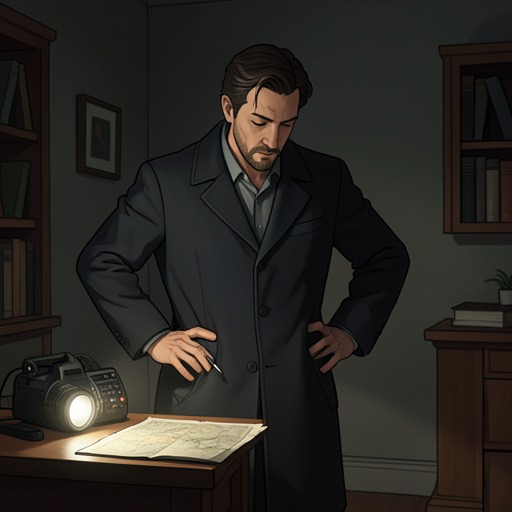
The case entered a new phase on March 16, 1980, when Lyman’s twelve-year-old son, Gary Smith, came to the house to mow the lawn. The unlocked front door and a buzzing alarm clock led him toward the master bedroom, where he found his father and stepmother dead beneath the covers. Investigators were soon deluged with leads. Against that unsettled background, Alsip stood out because he had visited the Smiths the night before the murders and because his fingerprint was found on a wine goblet.
The Suspect and the Allegation
The police and prosecution also had an apparently powerful statement from Alsip’s minister, who told investigators that Alsip had essentially confessed to him. Alsip was arrested, and investigators approached the preliminary hearing with confidence. The minister’s account appeared to offer a direct connection between Alsip and the killings, supplementing the circumstantial significance of his recent visit and the fingerprint.
That allegation became the case’s most consequential weakness. Anonymous tipsters had urged Alsip’s defense attorney, Richard Hanawalt, to investigate the minister’s past. Hanawalt uncovered a history stretching across the country, from Indiana to Washington, in which the minister had sought police protection in unusual circumstances and tried to insert himself into investigations. The findings changed how the prosecution’s apparent strength looked: the witness whose account seemed to link Alsip to the murders was himself becoming the focus of serious credibility concerns.
Sergeant Gary Adkinson, one of the lead investigators, had anticipated that the minister’s story might unravel. The police chief had given the minister a radio after the minister said he had received threats following his report about Alsip. One afternoon, the minister called in breathlessly, claiming that someone was coming for him. Adkinson, nearby, hurried to the minister’s house. The minister was inside, holding the radio; when he saw how quickly Adkinson had arrived, he said the supposed pursuer was gone. The episode, alongside Hanawalt’s findings, further weakened the account on which the case had relied.
The Preliminary Hearing and Release
Hanawalt’s defense also redirected attention to the physical circumstances of the crime. He presented the scene as consistent with an unknown intruder rather than necessarily with someone known to the Smiths. The victims had been bound with drapery cord and struck with a piece of wood taken from the firewood pile. The house had no lights on, raising the possibility that the encounter occurred in darkness. A person at the bathroom window could see into the bedroom, and the nearby woodpile offered a possible source for the object used in the attack. These details did not identify another perpetrator, but they complicated the prosecution’s effort to make the evidence point to Alsip.
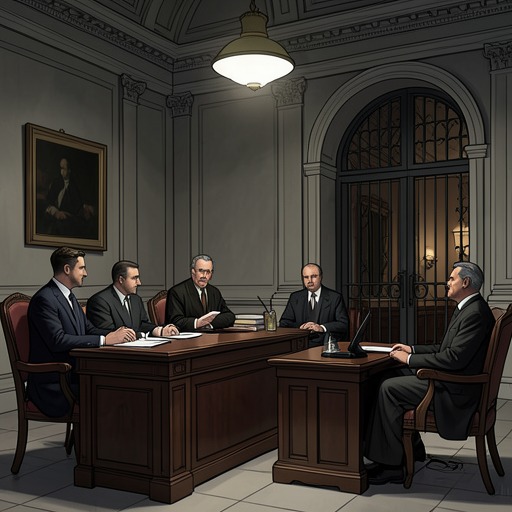
The prosecution had initially treated Hanawalt’s courtroom manner as a sign of a fumbling defense. His odd turns of phrase helped disguise the effect of the investigation he had undertaken outside the courtroom. By the time of the closing argument, the defense had brought the minister’s credibility into question and offered an alternative reading of the crime scene. The hearing ended with the Ventura County district attorney releasing Alsip for lack of evidence. The arrest and confident opening of the case had not produced a sufficient basis to hold him.
Aftermath and Narrative Significance
Alsip’s release sent investigators back to square one. The team remained divided: some believed the killer knew the Smiths, while others considered the crime random and sexually motivated. For years, the file remained on a shelf in the investigators’ bullpen before eventually being moved to the evidence vault. The case’s stalled status helps explain why Alsip’s name continued to matter: he was not a proven answer, but a prominent suspect whose prosecution had failed and whose case remained part of a larger effort to understand related killings.
That wider inquiry later brought the Ventura investigation back into view. In 2014, Michelle McNamara paid $1,400 for printed transcripts of Alsip’s preliminary hearings: 2,806 pages produced from microfilm. Their scattered references to material documented more fully in official reports only intensified her interest in the elusive case file. In January 2016, she obtained three dozen boxes of Golden State Killer material from the Orange County Sheriff’s Department. Much of the file she read focused on Alsip, whom the account identifies as a red herring; she had not finished incorporating the material into her narrative by the time of her death. The later attention does not establish Alsip’s guilt or innocence. It underscores instead how an arrest, a compromised witness, and a failed preliminary case could occupy investigators and researchers for years without resolving the murders.