Michelle McNamara
I'll Be Gone in the DarkMichelle McNamara was a true-crime writer whose research helped renew attention to the East Area Rapist case and brought her from outsider to trusted investigative partner. Her work joined meticulous analysis of records to a concern for the people living with unresolved violence. When she died midway through her book, she left behind thousands of files and notes, but also a method: assemble the details, test the connections, and keep the search open.
From reader to investigator
In 2011, after McNamara published her first True Crime Diary story about the East Area Rapist and Original Night Stalker, she noticed Paul Holes after he shared her article on an online cold-case forum. She contacted him with a lead of her own: a rare surname whose few bearers appeared in geographically interesting places. The exchange began a collaboration in which she identified names and connections for Holes to investigate, while he shared developments and possible leads with her.
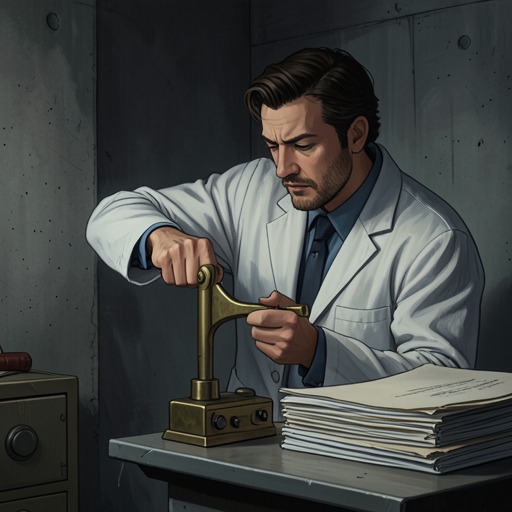
McNamara did not begin with official authority. As she worked on a feature for Los Angeles magazine that became the basis for her book, case files gradually reached her. She indexed people, places, and objects in the reports to make investigative details easier to retrieve, distinguish individuals who might otherwise be confused, follow later geographic movements, and identify possible connections among victims. She passed her findings and the resulting Master List to active investigators. Her work made a growing mass of records more navigable without pretending that a pattern, by itself, proved a suspect’s guilt.
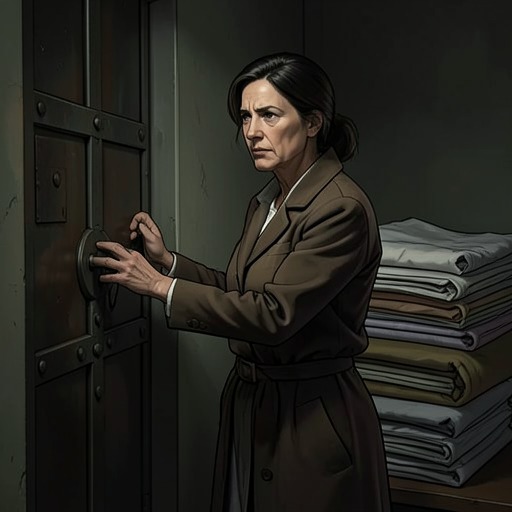
Her access expanded through relationships with current and retired investigators. In January 2016, she and Holes were shown a narrow closet at the Orange County Sheriff’s Department holding sixty-five Bankers Boxes of case files. They were allowed to review the boxes under supervision and borrow materials. The scale of the archive matched the scale of the work: the case could not be reduced to a single clue or a single dramatic revelation.
Reading the pattern, and its limits
McNamara’s account tracked the East Area Rapist not only as an attacker but as someone who studied neighborhoods. Police reports suggested a preference for single-story homes, often near a greenbelt or open space, and documented prowling and illegal entries around some targeted homes. Small or personal items went missing; hang-up calls increased in the surrounding blocks before attacks. McNamara read these details as evidence of reconnaissance: the offender appeared to select a neighborhood, consider several possible victims, and prepare before choosing a target.
She also traced how public awareness changed the meaning of what neighbors saw. Early in the attacks, people might not know a serial offender was active. As news and neighborhood discussion spread, some residents recognized warnings but responded by locking doors, turning off lights, and retreating rather than calling police. McNamara considered how fear and inaction could leave people isolated from one another, while keeping responsibility with the offender who exploited the conditions around him.
The reports also suggested that the offender connected separate homes through objects and incidents. Items taken from one victim or neighbor later appeared elsewhere; other details, including shared surnames or occupations, made the attacks seem linked across a wider social map. For McNamara, this was a form of power as well as a possible investigative pattern: the connections implied a presence that could be difficult to locate but hard for a neighborhood to ignore once recognized.
She attended to ordinary circumstances that could make an attack possible without treating them as proof of a victim’s responsibility. In one reported case, Kathy and David were moving out with their three-year-old son when the offender came during their final hours in the house. They told investigators he did not approach their son’s bedroom. The timing and apparent knowledge of their circumstances raised questions about how the offender identified targets and learned the layouts of their homes—questions McNamara presented as unresolved rather than settled explanations.
The human cost of an open case
McNamara’s research repeatedly returned to the lasting uncertainty faced by victims’ relatives. Roger Harrington spent years trying to understand the murders of his son Keith and daughter-in-law Patty. He hired a private investigator, offered a reward, and arranged for friends and co-workers to be reinterviewed; nothing brought the answer he sought. His search became an image of the way an unsolved case can occupy a family’s attention long after the crime itself.
A forensic development eventually moved the investigation forward: three glass tubes, preserved in manila envelopes, were tested in October and November 1996. By December, investigators were preparing to contact the families with the results. Harrington had died on March 8, 1995, and never learned of the testing. McNamara’s telling of this delay makes the case’s unresolved status more than a procedural problem. Evidence could remain physically intact while the person most desperate for an answer was no longer alive to receive it.
Her analysis of neighborhood behavior likewise resisted treating the reports as a collection of isolated incidents. A scream misheard, a person jumping a fence, or a late-night sound dismissed as ordinary could become part of a pattern only in retrospect. McNamara reflected on the distance between a promise to look out for others and the hesitation that can follow an ambiguous warning. That perspective widened the story beyond the offender’s tactics to include the social conditions in which neighbors did or did not recognize danger, without shifting blame away from the person committing the crimes.
Partnership and unfinished work
McNamara and Holes experienced the investigation’s repeated swings between hope and disappointment. They exchanged names, files, and possible suspects; a promising lead could give way to a DNA-based elimination. Holes later described her as his detective partner, emphasizing her persistence, insight, and ability to earn the trust of investigators across the task force. Ken Clark and Erika Hutchcraft also credited her research and perseverance with bringing attention to a prolific offender and helping her gain investigators’ confidence.
The archive she left was immense. A week after her death, Haynes and Jensen began examining her hard drives, which held 3,500 files about the Golden State Killer. They also had notebooks, legal pads, loose papers, digitized police reports, and thirty-seven boxes of materials from the Orange County prosecutor that McNamara had called the Mother Lode. They described the files as thousands of puzzle pieces whose intended picture even McNamara could not fully know; the killer himself held the missing knowledge.
Her unfinished research included leads she wanted to pursue and questions she had not resolved. Her personal list of projects included visiting Modesto, completing a reverse directory of Goleta residents, and finding a way to submit DNA to 23andMe or Ancestry.com. She wanted to compare the killer’s profile with expanding commercial databases, although she possessed the profile on paper, not a sample to submit in the ordinary way. The possibility raised questions about privacy, company rules, and the Fourth Amendment, illustrating the tension between a potentially useful technique and the constraints on how it could be used.
In a 2013 email to her editor, McNamara considered how an unsolved case could end on the page without pretending that its central mystery had been solved. She proposed including analyses of geography, footwear, and attack days so readers could examine the evidence and take part in the work of reasoning. After her death, Haynes and Jensen used her blog and ongoing reader discussions as places to continue pursuing open questions. They emphasized that she cared less about who solved the case than that it be solved.
Legacy
McNamara’s significance lies both in the attention she brought to the Golden State Killer and in the form of inquiry she made visible. She transformed an accumulation of reports into an organized, revisable body of research, working alongside investigators while remaining an independent writer. Her account preserved uncertainty where the evidence did not justify certainty, and it showed how an unresolved case continued to shape families and communities.
The book’s final appeal, signed by McNamara, asks the killer to leave concealment and be seen. It gives the pursuit a stark ending without claiming that the mystery has ended. Her collaborators’ afterword and the questions she left behind make that incompletion part of the work itself: the files remain open to scrutiny, and the search passes to investigators and readers who continue it.