Michelle's Obsession with the EAR-ONS Case
I'll Be Gone in the DarkMichelle McNamara’s obsession with the East Area Rapist / Original Night Stalker case is both an engine of investigation and a danger to her ordinary life. She follows details that others might discard, but her own account makes clear that the pursuit is not safely contained in the archive: it alters her attention, intrudes on sleep, and begins to resemble the relentless surveillance she is studying.
The Case as an All-Consuming Pursuit
McNamara describes herself and The Social Worker as being far beyond the point at which the case might merely consume them. Their conversations return to the East Area Rapist / Original Night Stalker for hours. At dinner parties, The Social Worker’s husband recognizes where the conversation is headed and tries to stop it. The pattern is presented not as a passing interest but as a habit that travels with its subjects into social settings and presses against their relationships.
McNamara’s own investigations show how small clues could take on disproportionate importance. She tracked down details about a member of the 1972 Rio Americano High School water polo team because a yearbook photograph seemed to show a lean build and prominent calves, traits associated with a possible offender. At another point, after dining with a suspect, she collected his water bottle for DNA testing. These episodes convey the breadth of her attention: a photograph, a physical detail, or an ordinary object could become a possible route into the case.
The work also affected how she read. Police files often recorded suspects’ names surname-first. At a particularly exhausted and disoriented point, she began investigating the apparent name Lary Burg before her eyes and mind corrected it to Burglary. The mistake captures the close contact between the investigator and the material: even a routine word on the page could briefly be absorbed into the search for a person.
The Search Enters the Body and Home
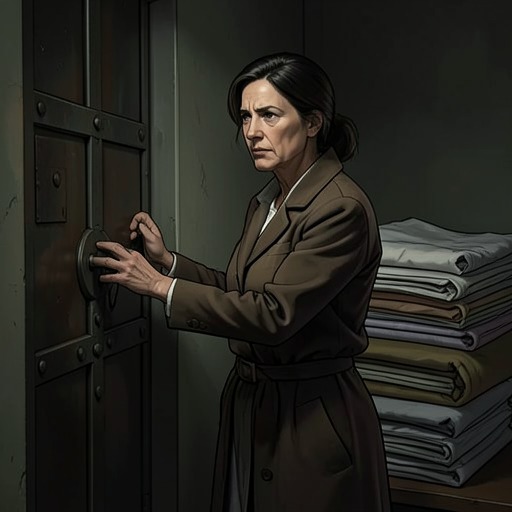
The clearest consequence appears at night. When Patton Oswalt tiptoed into the bedroom, trying not to wake her, McNamara sprang from bed, seized the lamp from her nightstand, and swung it at his head. She missed. In the morning, seeing the overturned lamp brought the episode back to her; she winced, felt around the covers for her laptop, and resumed studying police reports. The movement from alarm to renewed research gives the obsession its starkest shape: recognition of the disturbance does not end the work.
McNamara acknowledges The Social Worker’s warning about becoming consumed by the case, but describes their agreement to pretend they are only near the rabbit hole rather than already inside it. The phrasing makes their self-awareness part of the account without suggesting that awareness alone provides an exit. They can name the danger while continuing to investigate.
Reading the Offender’s Methods
The case files fed McNamara’s understanding of the East Area Rapist’s behavior beyond individual attacks. She saw a pattern of neighborhood reconnaissance: the offender favored certain single-story homes near open space, while reports recorded prowling, unauthorized entries nearby, missing small belongings, and a rise in hang-up calls in the blocks around a later attack. These details suggested preparation across several possible targets rather than a single, sudden choice. Her reading turned scattered reports into a model of how the offender studied residents and their routines.
She also traced how public knowledge of the attacks changed. Early reports showed little awareness; as the crimes became more widely discussed, victims recognized the threat and sometimes responded according to what they had heard about the offender. But increased fear did not necessarily produce mutual protection. Some neighbors, afraid, stayed inside and avoided drawing attention to themselves. McNamara’s attention to that shift links the offender’s methods to the neighborhood’s changing behavior: the same reports that helped her reconstruct the pattern also documented the spread of isolation and suspicion.
Shared Obsession and Its Paradox
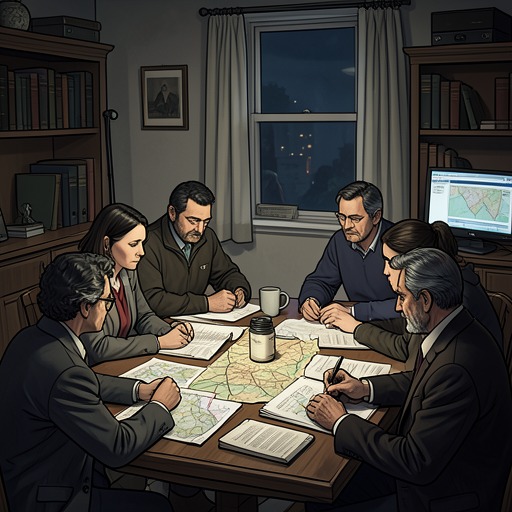
McNamara found a fellow investigator in The Kid, a meticulous amateur researcher whose attention to detail matched her own. In Florida, they met at a coffee shop and mostly discussed the case. Their shared command of its shorthand offered relief, but both seemed puzzled and self-conscious about how much of their attention it occupied. The Kid had assembled a 118-page Master List containing roughly two thousand men, with birth dates, address histories, criminal records, photographs where available, and an index. McNamara’s account of the document conveys the scale of the search without treating its scale as proof that it would succeed.
She also recognized an unsettling resemblance between seeking and the behavior under investigation. She reflected on the pull of searching itself, then noted that the investigators’ energetic pursuit mirrored the offender’s reported prowling: both involved repeated attention to places and details in the hope of finding a decisive connection. The parallel does not equate their purposes; it exposes how an investigation can borrow the compulsive form of the conduct it seeks to explain.
McNamara’s account therefore holds two truths together. Patient attention can make neglected evidence legible, but the same attention can colonize conversation, sleep, and judgment. Her continued return to the laptop after the lamp incident, and her recognition that the search had become a rabbit-hole obsession, leave the tension unresolved: the case demands sustained looking even as sustained looking exacts a personal cost.