Ongoing Trauma and Relationship Consequences for EAR Survivors
I'll Be Gone in the DarkThe ongoing trauma and relationship consequences for survivors of the East Area Rapist’s attacks emerge not as a single aftermath but as a range of lasting changes: fear enters daily routines, some spouses separate, and survivors must contend with other people’s assumptions about how they should respond. The book places these private consequences beside the records and encounters through which they become visible, showing how the damage can persist long after an attack and how testimony can be received with compassion or distorted by judgment.
Fear in Everyday Life
After Fiona Williams was attacked, she found herself stuttering, as the East Area Rapist had. Carol Daly brought female victims together at one of their homes, where they exchanged reassurance and accounts of how long it had taken them to feel safe enough to leave home. Daly played recordings of male voices, but Fiona did not remember any of the women identifying one. The meeting offered company without an easy resolution: the women could recognize one another’s struggles, but the recordings did not produce a clear answer.
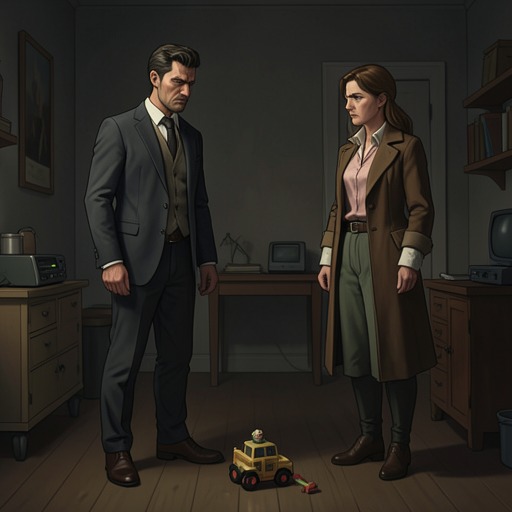
Fiona’s fear continued in specific, practical ways. At night she would not go to the back of the house, where the bedroom was, until Phillip Williams returned. She sometimes kept a loaded gun beneath the driver’s seat of her car. Nervous energy could turn an ordinary household task into a crisis: while vacuuming furiously, she blew a fuse, plunging the house and backyard into darkness. She became hysterical, and elderly neighbors who knew what had happened came over and fixed the fuse. The episode makes the reach of the attack tangible without suggesting that recovery followed a straight or predictable course; even the home’s familiar routines had become charged with fear.
The aftermath also shaped Phillip’s actions. During a break from work, he went to the home of another victim and introduced himself. He did not tell Fiona until years later that he and the other woman’s husband sometimes drove around together in the early morning, scanning yards and empty lots for someone moving along the hedges. Their shared experience was difficult to explain to anyone outside it. They searched for a man whose face they did not know, but the act of moving, looking, and doing something gave their distress a physical outlet. The book presents this bond as a consequence of the attack as well as a form of mutual recognition.
The Unseen Burden on Male Victims
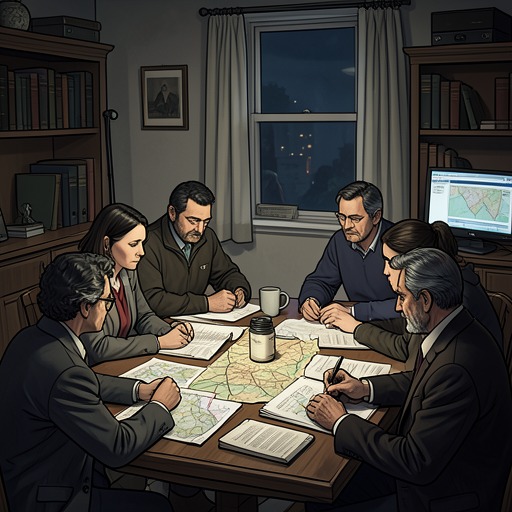
The book argues that male victims’ experiences could be overlooked even within the process of investigating the crimes. Paul Holes recounts contacting a woman in Stockton who had been attacked alongside her husband. Her husband initially said that she had put the experience behind her and did not want to revisit it; he agreed to pass along Holes’s questions, but no reply came. Months later, the woman contacted Holes herself and agreed to answer. She was willing to remember. Her husband, she conveyed, was the one struggling.
The contrast unsettles the assumption that the person who appears most ready to speak is necessarily the person least affected. The man had first presented himself as a protector of his wife’s wish not to revisit the attack, yet her later decision to respond showed that her silence had not been his to interpret for her. Holes’s account makes both people’s different responses part of the aftermath, rather than treating the husband’s silence as proof that the experience had passed.
The police files reflected the gender expectations of the victims’ generation, many of whom were born in the 1940s and 1950s, when therapy was largely unfamiliar. Investigators asked women where they shopped and men about locks on doors and windows. Women were given blankets and taken to the hospital; men were asked what they had seen, not what they had felt. Many of the men had military experience, sheds full of tools, and identities organized around doing and protecting. The attack could take away the very capacities those roles prized, while the questions asked of them left little room to describe that loss as emotional suffering. The book treats this pattern as an institutional blind spot: male victims’ trauma could remain present while the language used to document it made it harder to see.
Relationships After the Attacks
Kathy’s experience shows how trauma could persist inside a marriage and how later accounts could compound it. In his book about the case, Sudden Terror, Larry Crompton described her behavior during a police interview in a way that invited readers to judge her response, included unflattering details about her life afterward, and compared her appearance with that of other victims. The book’s narrator considers this treatment deeply insensitive and victim-blaming. In particular, Crompton presented Kathy’s request for water before complying with the attacker’s demand as an incongruous detail, without considering that asking for water might have been a way to delay. His pseudonym for her, Sunny, also clashed with the grim portrait he offered.
After the book appeared, Kathy emailed the Sheriff’s Office to protest how she had been portrayed. Although the office could not put her in contact with the retired Crompton, Holes and a female colleague invited her to meet them. Kathy was shaking and made little eye contact, which Holes understood as consistent with residual trauma. He had studied evidence from her case but had never met her before. At the meeting he asked few questions and let his colleague take the lead, a contrast to the earlier published account that had made Kathy’s response an object of judgment.
Kathy also told the investigators that she and her husband, David, had long since divorced. She said that after the attack David had thought he recognized the East Area Rapist’s voice, although he could not identify it. Their separation was part of a wider pattern: the book notes that many couples victimized by the East Area Rapist did not remain together. It does not reduce each breakup to a single cause, but it places the failed relationships among the consequences that continued beyond the crime scene. David’s uncertain recognition of the voice further connects private recollection to the unresolved search for the offender.
Homes Left Behind and the Record of Recovery
A survivor in Danville was driven home from the hospital after an examination but could not bring herself to leave the county vehicle. Investigators needed her to walk through the scene, and they gently explained why. She agreed to a brief walkthrough and then left. Friends later collected her belongings; she never entered the house again. The home remained physically available, but for her it was no longer a place she could return to. The distinction between completing an investigative task and being able to resume ordinary life is stark: cooperation did not mean that the house had become bearable.
Another female survivor, described in a case file as a young mother, sent the lead detective a note five months after the attack. It listed missing property and checks written over July and August, including jewelry taken from a bedroom chest drawer or dresser. Her tone was practical and resilient, and she expressed a hope that the information would be enough for investigators while she and her family tried to restore normal life. A later deputy’s note recorded that the family had moved out of Contra Costa County, to a city hundreds of miles away. Read together, the documents hold two facts at once: the survivor’s effort to manage the immediate details of a disrupted life, and the later distance between that life and the place where the attack occurred.
Across these accounts, recovery is neither a uniform process nor something that can be inferred from composure, silence, or cooperation. Fiona’s alarm in her own home, a husband’s unspoken search with another survivor’s spouse, Kathy’s anger at a published portrayal, and a family’s move away each register a different consequence. The book’s attention to those differences challenges accounts that treat victims as interchangeable or assume that a single visible response can measure what an attack has left behind.