December 4, 1992
I'm Still Here- What didn't kill me made me stronger and sharperDecember 4, 1992 is the date of Jensen Brick McCall’s survival after a failed late-term abortion, the event that binds his life to Grace McCall’s decision to save him and to the question of what his survival means. The date is more than a birth entry: it marks the beginning of a life that its birth mother expected to end, and a story Jensen later returns to in order to understand his own purpose.
The Day of the Birth
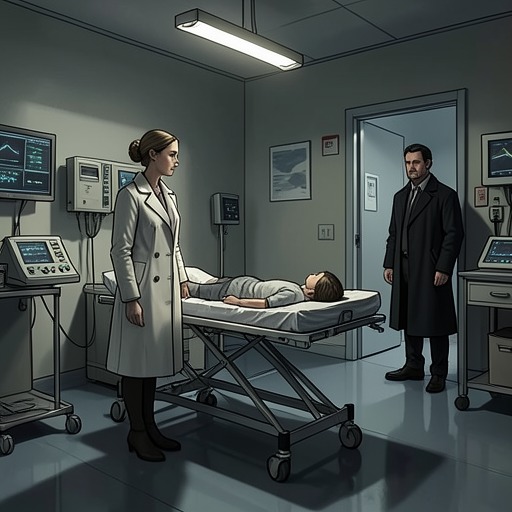
The account of December 4 begins in an abortion clinic, where twelve procedures were performed. Grace McCall covered a shift for an ill nurse and watched the infants left on a steel table. The weather was unseasonably warm, with rain and no snow, but the room was cold; the babies were frail and turning pale blue. As each hour passed, Grace checked for a heartbeat and recorded a time of death. Jensen, described as a brown baby with steel-gray eyes, was the one infant who continued to cry and move after eight hours.
The date’s significance is made concrete in the details of his condition. Grace wrapped Jensen in a receiving blanket, checked his breathing and lungs, and placed him on the Apgar scale, where he scored seven. He weighed five pounds and ten ounces and appeared healthy. In the account, December 4 is therefore not only the date attached to his birth but the day an expected death was interrupted by unmistakable signs of life.
Grace’s Decision and Jensen’s Name
Grace called Jensen’s birth mother, who refused to take him and said she wanted to forget him. After the call, Grace rocked the infant; he smiled and grabbed her thumb. She decided she could not leave him to die, took him home, and named him Jensen Brick McCall. The name Jensen was associated in her account with the meaning Jehovah has been gracious, turning the date into the beginning of an identity as well as a life.
That rescue carried a grave consequence: Grace created a birth certificate after having created a death certificate for the same child, then arranged for the birth certificate to be registered. Jensen later describes himself as the only person he knows with both documents. The paired records preserve the contradiction at the heart of December 4: the institution documented his death while Grace acted on the evidence that he was alive.
Grace’s choice also emerges against her own history and guilt. She had once been a sixteen-year-old who chose to end a pregnancy and had remained in work she hated, hoping to see one baby survive. Her plea for even one infant to live was answered, in her understanding, by Jensen. She later told him that babies did not survive such a botched abortion healthy, and repeatedly insisted that he had a purpose. Her religious interpretation gives the date the meaning of a miracle, although Jensen’s later questions show that being told he was destined for something great did not resolve what he had suffered.
The Date Revisited
The novel first presents Jensen’s encounter with his birth mother as a charged present-tense confrontation, then turns backward to the story of his birth. At the meeting, twenty-five years after December 4, 1992, he faces the woman who had expected him to be stillborn. His account of the date is inseparable from that encounter: he understands himself as someone whose mother knew he had survived and nevertheless rejected him. He also recalls that she blocked his attempt to contact her on Facebook, making the later face-to-face meeting another consequence of a history that began on the date.
Jensen’s language about the date is shaped by the distinction between biological survival and a lived life. He describes having survived when he was supposed to die, but also having endured homelessness, rape, foster care, and repeated losses. When he explains his story to Mama Pearl, he says his mother tried to abort him at twenty-six weeks, that he was left in a dark room, and that Grace saved him after his mother told the clinic to let him die. Mama Pearl recognizes him as her grandson. The birth story thus connects December 4 to a family relationship Jensen had not known and to the painful work of telling another person what the date means to him.
Survival and the Meaning of a Beginning
Grace’s assurances remain with Jensen, including her claim that his unusual survival and health marked him for a purpose. After her death, he continues to question whether a life marked by abandonment and suffering can be reconciled with that claim. The date supplies the origin of his life, but not an easy answer to the meaning of it.
Jensen eventually gives the date a more complicated place in his own story. He says his life began not on the day he was left for dead, but when he left Syracuse. That distinction does not erase December 4, 1992; it refuses to let the circumstances of his birth define the whole of his existence. The date remains the point from which his survival, his bond with Grace, and his search for his birth mother can be traced, while Jensen claims the later act of leaving as the beginning of a life he could shape for himself.