Doctor Jackson’s let-die order
I'm Still Here- What didn't kill me made me stronger and sharperDoctor Jackson’s let-die order is the clinic command to leave infants alive after failed late-term abortions and allow them to die without intervention. It turns a medical workplace into a place where staff are assigned to witness preventable deaths, and where the distinction between actively killing an infant and withholding care becomes the order’s governing logic.
The Directive and Its Circumstances
The order follows a day on which every infant was born alive and struggling after abortions failed. The procedures had begun with a solution injected into the pregnant patients’ veins and sticks inserted into their vaginas twenty-four hours before the expected delivery of a dead baby. When staff recognized that the infants were alive, one worker urged that their parents be told. The response was that this had been an abortion, not a birth requiring disclosure or care.
Doctor Jackson then directed staff to place the infants in a room and let death occur, specifically forbidding them from smothering the babies as had happened before. The stated distinction was that smothering would be considered murder on the staff’s part; leaving the infants on a table to die was presented as allowing what he called the inevitable. The instruction thus did not merely withhold treatment: it prescribed a method of nonintervention and attempted to define the limits of responsibility around it.
How the Order Was Carried Out
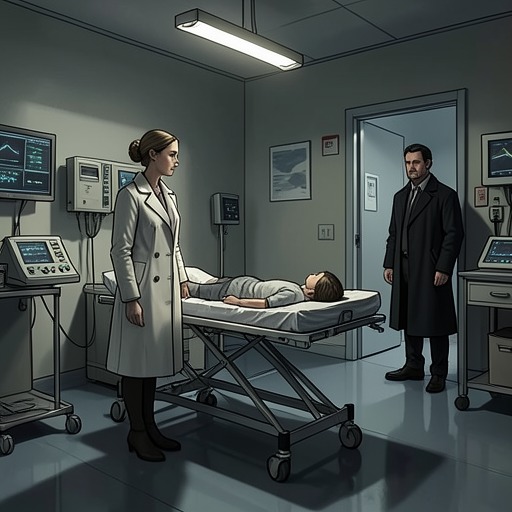
The order placed a nurse in the room as both witness and recorder. The room was set at twenty-five degrees; a large clock marked the passage of time while the infants’ small bodies trembled. Some were burned by the solution, others had broken limbs from the forceps or visible birth defects. The nurse watched their chests rise and fall, checked for heartbeats with a stethoscope, and documented each time of death. Some died within minutes; others remained alive for hours.
After each death, the nurse closed the infant’s eyes, dipped her fingers in water, traced a cross on the forehead, and prayed. She took Valium and Percocet to endure the guilt, while telling herself that nurses were expected to remain strong rather than cry for unwanted babies. The ritual of care continued even as the clinic denied the infants the care that might have kept them alive: a prayer and a mark of blessing followed the recording of death, while their bodies were wrapped in receiving blankets and placed in red hazardous-waste bags for disposal.
One infant survived that routine. After eight hours, the Brown baby was still crying and kicking; the nurse bundled him, checked his vital signs, and found his skin soft and richly colored. When the baby’s mother refused to take him, the nurse rocked him as he smiled and gripped her thumb. She chose not to let him die, took him home, and named him Jensen Brick McCall. The order’s logic had treated survival as an interruption to be contained; her decision made the surviving child the beginning of a life beyond the clinic.
Responsibility and the Order’s Afterlife
The directive’s claim that death was inevitable sits uneasily beside the nurse’s account of repeatedly watching infants die and longing for one to survive. She had once been a sixteen-year-old who chose to end a pregnancy, and she remained in a job she hated in the hope of witnessing a different outcome. That history does not erase her participation in the clinic’s routine: she watched, recorded deaths, and helped dispose of the infants’ bodies. But it makes her presence inside the room a conflict between institutional obedience and the possibility of care, rather than detached observation.
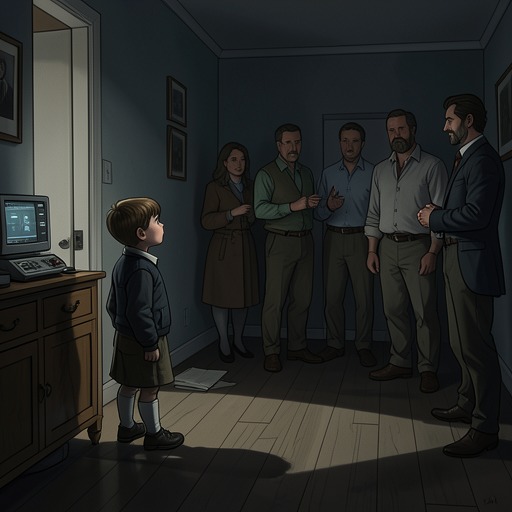
The order’s consequences extend beyond the clinic because its refusal to recognize a living infant as someone entitled to care shapes Jensen’s understanding of his own beginning. As an adult, he describes surviving a botched abortion after being left in a dark room on a table to die, and identifies his birth mother as his “murderer.” He also names Grace McCall, the nurse who first cared for him, as the person who saved his life. The contrast exposes the order’s practical limit: it could direct staff to treat survival as an event to wait out, but it could not determine whether an individual would respond to a living child with care. Jensen’s later account turns that refusal into the starting point of his search for purpose, giving the clinic’s decision an afterlife in the story as both a source of lasting injury and the circumstance against which his survival is measured.
A Rule Repeated Beyond One Day
The account places the order within a larger clinic routine rather than presenting it as an isolated crisis. On December 4, twelve abortions were performed; the infants were six Black, five white, and one Hispanic. The nurse was covering the shift because Veronica had fallen ill. The day was cold and rainy, without snow, yet warmer than usual—a detail that sits beside the clinic’s deliberate room temperature of twenty-five degrees and the clock by which each infant’s remaining time was measured.
The nurse’s account also makes clear that the directive did not end with this group of infants. She had stayed in a job she hated hoping to witness a surviving baby, while day after day the rows of infants died. That repetition gives the order its force as a rule: it converts a decision about living infants into a procedure the staff are expected to carry out again. Jensen’s survival breaks that pattern, but the account presents it as an exception within a practice that had already taught the nurse to expect death.