Inya
I'm Still Here- What didn't kill me made me stronger and sharperInya is the therapist who becomes central to Janae’s recovery from drug addiction, self-harm, shame, and emotional dependence. Her authority does not come from distance or moral purity: she discloses that she once smoked Sherm and crack, married a drug dealer, lost her nine-year-old daughter to violence while she was asleep after a crack binge, attempted suicide, entered a psychiatric ward, became sober, and went to college. By turning catastrophe into a life devoted to helping others, Inya gives the novel a model of recovery grounded in accountability rather than judgment.
Identity and Introduction
Inya first appears as a tall, slender woman with dreadlocks wrapped in a white cloth, a sleeveless linen dress, white wedges, an exotic-flower scent, sand-colored skin, and a nose ring. The details make her visually distinctive, but her setting also establishes a deliberate contrast with the institutions and hostile public spaces that have shaped Janae’s life. Her office contains her degrees and a photograph of herself with Maya Angelou, while its atmosphere gives Janae calm and creative inspiration. Inya is therefore introduced not merely as a medical professional but as a woman whose education, artistic sensibility, and survival history coexist.
Her first direct offer is simple: she tells Janae that her name is Inya and asks whether Janae wants help. Janae’s guarded response is that she does not want to be judged or criticized. Inya does not dismiss that fear, but she refuses to make treatment a passive refuge from consequences. She explains that she has chosen Janae as a client because her sister, who was Janae’s nurse, begged her to take the case. Inya is already fully booked, so continued treatment depends on complete honesty, including honesty with oneself; one lie will end the professional relationship, and Janae must genuinely want help rather than waste their time.
Method of Recovery
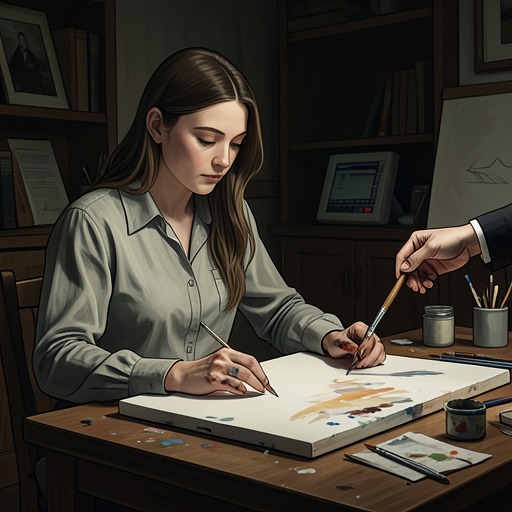
Inya makes treatment concrete through a negotiated exchange: Janae will paint a portrait of Inya’s daughter as payment. The arrangement links therapy to Janae’s artistic ability without reducing art to a decorative talent. Painting becomes a form of work, attention, and testimony, while Inya’s daughter remains present as both a loved and murdered child. Inya’s practice thus joins psychological care with creative labor and the unresolved obligations of grief.
Her guidance repeatedly separates a problem from the person carrying it. When Janae is burdened by the belief that Robert Walters has defined her as bad energy, Inya makes her repeat, “I am not bad energy.” The exercise does not erase the social insults, betrayal, or addiction that produced the label; it challenges the label’s claim to describe Janae’s essence. Inya asks Janae to say it until she believes it, treating language as a way to replace an imposed identity with one Janae can inhabit.
Inya also gives Janae a practical account of relapse and attachment. She says that a wounded heart can drive recovering addicts back to drugs more powerfully than many other triggers, and she advises Janae to stop trying to control Jensen’s feelings, give him space, and control her own reaction. Her counsel recognizes that Jensen is healing too and that intimacy can become dangerous when it is made responsible for repairing every prior loss. Recovery therefore requires both emotional connection and boundaries.
A Survivor Who Becomes a Witness
When Janae assumes that Inya grew up privileged, Inya corrects her with an account of life in the projects in Watts, drug use beginning at eighteen, marriage to a drug dealer, and the death of her daughter during a violent intrusion aimed at her former husband. She identifies herself as a bad mother during the period when she was strung out and recalls several attempts to take her own life before becoming sober and dedicating herself to saving others. Her disclosure prevents therapy from becoming a one-way lecture from an untouched expert. Inya knows the seduction of drugs, the shame of parental failure, suicidal despair, and the permanent shape grief gives to ordinary life.
Yet she does not use shared pain to excuse Janae. Inya’s history makes her more demanding, not less. She has converted guilt into responsibility by treating recovery as an obligation owed to the daughter she could not protect. Her past functions as evidence that survival can become a practice rather than a sentimental conclusion: sobriety, education, professional service, and honest confrontation are the forms her mourning takes.
Confronting Victimhood and Relapse
Inya later meets Janae at Starbucks, wearing a flower shirt and black joggers, with her dreadlocks tied in a ponytail. The new setting places their therapeutic exchange amid the morning rush, coffee, servers, aspiring writers, and business meetings, making recovery part of ordinary public life rather than a sealed clinical ritual. Across the table, Inya tells Janae to stop evading the truth: Janae is afraid of no longer being the victim and of having to rescue herself from hell. Jensen cannot save her because the addiction belongs to her responsibility.
Inya’s intervention becomes sharper when Janae believes that Jensen’s anger proves he hates her. Inya distinguishes anger from hatred and points to the care still visible in his actions. She describes Jensen as a man who is himself afraid to love because of the losses in his life, and later tells Janae that it is rare to find someone who remains beside a person fighting addiction, guilt, and grief. Her interpretation does not promise that love will cure Janae. Instead, it identifies love as a difficult condition under which Janae must still choose honesty and recovery.
Inya supports this point by recounting her own relapse history. She says that she relapsed twice, stole her husband’s credit card, and took a ten-thousand-dollar cash advance even while her life appeared to be improving: she was passing classes with A grades, making the honor roll, and feeling better about herself. Fear of success and the belief that her new life was too good to be true led her to destroy what was improving. Her experience gives Janae a precise account of self-sabotage: recovery can be frightening not only because of pain, but because stability exposes the possibility of having something to lose.
Narrative Role and Significance
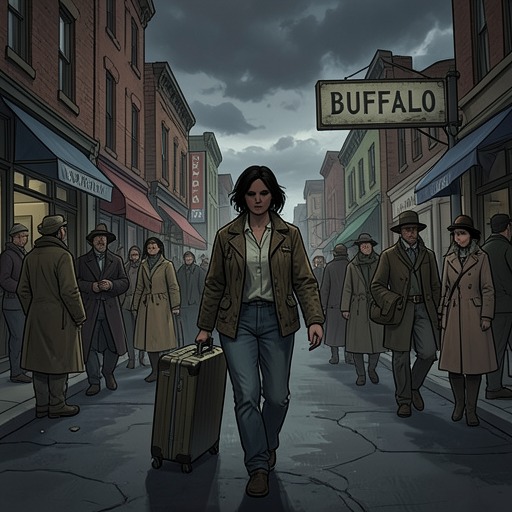
Inya is a counterpoint to the figures who define people through stigma. Robert Walters publicly casts Janae as a distorted, drug-using woman who seduced him, while Buffalo’s elite women and bystanders turn her body, sexuality, and reputation into reasons for exclusion. Inya does not deny Janae’s drug use or self-harm, but she refuses to make those facts the whole person. Her method combines truth-telling with recognition, asking Janae to admit what she does while also rejecting the verdict that she is inherently contaminated.
Her role also parallels the novel’s broader transformation of “murderer” and “victim.” Jensen calls his birth mother his murderer because she attempted to abort him at twenty-six weeks and then ordered that the surviving infant be left to die; nevertheless, his later life turns survival into purpose. Inya offers Janae a related vocabulary of transformation. She is a mother marked by the death of her child, an addict marked by relapse, and a survivor marked by suicide attempts, yet none of those descriptions remains her final identity. By the time the story reaches the Christmas birth of Grace Pearl McCall, the family’s language of murder, survival, and care has changed: Jensen calls the woman who once tried to end his life his mother, while Inya’s therapeutic work has helped make possible the honesty and self-responsibility through which such changes can occur.