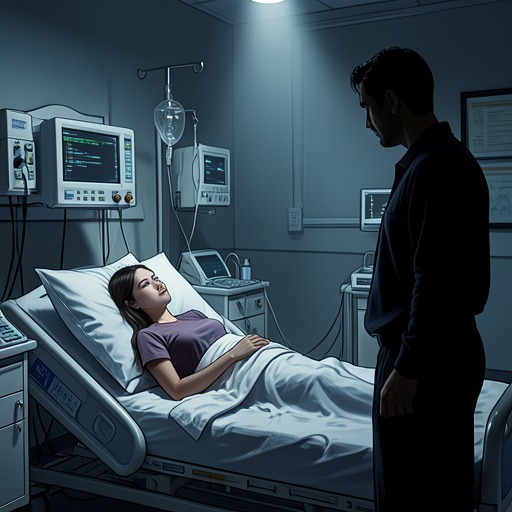
Janae's Addiction and Self-Harm Recovery Plan
I'm Still Here- What didn't kill me made me stronger and sharperJanae's Addiction and Self-Harm Recovery Plan gives practical structure to Janae Morrison’s effort to heal from addiction and stop cutting herself. Developed through counseling with Inya, it joins a clear therapeutic agreement to peer support, sponsorship, and day-by-day choices. Its defining premise is that recovery is neither effortless nor secured by a single promise: Janae must be honest about setbacks and reach for help when the urge to use drugs or harm herself returns.
Goals and the counseling relationship
When Inya asks what Janae expects from counseling, Janae identifies three linked aims: “Healing, to stop using drugs, and not cutting myself.” Her answer makes the plan’s scope explicit. It addresses both substance use and self-harm, while placing healing—not merely the suppression of an immediate behavior—at the center of the work.
Inya first offers help without assuming Janae is ready to accept it. Janae responds that she does not want to be judged or criticized, naming a condition that could otherwise keep her from speaking openly. Inya’s office is presented as calm and creatively inspiring to Janae, who is an artist; the setting offers a contrast to the shame and distress surrounding the problems she brings into counseling.
The arrangement has concrete terms. Inya says that her sister, who had been Janae’s nurse, urged her to take Janae on despite a full client schedule. She requires complete honesty, both for the counselor and for Janae herself, and warns that a lie will end the counseling relationship. Janae must also genuinely want help. In return, she will paint a portrait of Inya’s daughter as payment. This agreement makes trust and participation part of the plan rather than assuming that attendance alone amounts to recovery.
Honesty, shame, and self-understanding
The honesty rule is consequential because Janae’s recovery unfolds alongside a painful sense of being rejected and judged. In counseling, she describes uncertainty about her relationship with Brick: he can show affection and then withdraw, leaving her unsure whether to give him space or keep focusing on her own life. Inya advises her to work on her life and recognize that she cannot control how Brick feels, only her own response. She also warns that a wounded heart can become a route back to drugs for people recovering from addiction. The plan therefore treats emotional distress as a recovery concern, not as a separate matter with no bearing on Janae’s safety.
Inya also directly challenges Janae’s identification with the idea that she is bad energy. She asks Janae to repeat, “I am not bad energy,” and to continue until she believes it. The exercise does not erase the rejection and grief that have shaped Janae’s self-image; it supplies a counterstatement she can practice instead of accepting that damaging label as her identity. In the plan’s terms, recovery involves changing how Janae responds to painful beliefs as well as changing what she does when distressed.
Daily practices and peer support
Inya presents recovery as a continuing process. She says that she relapsed three times before getting clean, acknowledges that urges and “pipe dreams” can persist, and describes calling her sponsor, attending Narcotics Anonymous meetings, and meditating as practices she uses to maintain sobriety. Her account places expertise in lived experience rather than in a claim that recovery is simple or complete. She tells Janae that the work proceeds one day at a time.
The plan gives Janae an immediate support route: Inya becomes her sponsor, and Janae is told to contact her when an urge hits or come by her home. Inya urges her to do whatever is necessary to avoid getting high or cutting herself. This response turns the broader goal of recovery into a concrete action at a moment of risk: reach another person rather than face the urge alone. Inya emphasizes that she will remain involved and does not treat Janae’s difficulties as grounds to abandon her.
Support also has a regular communal form. Inya and Miguel facilitate Narcotics Anonymous meetings at the office on Thursdays at 6 p.m. Janae is expected to attend and bring a dish; Inya specifies that the gathering is a nonjudgment zone and that no pork is allowed. The details give the meetings a recurring time and place, while the stated atmosphere answers Janae’s fear of criticism. Inya’s closing instructions to practice self-care and speak life extend the plan beyond crisis response into the everyday language Janae uses about herself.
Setbacks, persistence, and the plan’s meaning
Janae’s progress is not presented as a smooth ascent. At one point she sobs that she keeps messing up and admits she thought she could stay strong. Inya rejects the expectation that recovery should be easy, describes her own relapses, and returns to the plan they have made: Janae can contact her, visit her, and take step-by-step action to avoid both drug use and self-harm. Janae fears that Inya will quit on her; Inya answers that she is in for the long haul. The exchange shows the plan under pressure: its commitment is tested not by the absence of setbacks but by what happens after Janae acknowledges one.
Later, Janae worries that Brick is done with her. Inya responds by sharing her own history of relapse and the fear that had led her to damage a life that was beginning to improve. She describes recovery as requiring continued effort and tells Janae that Inya facilitates the Thursday meetings with Miguel. The self-disclosure connects counseling to a lived example, while the meeting invitation returns the conversation to specific support rather than leaving it at reassurance.
The available ending does not certify that Janae has permanently stopped using drugs or cutting herself. A later account places her in family life as Brick’s wife and the mother of their daughter, Grace Pearl McCall, and says that Janae’s art is selling for six figures. Those later circumstances show a life that has expanded beyond the immediate crisis, but they do not by themselves establish the outcome of every part of her recovery. The plan’s clearest significance lies in its repeated, practical commitments: tell the truth, seek help, attend meetings, resist the urge one day at a time, and do not let a setback become proof that recovery is impossible.