Janae's Cocaine Relapse and Recovery Crisis
I'm Still Here- What didn't kill me made me stronger and sharperJanae Morrison's Cocaine Relapse and Recovery Crisis is the turning point at which Janae Morrison's concealed cocaine use breaks her relationship with Jensen Brick McCall, then becomes a crisis she confronts by asking for help. The sequence moves from a private discovery to separation and a near-return to drugs; its decisive reversal is not an instant cure but Janae's choice to call Jensen and leave a dealer's car without getting high.
Background and Vulnerability
Janae's relapse takes place against a history of painful relationships and efforts to recover. She has been working with Inya, who introduces herself as someone willing to help if Janae wants it. Janae says she fears being judged or criticized, a concern that makes the possibility of admitting her drug use especially fraught. In another session, Inya rejects the idea that Janae is bad energy and asks her to repeat that she is not. The affirmation offers an alternative to the shame through which Janae interprets her difficulties, but it does not mean the underlying struggles have ended.
Janae later explains that she uses cocaine to forget that her mother does not love her and to escape memories of her mistakes. The relapse is therefore connected, in her own account, to emotional pain rather than presented as an isolated lapse. The crisis also unfolds in a relationship built on disclosure: Jensen has shared his past with her, and she understands honesty as central to the trust between them.
Discovery and Breakup
After Janae and Jensen have sex, Jensen notices aluminum foil on the bed as she gets up and goes to the bathroom. Inside is a white substance, which he recognizes as cocaine. He runs to confront her. Janae has wiped her nose, and cocaine is visible on the sink. When Jensen asks whether she is still using or had never stopped, she acknowledges that she has been using, then struggles to explain that she had stopped but has returned to it.
Janae flushes the cocaine down the toilet, but getting rid of what is immediately in front of her does not repair the breach between them. Jensen says he is ending the relationship because she lied after he had made clear that honesty mattered to him. Janae responds that overcoming addiction is not easy, that she uses to take the edge off, and that she is trying. She also says she thought she could hide her addiction and does not know how to stop. Jensen rejects the suggestion that he is abandoning her because of the difficulty of recovery: he sees her concealment and continued use as the immediate rupture, and says the lie, rather than a truthful admission that she had not stopped, is what he cannot accept. He leaves, invoking the healed cuts on her arm and the trust she had shown him as part of what makes the situation painful.
Janae gives Inya a direct account of the breakup: she and Jensen had sex, he found cocaine in the bed, and he left. Inya asks whether Janae relapsed or had never stopped. Janae clarifies that she relapsed two weeks earlier, after finding a stash in one of her suitcases while painting and thinking about it before using. Asked whether she is high at that moment, she says yes and describes herself as a failure. The disclosure establishes that the discovery was not the beginning of her return to cocaine: the use had already resumed, concealed from Jensen, for two weeks.
The Near-Use and Call for Help
After the breakup, Janae's craving becomes an immediate risk. Her hand trembles, and she considers getting cocaine as a way to temporarily erase the love she still feels for Jensen. She tries to call Inya, but reaches voicemail. While she is five minutes from home, she is close to buying drugs; a police car pulls up beside the car, where an officer looks at both Janae and the driver. The scene holds together her isolation and the availability of help: she is near a dealer, but she still has Jensen's number.
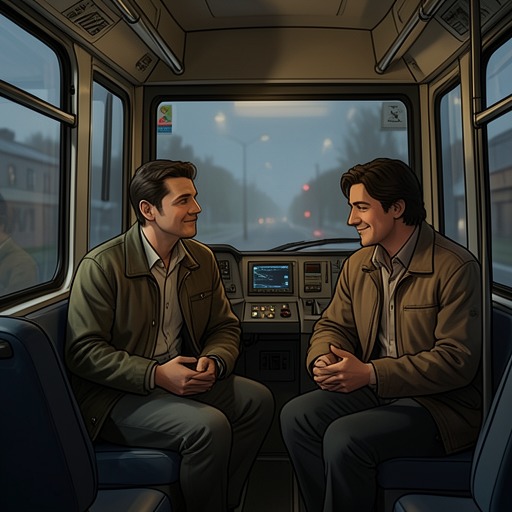
Janae calls Jensen and admits that she lied about defeating her addiction and has been sabotaging herself. She tells him that a dealer is trying to sell her drugs and that she is fighting hard to resist. Her voice trembles as she sobs. Jensen asks whether she is in the white car and tells her to get out. He is waiting beside Ginger Pearl's car, with his arms folded, wearing a baseball cap turned backward and sunglasses. Janae steps away as the other car drives off. She has not used; she describes herself as having defeated the demon in that moment and stands in front of the person she calls her hero.
Janae's appeal does not instantly undo the breakup or settle the question of trust. It does, however, change what she does when craving and access converge: rather than continuing toward a purchase, she names the danger to Jensen and follows his instruction to leave the car. Her subsequent report that she has spoken with Inya makes clear that the next steps are practical as well as emotional. Inya has suggested Narcotics Anonymous meetings and possibly a stay in rehabilitation, and Jensen tells Janae he is there for her whatever approach works.
Consequences and Significance
The crisis exposes two related but distinct problems: Janae's cocaine use and the concealment that prevents Jensen from knowing what she is facing. His departure follows the lie, while the later call depends on a more candid admission of risk. That contrast makes the scene a test of the relationship's stated value of honesty, not a simple claim that love alone can overcome addiction. Janae's call gives Jensen a chance to help her avoid using, but the evidence also points toward continued support through Inya, meetings, or rehabilitation rather than a completed recovery.
The episode's longer horizon is more hopeful without erasing the crisis. One year later, on Christmas Day, Janae gives birth to Grace Pearl McCall; Jensen describes Janae as his wife, best friend, and family. The later family life establishes that the breakup was not their final outcome, but it does not turn Janae's relapse into a resolved problem by itself. Within the crisis, the more concrete sign of change is smaller and harder won: when she is close to buying cocaine, she asks for help, gets out of the car, and does not get high.