Jensen's First Confrontation with His Birth Mother Gloria
I'm Still Here- What didn't kill me made me stronger and sharperJensen’s first confrontation with his birth mother, Gloria Simpson Picou, is the moment his search for the person he calls his murderer becomes an actual encounter—and a demand for the truth about his survival. At Gloria’s California home, he brings the death certificate that records the attempted termination of her 26-week pregnancy. She had known he survived and had still told those caring for him to let him die. The meeting makes that history impossible for either of them to keep at a distance, while revealing that the circumstances of his conception carry another buried violence.
The Journey to Gloria’s Door
Jensen arrives after leaving Syracuse, New York, determined to find Gloria and obtain an explanation. The encounter begins not with a conversation but with fear taking hold of his body: his hands shake, his teeth chatter, his skin turns clammy, and each step toward the house seems to cost him breath. He wants to turn back, yet insists on facing her and letting her see him alive. His physical dread gives the search a clear stake: he is not simply looking for information about his birth, but confronting the person whose decision, as he understands it, placed his life in danger before it began.
The house sharpens the contrast between Gloria’s life and the childhood Jensen believes she denied him. He sees a white picket fence, a small garden, a two-story brick house with a porch, and a driveway holding a minivan and a BMW. These details stand against his memories of rundown projects, trash-strewn streets, and gardens littered with crack vials and dirty needles. The setting is not merely a backdrop to their meeting; for Jensen, it makes visible the difference between the home he was refused and the family life he sees Gloria has built with her other children.
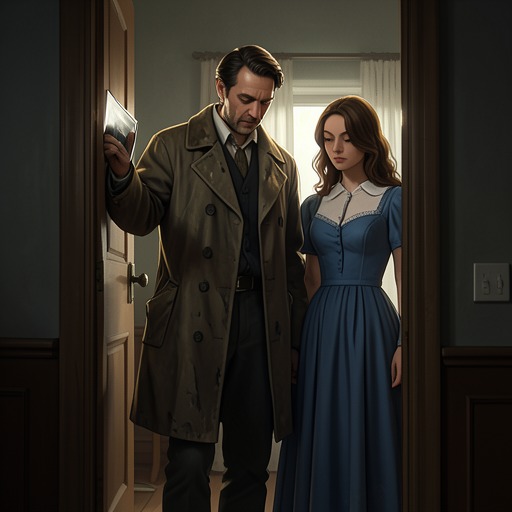
At the door, Gloria peers through a window before opening it. Children can be heard laughing and shouting inside. Jensen is six feet five, with a complexion resembling hers and steel-gray eyes. She initially treats him as a stranger asking for help, although he believes she knew he had survived. He confronts her, then hands over the death certificate. Its record identifies the baby as John Doe 3524 and gives the cause as code P96.4, termination of pregnancy at 26 weeks; Gloria’s name appears on the document. Reading it, she begins to cry, trembles, and steps outside, closing the door behind her. The certificate has made the hidden history tangible: the son she expected not to live is standing in front of her, alive and able to demand an account.
The Accusation and the Record of Survival
The document carries particular force because Jensen’s survival depended on someone acting against the decision he attributes to Gloria. He says that Grace McCall, the nurse who cared for him, told Gloria that he was still alive, and that Gloria instructed the staff to let him die. Jensen describes being left on a table in a cold, dark room after an eight-hour struggle for life. In the confrontation, he presses Gloria to answer for that choice, not to offer affection as a substitute for explanation. He tells her he does not want her love, hugs, respect, or embrace; he has lived without them for twenty-five years and says he has stopped wanting her in his life. What he demands is a reason for why she did not want him.
His refusal to leave until he receives an answer makes the encounter a contest over who will control the account of his beginning. He drops his duffel bag beside his seat and folds his hands as Gloria sits next to him. When she touches his hand, he jerks away and turns aside. He fears that looking into her eyes might bring understanding and forgiveness before he is ready to face either. He sees guilt in her expression, but the recognition does not quiet his anger. His own feelings pull in opposite directions: he is furious at the woman who rejected him and still longs for the love of the mother before him. The scene does not resolve that struggle simply because they are finally together.
The record of Jensen’s birth and survival has already become part of how he understands his identity. He calls himself the only person he knows with both a death certificate and a birth certificate, and frames his life as having continued when death was expected. That belief is not abstract in the confrontation: Gloria must face the living person behind the paperwork, while Jensen must decide what the facts mean for his future. He says the past has occupied his dreams and thoughts, and that he travelled from Syracuse to California for resolution so he could move on.
Gloria’s Explanation
In the extended conversation, Jensen repeats that he needs an explanation for why Gloria did not keep him and asks whether she told Grace, when he was nine, that she wished the nurse had let him die. Gloria answers that she did. She says she hates herself for lacking the courage to love him simply because he was her son and apologizes. Her admission confirms the painful belief Jensen has carried, but truth does not immediately bring relief. Overwhelmed, he throws the bottle of water across the yard, where it bursts against the concrete. He experiences the gesture as an attempt to erase the love he still feels from the knowledge that she had wanted him dead.
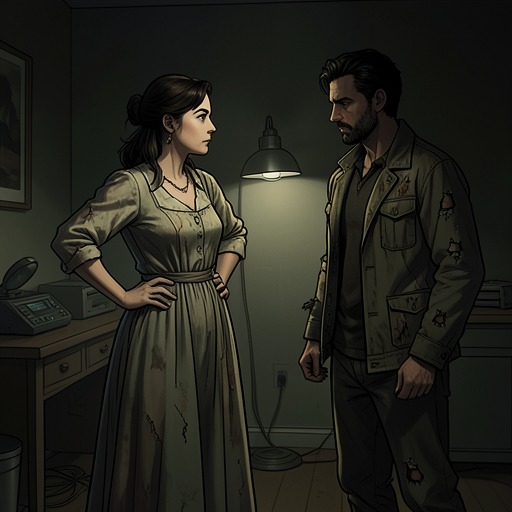
Gloria’s account then changes the meaning of the pregnancy without undoing the harm of her decision. She says she was seventeen, was not ready to become a mother, feared her own mother’s reaction, and had told only Jensen’s father, who gave her the money for the abortion. She had not expected the baby to survive or to be healthy. Jensen’s question about why she did not want him receives a more complicated answer when Gloria explains that she had been sent to Brooklyn to live with her sister and brother. Her brother, Henry, sexually abused her for months; she says he took her virginity and fathered the baby. Henry is therefore both Jensen’s uncle and biological father. Gloria says that seeing Jensen reminds her of that assault, while insisting that what happened was not his fault.
The disclosure does not cancel Jensen’s abandonment or make their histories interchangeable. Instead, it reveals a chain of violence and silence that neither the death certificate nor his accusation alone could convey. Gloria’s explanation gives context for her fear and pregnancy, while her admission that she told the carers to let him die remains part of the same encounter. Jensen receives the truth he demanded, but he cannot absorb it as a clean resolution: his shock and anger persist alongside the possibility of understanding.
Aftermath and Significance
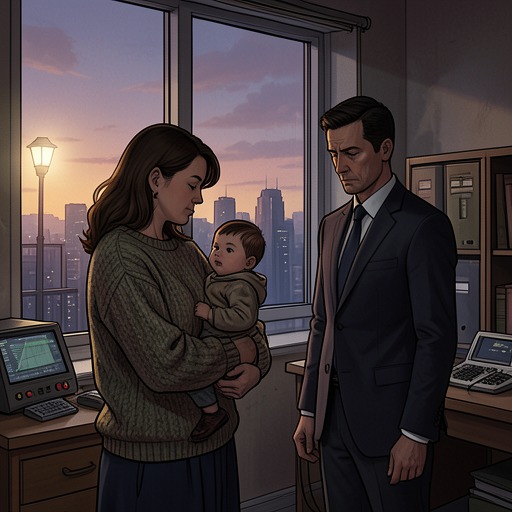
The confrontation belongs to a larger history of bereavement and guilt that follows Jensen from Syracuse. He has lost Grace McCall, whose care and teaching helped him survive, and Chyna, the friend he regarded as a sister. Chyna and her son, Mortez Payne, are murdered after gang members suspect her of informing on them. Jensen carries guilt over failing to save them; after finding their bodies, he reports the crimes to Detective Dartes. His decision to leave and seek Gloria is connected to this burden: he wants to honor the dead, escape the past, and understand why his own life continued when he had once been expected to die.
The meeting also sets a limit on what an explanation can accomplish. Jensen comes prepared to reject affection and leave Gloria behind once she answers him; instead, the encounter exposes a bond neither anger nor history can immediately sever. Later, he tells Ginger Pearl that his mother tried to abort him and ordered that he be left to die, and Ginger Pearl recognizes him as her grandson. That retelling shows how the confrontation’s revelation enters a wider family history rather than remaining a private exchange between mother and son.
The story’s later Christmas scene gives the meeting a consequence that its first emotional terms could not predict. Jensen is then part of a family with his wife, Janae Morrison, and their daughter, Grace Pearl McCall. He describes Gloria as his mother, and says he gives her a kidney so she can watch her other children grow up. The man who once demanded only an explanation has come to take part in her life and help preserve it. This later reconciliation does not erase the attempted abortion or the years of abandonment; it shows the distance between the first encounter, defined by accusation and refusal of touch, and a future in which the relationship can be rebuilt. The confrontation matters because it forces survival, guilt, and inherited trauma into the open, making truth the first condition of a family connection that Jensen once believed he needed to end.