Miracle Baby
I'm Still Here- What didn't kill me made me stronger and sharperMiracle Baby is the name Grace McCall gives Jensen Brick McCall after he remains alive for eight hours in a clinic where newborns are expected to die following late-term abortions. The phrase marks a literal reversal of the clinic’s intended outcome, but it also becomes a spiritual explanation for Jensen’s survival and an expectation that he will fulfill a purpose. The novel holds those meanings in tension: survival is celebrated as a gift, yet it does not spare Jensen from abandonment, loss, or the question of what such a gift demands.
The Birth and the Naming
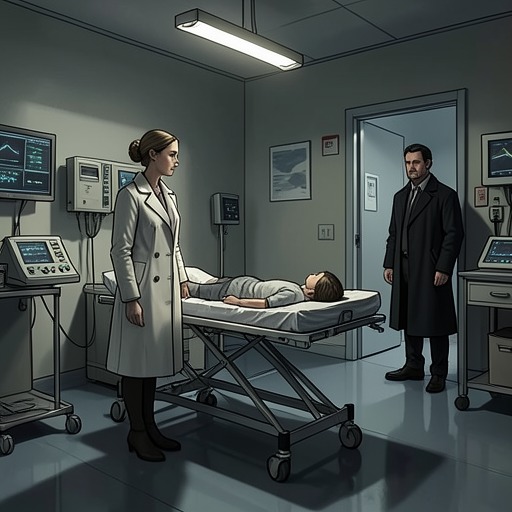
The account is set on December 4, 1992, during a shift Grace covers for a sick nurse. Twelve abortions have been performed. The babies are laid in a row on a steel table, and Grace watches their breathing and records their deaths as one after another stops moving. She has assisted with late-term abortions before, and the work carries a personal weight: she had made a similar choice at sixteen. Her prayer that even one baby might live gives the scene its central hope, set against a process organized around waiting for death.
The surviving infant is described as a brown baby with silver-gray eyes. After eight hours, he is still breathing and moving. Grace checks his condition, finds him healthy, and sees in that unexpected survival the answer to her prayer. The scene supplies the concrete basis for the name: not a general claim that Jensen’s life will be easy, but the extraordinary fact that he lives when the other babies in the room do not.
When Grace contacts his mother, the woman says she wants the baby to die and denies having had a child. Grace rocks the infant, then decides she cannot leave him to die. She wraps him in her coat, takes him home, names him Jensen Brick McCall, and creates a birth certificate. The phrase Miracle Baby therefore begins in an act of rescue as well as in the infant’s survival; Grace turns the moment of abandonment into the beginning of a home and a name.
Faith, Guilt, and Purpose
Grace understands Jensen’s survival through religious language. She believes God has chosen him to live for a purpose and tells him that babies do not normally survive a botched abortion in good health. In her account, the solution used in the procedure changed the color of his eyes, but he had no cerebral palsy or seizures. The eyes that first make his survival vivid to her become part of the story she repeatedly tells him: he is a miracle, and his life is meant to touch others.
That faith does not erase Grace’s guilt. She describes herself as a murderer for having watched babies die, prays over them, and struggles with the knowledge that she saved only Jensen. Her religious interpretation is thus both consolation and burden: it gives his survival meaning while keeping the suffering and deaths that preceded it in view. The miraculous outcome depends on a nurse acting against the routine she has been ordered to follow, not on the clinic itself changing its practice.
As Jensen grows up, Grace’s insistence that he has a purpose becomes one of her defining messages to him. It is also her final counsel before her death. For him, however, the message does not settle the question. He wonders whether his purpose could be to suffer through foster homes, abuse, and repeated losses, and asks how a person can make sense of being unwanted by the mother who had him. The contrast between Grace’s certainty and Jensen’s doubt keeps Miracle Baby from functioning as a simple promise that survival guarantees happiness.
A Story Recalled Through Loss
Jensen frames his life as a search for meaning in the face of survival that often feels like mere continued existence. He says his life did not begin on the day he was left to die, but later, when he left Syracuse; he describes homelessness, rape, and being dismissed as a foster child. He presents the story as something that might help another young man who wonders why he is still alive when death seemed close. In that framing, Miracle Baby is not only an origin story. It is the beginning of a testimony offered to someone else who is trying to find a reason to keep going.
The name also stands beside later losses rather than replacing them. Jensen remembers Chyna as someone he loved who saw him as a brother, and grieves that he could not save her. He recalls friends who treated him as human when they gave him dry clothes and food after he was put out of a home. Their deaths intensify the irony of being the one who survives: other people die, while he describes himself as the one still here. The miracle is therefore measured not only by the fact of his birth, but by the painful accumulation of lives he could not protect.
Recognition and Continuing Meaning
The story’s meaning shifts when Ginger Pearl recognizes Jensen as her grandson. Before that recognition, she keeps a photograph of him as a baby among pictures in her Bible and gives thanks that she has found him. Later, when Jensen explains that his mother tried to have him aborted and that Grace saved him after his mother told the clinic to let him die, Ginger Pearl recognizes the family resemblance and understands that the man before her is the baby from the picture. The name’s private history becomes a family history: the child Grace rescued is also a lost grandson who has been found.
Miracle Baby thus links physical survival to several kinds of care: Grace’s decision to take Jensen home, the stories she tells him about his worth, and Ginger Pearl’s recognition of him as family. At the same time, the book does not make those connections a cure for everything that followed. Jensen’s question about purpose persists beside the religious assurance that he was chosen, and the phrase carries both the warmth of being saved and the unresolved pain of having first been rejected. Its significance lies in that double meaning: he survives against expectation, but must still build a life in which survival can become more than an explanation for why he is here.