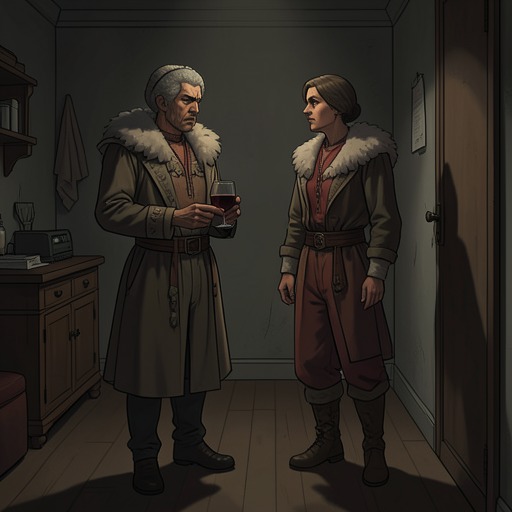
Robert Walters Is Shot and Killed by Elizabeth Walters
I'm Still Here- What didn't kill me made me stronger and sharperRobert Walters Is Shot and Killed by Elizabeth Mourning-Walters becomes known through a sequence of reports and disclosures rather than a directly narrated shooting. The first account calls Robert’s head wound self-inflicted; Elizabeth later admits to shooting him. Her confession recasts the death as the violent culmination of a marriage marked by affairs, lies, and damage that extended beyond the couple.
The News and Its Contradiction
The killing reaches Jensen Brick McCall and Janae Morrison while they are together in Los Angeles, caught in traffic among honking cars and the haze of smog. After they kiss, Janae checks her phone and learns that Robert has been found dead with a single wound to the head, initially described as self-inflicted. The intimate moment is abruptly overtaken by the news: Jensen sees Janae’s distress and asks what is wrong.
The account then shifts from the first report to the disclosure circulating on social media. Robert’s photograph appears beside memorial posts, while the story attached to his death names Elizabeth as the person who shot him. News coverage reports that she confessed, making the initial description of a self-inflicted wound difficult to reconcile with her admission. The narrative presents both versions without explaining the discrepancy; its emphasis falls on how the confession changes what those around Robert understand about his death.
A Private Loss Becomes Public
Jensen receives the news in a room provided by Mrs. Pearl, where he sits staring at the wall. He feels physically distressed, with hot, gummy eyes, a scratchy throat, and a runny nose. Mrs. Pearl has been caring for him, but the news overwhelms the room’s temporary safety. Jensen’s response is sharpened by his sense of Robert as his first love: the killing is not merely a public scandal but a personal bereavement.
The story’s public dimension grows through a detailed interview with Elizabeth. The interviewer asks why she killed her husband, and Elizabeth describes rage, hatred, and anger mixed with love. Her answer refuses to reduce the act to a single emotion. Love remains in the account, but it coexists with the fury produced by betrayal; the killing emerges as a rupture inside a relationship that had not simply ceased to matter to her.
The Affairs and Their Aftermath
The interview broadens the consequences of Robert’s conduct beyond his marriage. Asked about the women who had relationships with him, Elizabeth says she holds nothing against them and believes he did to them what he did to her, leaving them broken. She calls them all fools and says she forgives them. Her words distinguish the women from Robert: rather than treating them as the cause of the marriage’s destruction, she recognizes them as people who may also have been deceived and hurt.
The interviewer points to accounts from women who said they had not known Robert was married and asks whether he may have pursued them, using his status and power. The exchange raises the possibility that the relationships were not simply a series of equal, informed choices. Elizabeth says that he took her soul and freedom, then jingles the chains binding her hands. The gesture gives physical weight to her account of feeling trapped, while the interview makes the violence of the marriage’s aftermath visible through competing claims, questions, and testimony.
Narrative Significance
The event changes the meaning of Robert’s death as information accumulates. A report that initially frames the wound as self-inflicted gives way to Elizabeth’s confession, and the focus moves from the bare fact of death to the years of affairs and the injuries they left behind. The book does not stage the shooting itself; it makes the reader encounter the killing through the shock of a phone notification, social-media memorials, and an interview. That mediated presentation keeps attention on the people forced to interpret the news and on the difference between a public account of a death and the intimate history that emerges around it.