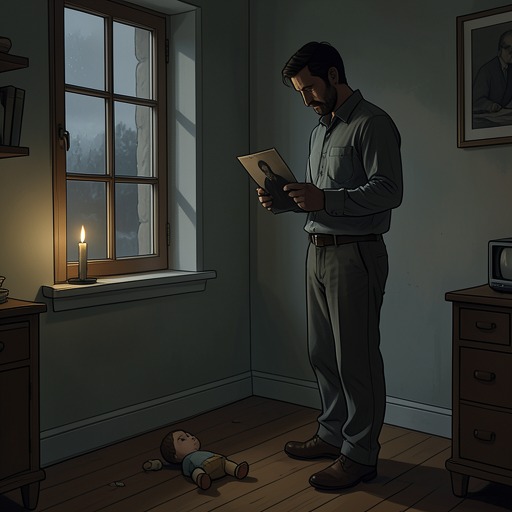
Syracuse, New York
I'm Still Here- What didn't kill me made me stronger and sharperSyracuse, New York is the formative and oppressive setting from which Jensen Brick McCall escapes after betraying his gang and assisting the police. It contains his improvised family, the deaths of Chyna and Mortez Payne, the memory of Grace McCall, and the unresolved question of why his birth mother abandoned him. By the time a cab carries him toward California, Syracuse has become more than a city: it is the past he must cross in order to discover who he is.
A City of Survival and Exile
Syracuse is presented through Jensen Brick McCall’s retrospective account as a place where survival was never secure. Before leaving, he describes a life of sleeping on library steps, enduring rape and uninhabitable conditions, moving through unwanted foster homes, and being reduced in society’s language to “the foster kid.” The city therefore functions as a social landscape of exclusion as much as a physical location. Its institutions and homes offer temporary shelter, but none provides lasting belonging.
Jensen’s account also makes Syracuse the starting point of a life that, in his view, should have ended at birth. Grace McCall told him that he had been left for dead in a cold, dark room and that he survived among eleven other babies who had died. She called him her miracle baby, while refusing to let him call her Mom because she believed that title belonged to his birth mother. The damaged house where Grace once lived—its shingles fallen away, pale-blue paint chipped, and windows broken—becomes a visible remnant of the care and violence that marked his childhood.
The Library, Grace, and the Meaning of Home
Although Syracuse is associated with abandonment, Jensen also remembers a narrow path toward life within it. Grace read Good Night Moon to him, taught him to read, and insisted that education could save him. Every Saturday they went to the library, and Jensen says that reading repeatedly kept him out of jail and that sitting in the library kept him alive. The library is consequently set against the city’s criminal spaces as an alternative form of refuge: not a permanent home, but a place where survival could become knowledge.
Jensen’s memory of Syracuse is therefore divided between physical ruin and emotional persistence. Walking back toward the block that had once been his true home, he hears Grace’s laughter and remembers her reading. The neighborhood itself has changed, becoming predominantly populated by refugees from Somalia, while his memories remain attached to the earlier home and to Grace’s protection. Syracuse holds both the city that failed him and the small acts of care that made his continued life possible.
Crime, Betrayal, and the Deaths of Chyna and Mortez Payne
The decisive transformation of Syracuse occurs through Jensen’s relationship with the gang. At five o’clock in the morning, during heavy snowfall and cutting wind, the Drug Enforcement Administration and the Federal Bureau of Investigation raid the gang’s location. Officers break down the door with a battering ram while Detective Dartes orders everyone to the ground. Twenty-two men, including the leader, are arrested for narcotics sales and for the murders of Chyna and Mortez Payne. Weapons, money, heroin, cocaine, and pounds of marijuana are found throughout the premises.
Jensen is not merely an observer of the raid. For weeks he has met with Detective Dartes and his partner, providing details, videos, and audio recordings of crimes. In exchange, he receives immunity from spending a day in jail and a bus ticket out of Syracuse. He describes this betrayal as selling the gang’s souls to the devil, yet he also frames it as an attempt to secure justice for Chyna, her son Mortez, and Grace. The city’s criminal community is a makeshift family, but it is a family already marked by violence and impermanence; after the arrests, Jensen sees it as another foster family whose members are living on borrowed time.
Chyna’s murder gives Jensen’s departure its moral urgency. He had warned her that involvement with Trey Dollar and violation of the gang’s code would lead to her death. After finding Chyna and her son murdered, he held their cold bodies, closed their eyes, and rocked them. Mortez still held the Transformer Jensen had given him for Christmas. The next day, Jensen went to Detective Dartes and reported the crimes. Syracuse is thus the place where his guilt becomes action: he cannot save Chyna and Mortez, but he can expose the system that killed them.
Leaving Syracuse and Pursuing the Past
The police bargain frees Jensen physically without freeing him inwardly. He leaves with a duffel bag containing all he owns and money from a job he had been preparing to do, but he remains burdened by guilt, grief, and the belief that he failed to protect the women and children around him. He promises himself that he will never again allow another woman to die without attempting to save her. The promise links his escape from Syracuse to a larger quest for redemption.
Detective Dartes warns him that returning would cost him his freedom and possibly his life. The warning establishes Syracuse as a closed circle of retaliation: once the gang realizes that Jensen was the informant, he will not receive another chance. The cab that arrives and honks three times carries him toward California, but the destination is not simple refuge. Jensen is traveling to confront his “murderer,” the birth mother whose abandonment has shaped his understanding of himself.
Narrative Significance
Syracuse, New York occupies the story’s threshold between a life organized by abandonment, violence, and guilt and a life organized by investigation and self-discovery. Jensen says that his life began not when he was left for dead, but when he left Syracuse. That distinction turns departure into a second birth. The city remains the source of his wounds—foster care, gang violence, Chyna and Mortez’s deaths, and the loss of Grace—but it also contains the library, education, and memories through which he learned to survive.
The location’s narrative power comes from this contradiction. Syracuse is neither only a criminal underworld nor only a lost home. It is the place where Jensen becomes a snitch, a witness, and an exile; where freedom is purchased through betrayal; and where the search for his murderer begins. Leaving it does not erase the city’s influence. Instead, the journey away makes Syracuse legible as the first landscape in Jensen’s movement from “dead man walking” toward a person capable of naming his past and pursuing a purpose beyond it.