The Cleveland Station Attack and Brick's Rescue
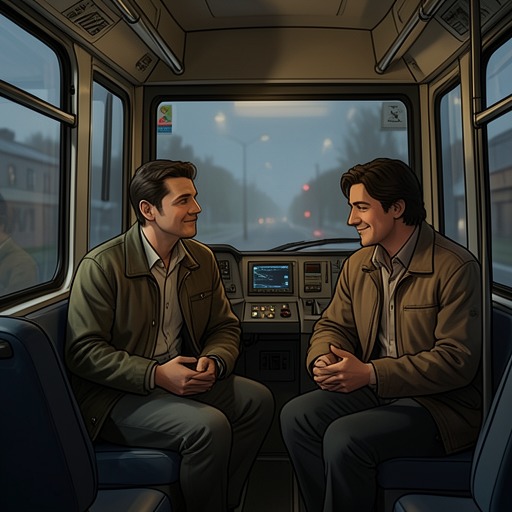
I'm Still Here- What didn't kill me made me stronger and sharperThe Cleveland Station Attack and Brick's Rescue is the turning point at which Jensen Brick McCall's paid assignment against Janae Morrison gives way to an immediate act of protection. At the Cleveland, Ohio, depot, a missing bag of cocaine and Janae's unexplained absence bring the danger of the journey into focus; when an attacker assaults her, Jensen intervenes and rescues her.
Causes and Background
Before the attack, Janae is already in danger for reasons Jensen knows but has not resolved. While stranded in Buffalo, New York, he had been approached by a wealthy, aggrieved woman who transferred $25,000 to his bank account and gave him Janae's picture. The woman wanted Janae destroyed and never to return to Buffalo. The commission makes the passenger beside Jensen on the bus more than a stranger: she is the intended target of the violence he was paid to carry out. Yet as he watches her, he questions whether he should help her, rather than treating the contract as a settled decision.
The immediate crisis develops when Janae leaves her seat for the bathroom and Jensen notices a clear bag containing a powdery substance. Recognizing it as cocaine, he takes it from the seat, aware that carrying it could expose him to arrest. As the bus reaches the Cleveland depot, he sees Border Patrol cars and officers approaching. While Janae remains in the bathroom, he hides the bag in his shoe as officers check passengers' identification. Once they have passed, he rushes off the bus and throws the drugs away. Janae still has not returned, and his alarm shifts from the risk of being caught with cocaine to concern for the stranger whose absence he cannot explain.
The Attack and Intervention
Janae’s absence becomes a physical emergency away from the bus: an attacker pins her down in the mud, grips her throat, reaches toward her breasts, and tries to take her money. She coughs and struggles to breathe, scratches at his hands, then fights back by kicking and biting him. When he releases her, she runs, but he catches up and grabs her hoodie, tightening its neck around her throat. Unable to scream, she manages to call for help one syllable at a time.
Jensen Brick McCall arrives as the attacker’s weight bears down on Janae. He pulls the man off her, lifts him by the throat, punches him in the stomach, and slams him onto the concrete. He continues striking him, stomps on his chest, searches his pockets, and retrieves Janae’s envelope. The rescue reverses the immediate danger, but its force is unmistakable: Jensen acts to protect someone he had been paid to harm, while using severe violence against the person attacking her.
Afterward, Jensen helps Janae stand, brushes her clothes, and wipes mud from her hands and face with a towel from his bag. His care is followed by anger. He rebukes her for leaving cocaine on the bus, which could have exposed him to arrest, and for going with a stranger to obtain more. Janae answers that his saving her does not give him the right to speak to her however he likes, insisting that he does not know her. The exchange establishes the rescue as more than a simple rescue: immediate protection has begun to replace the contract, but trust between the two passengers has not yet been earned.
The Earlier Failure Behind the Intervention
The force of Jensen Brick McCall’s intervention is sharpened by an earlier failure he carries as guilt. After Chyna and her son Mortez Payne were murdered by gang members who suspected her of informing on them, Jensen remembered standing there, unable to save them. Chyna had admitted that she, too, had talked to the authorities, but when Jensen tried to offer himself in her place, she covered his mouth and told him to survive and become somebody great. His memory of her death is therefore not simply grief for a friend: it is the knowledge that fear kept him from acting when someone he loved was in mortal danger.
That bond had begun in a group home, where Chyna and Jensen first defended themselves against her sons’ attempted sexual assault. She came to regard him as a brother, while he wanted a closer intimacy; Chyna maintained that friendship was safer than being lovers. After her death, Jensen described her as the person who had loved and accepted him when he had little else. His rescue of Janae Morrison thus occurs against a history in which affection, danger, and helplessness have become entangled. The earlier loss gives his decision to intervene particular weight without making it a simple act of redemption: it cannot undo what happened to Chyna and Mortez.
Jensen had also connected his silence around Grace McCall’s drug use to the deaths he witnessed, treating his failure to speak as a moral burden rather than an excuse. In the aftermath of Chyna’s murder, he resolved not to let another woman die without attempting to save her. The Cleveland attack places that resolve in a new, immediate test. Janae is not someone he already knows or can confidently trust; she is a fellow passenger whose danger interrupts the assignment he had accepted. His action makes protection a choice made in the present, while the memories behind it show why that choice matters to him.
Later, Jensen tells Janae that at fourteen he was sexually coerced by an older foster sibling who threatened to accuse him of rape and have him put out of the home. Janae recognizes what he describes as rape, while Jensen explains that the threat of losing his placement was central to his fear. That later disclosure does not establish what he was thinking during the attack, but it places the rescue within a relationship that gradually makes room for each of them to speak about vulnerability and harm. The depot episode begins that movement through action: Jensen protects Janae before trust has been established, and the subsequent exchange preserves the difference between being saved and being entitled to another person’s confidence.
Aftermath and Significance
The rescue does not settle the relationship between Jensen Brick McCall and Janae Morrison; instead, it opens a connection that later bears disclosures neither could have offered at the depot. Janae eventually hears Jensen explain that his biological mother attempted to end his life before birth, that a failed abortion left him on a table to die, and that Grace McCall, the nurse who first cared for him, saved him despite his mother’s order to let him die. As he speaks, Ginger Pearl recognizes him as her grandson, while Janae holds his hand. The scene gives the rescue a wider emotional consequence: the man who acted when Janae was in danger becomes someone whose own history of abandonment can be witnessed. That later intimacy does not erase the violence of the depot encounter or make trust automatic. It develops through moments of disclosure and choice, including Jensen’s eventual embrace of his mother after receiving an explanation for why she left him. He leaves her his number and offers to sit with her at dialysis if needed. Set against those later possibilities, the Cleveland attack marks a first, concrete break with the role assigned to him: the paid commission no longer determines what he does when another person faces immediate harm.