WIVB News
I'm Still Here- What didn't kill me made me stronger and sharperWIVB News is the television news outlet that broadcasts the scandal surrounding Janae Morrison and Robert Walters, making it a central instrument of public exposure in the novel. Its reports do not merely relay information: they assemble a spectacle in which Janae’s addiction, body, sexuality, criminal suspicion, and troubled past are presented to the community as evidence of a defective moral identity, while Robert Walters is given the opportunity to perform innocence and benevolence. Through this contrast, WIVB News becomes part of the machinery that decides who will be believed, who will be shamed, and who will remain socially protected.
Coverage of the Scandal
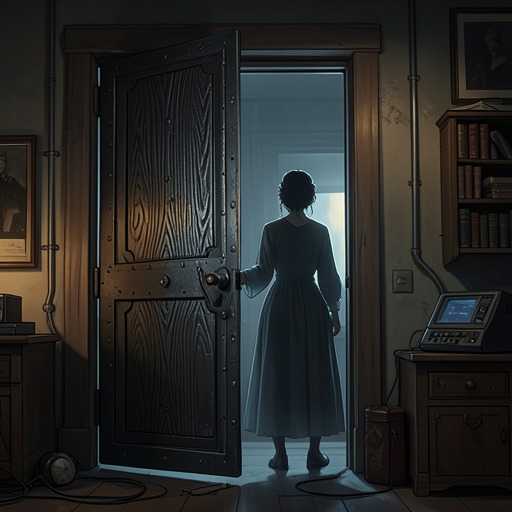
WIVB News appears while Janae is in crisis, cutting herself with broken glass as the broadcast plays on television. The report shows her alongside Robert Walters and connects the alleged affair to a drug bust in which she was found naked with her nose in a jar of cocaine. It also recounts her troubled past and addiction, producing a compressed portrait of her as a horrible person rather than treating the broadcast images as fragments of a larger history. Janae experiences the coverage as an assault that turns her life into a public display and confirms that the world has already assigned meaning to her pain.
The broadcast gives Robert Walters a platform for denial. During a press conference carried by the media, he claims that his only relationship with Janae was business, that his interest lay in her artwork, and that he came to the hotel to offer her alternatives rather than to engage in sex or drugs. He presents himself as a humanitarian attempting to rescue a damaged young woman, while representing Janae as the guilty and distorted party. His tears before the camera strengthen the performance, allowing visible emotion to function as apparent proof of sincerity.
Stigma and Public Credibility
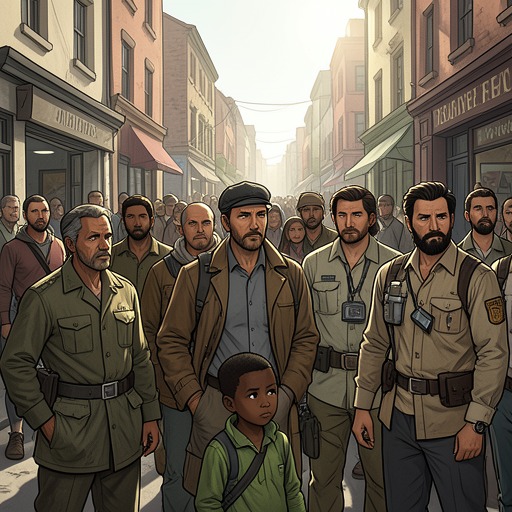
The news framing is reinforced by a visual and social contrast between Robert Walters and Janae. He is described as a respected community figure, while Janae is reduced to the image of an obese, addicted, sexually suspect woman whose testimony can be dismissed as fantasy. The community’s response shows how quickly televised representation becomes social judgment: people recognize her face, glare at her, whisper, point, and repeat the assumptions generated by the scandal. One passerby openly declares that Robert could not have slept with her because she is fat and ugly, turning bodily contempt into an argument about whether the affair could have occurred.
WIVB News therefore helps construct several overlapping stigmas at once. Janae is marked by addiction, alleged promiscuity, obesity, criminality, and a supposedly irredeemable past. The broadcast does not need to prove each accusation independently; by placing them together in a single sensational narrative, it makes them appear mutually confirming. Her body becomes treated as evidence, her self-harm as proof of instability, and her disclosure as the speech of an untrustworthy woman. The result is a public identity that precedes her wherever she goes and threatens her ability to work, sell artwork, or remain safely in Buffalo.
Evidence, Exposure, and Counter-Narrative
The novel distinguishes the televised version of events from Janae’s fuller account. She states that she and Robert were lovers, had sex at least a hundred times, and used drugs together. She recalls that he first approached her at an art event, bought supplies, paid for art classes, took her to New York to see artists associated with the Harlem Renaissance, and repeatedly told her that she was beautiful and that he wanted her. He also painted their relationship as a promise of a shared future while remaining married to Elizabeth Mourning-Walters. These details contradict his public claim that he was merely helping her and show how the broadcast’s apparent clarity depends on excluding the history that would make his conduct intelligible.
The scandal also circulates through recorded material rather than through testimony alone. Janae watches images of Robert using cocaine, blindfolded and naked, as well as footage of sexual behavior and a recording in which he speaks of loving her body, leaving his wife, and marrying her. The evidence gives her a form of truth and exposes the distance between his televised performance and his private actions. Yet its release does not make her safe. Instead, it intensifies the public spectacle, brings threatening calls and messages, and prompts Elizabeth Mourning-Walters to leave an abusive voicemail calling Janae horrible, obese, grotesque, and a bitch.
The media scandal thus creates a paradox. Public exposure appears to offer truth, but the same exposure makes Janae more vulnerable. Even after evidence damages Robert’s reputation, the social narrative continues to punish her as the woman who disrupted an elite marriage. WIVB News is part of that contradiction: it can reveal an image, but it cannot by itself control how the image is interpreted or whom the audience chooses to condemn.
Consequences for Janae and the Wider Story
After the coverage, Janae understands that she is neither wanted nor safe in Buffalo. Jessica Brown tells her that the city’s Black elite women will protect Elizabeth Mourning-Walters collectively, that Janae will be unable to find work or sell her artwork, and that she has been blacklisted. Jessica gives her an envelope containing money and a bus ticket, along with evidence stored on an SD card, and urges her to leave for the West Coast, change her name and appearance, and begin again. The broadcast has therefore helped convert a private relationship and a contested accusation into a condition of exile.
Janae’s immediate response reveals the bodily cost of this public narrative. After hearing strangers repeat the judgments attached to her televised image, she goes into a bathroom, takes out a razor, and cuts herself, hoping the pain and blood will erase what she imagines is ugly or bad inside her. WIVB News is not presented as the sole cause of her self-harm, since addiction, past trauma, and abandonment already shape her crisis, but the broadcast gives those wounds a fresh public trigger. It turns the language of condemnation into something she carries against her own skin.
The organization also forms part of the novel’s larger media environment, in which television, social platforms, gang communications, and public rumor circulate competing versions of guilt. Elsewhere, gang members post statistics and possible photographs of the person who betrayed the .357 Murder Mafia Swift, while Jensen Brick McCall’s absence from those images protects the secret of his cooperation with federal authorities. Against that background, WIVB News represents a different but related form of surveillance: the public does not need complete knowledge to punish a person. A recognizable face and a persuasive narrative are enough.
Narrative Significance
WIVB News embodies the novel’s critique of moral panic and media-made identity. Its coverage elevates Robert Walters as a credible savior and reduces Janae Morrison to a spectacle of appetite, sex, drugs, and failure, even though her account identifies Robert as the pursuer and the manipulator of the relationship. The organization’s importance lies less in any independent institutional history than in the power of its broadcast frame: it converts complex events into a legible contest between an honorable man and a disordered woman.
At the same time, the novel refuses to let television’s account become the final truth. Janae’s remembered details, the recorded evidence, her self-harm, and her forced departure expose what the broadcast leaves out and what its language makes possible. WIVB News consequently functions as both a plot mechanism and a formal contrast between public narrative and lived testimony. Its screen promises objectivity, but the surrounding scenes reveal how selection, image, status, and repetition can make stigma look like fact.