
The Moral Conflict Over Dalin's Death
I'm Still HereThis flow traces Austin's grief as it expands into a religious and political challenge to the idea that only innocent people deserve mercy.
increasing Bearing strength in each event
 decreasing
Bearing strength in each eventdecreasingPrison Made Personal
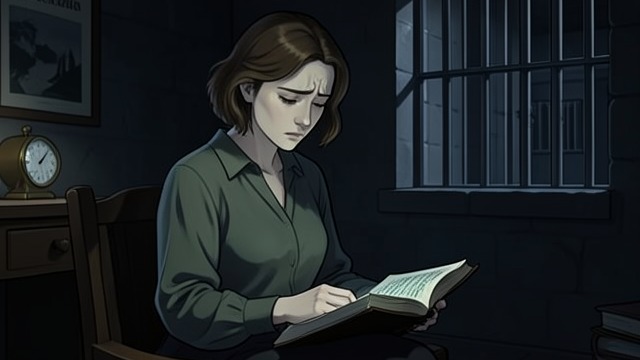
Prison Made Personal
Reading with Dalin in mind
Austin reads Jimmy Santiago Baca's account of prison violence and thinks of her incarcerated cousin. The descriptions make her wonder whether Dalin faces abuse, isolation, and constant danger.
A delayed question
She has not contacted him since he went to prison and fears asking the wrong thing. The book turns a general concern about incarceration into an urgent personal obligation to reach out.
A Sentence Measured in Years

A Sentence Measured in Years
Three strikes
Dalin's third strike means a decade away from family for a nonviolent offense. Austin struggles to understand how so much of a life can be taken through a mandatory sentence.
The unequal system
His punishment gives her a concrete example of how criminal-justice policies shape Black families. The question is no longer only whether a law has been followed, but what that law does to people and relationships.
A Letter and a Sudden Death
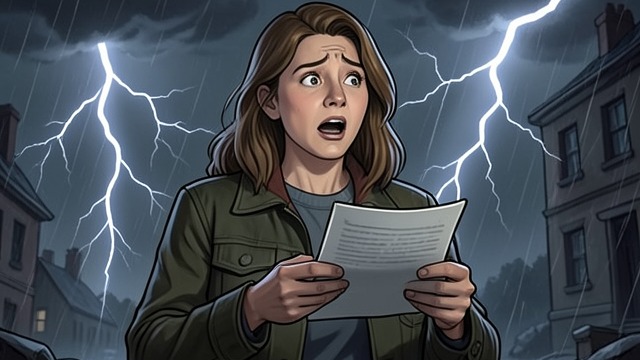
A Letter and a Sudden Death
Contact restored
Dalin replies warmly to Austin and tells her about his life and hopes. The letter makes their shared family history feel available again.
The reply becomes final
Only weeks later, Austin learns that lightning killed Dalin in the prison yard after men in his program were not warned about the storm. Their new conversation ends before it can become an ongoing relationship.
The Reunion That Angers Her

The Reunion That Angers Her
A public celebration
At church, a recently released man recommits himself to God and embraces his young daughter. The congregation celebrates their reunion with warmth and approval.
A painful contrast
Austin is furious because Dalin's daughter will never run into her father's arms again. The beautiful scene sharpens rather than softens her grief, revealing the unequal distribution of second chances and time with family.
The Accused Included

The Accused Included
Questions beyond grief
Austin rages at God, then asks what the state owed incarcerated people and how policing shaped Dalin's life. She questions the assumption that her cousin's choices made his death less worthy of mourning.
A broader theology
She comes to understand Jesus Christ as one who knew accusation, imprisonment, and execution. This does not bring Dalin back, but it makes justice a framework for people who are not deemed innocent or perfect.
Near the end of Austin's master's program
Several years into Dalin's incarceration
A few weeks after Austin's letter reaches Dalin
The Sunday after Dalin's death
After the funeral and church service
