
From Racial Fear to Collective Defiance
I'm Still HereThis flow traces Austin's movement from private fear after anti-Black violence toward collective worship, protest, and public insistence on life.
increasing Bearing strength in each event
 decreasing
Bearing strength in each eventdecreasingA New President and Old Threats
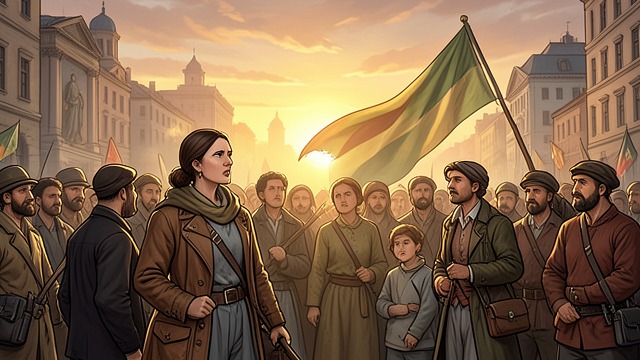
A New President and Old Threats
A historic achievement
Austin watches the Obama family celebrate in Chicago and feels the importance of a Black family reaching the White House. The event seems impossible only a year before.
Celebration shadowed
Black people remain afraid that the president may be assassinated and see protests and racist imagery directed at him. The new political milestone does not erase the country's history or the backlash to Black power.
Ferguson and the Familiar Image
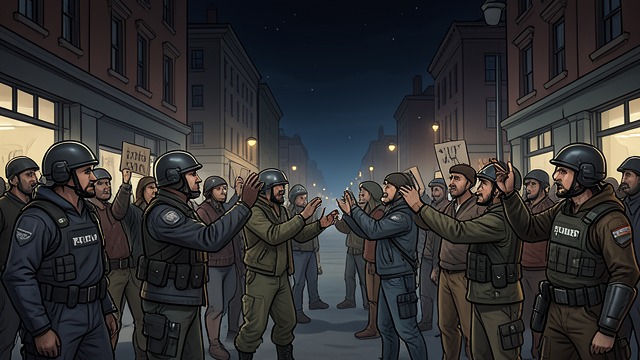
Ferguson and the Familiar Image
Police on the streets
Austin watches officers in riot equipment, with dogs, tear gas, and military vehicles, confronting Black residents. The protestors are parents, relatives, and children demanding accountability, not an invading army.
The present resembles the past
The images recall the violence in historical photographs Austin has studied. She sees racism as a continuing structure of state power rather than a problem that has steadily disappeared.
Charleston's Fear Spreads
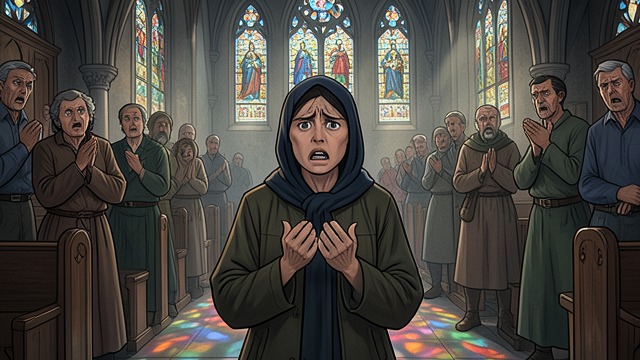
Charleston's Fear Spreads
A targeted congregation
A white supremacist attacks worshippers at Emanuel African Methodist Episcopal Church. Austin recognizes that the violence threatens more than the people inside the building.
Fear reaches other churches
She imagines more attacks before the suspect is caught and remains afraid afterward. The possibility that worship itself may be targeted transforms her sense of safety in Black sacred spaces.
Gathering Instead of Retreating
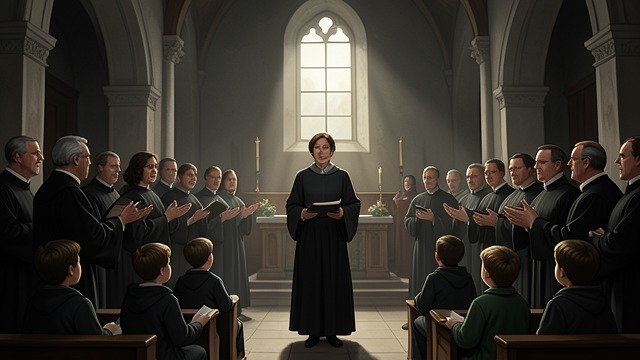
Gathering Instead of Retreating
A return to worship
Austin goes back to her childhood church and finds the choir, altar prayer, and congregation still present. She does not wait until her fear has disappeared to return.
Community chooses presence
The church gathers in song and welcomes children at the front. Its continuation is an answer to terror without claiming that terror has been overcome or forgotten.
A Public Claim on Tomorrow
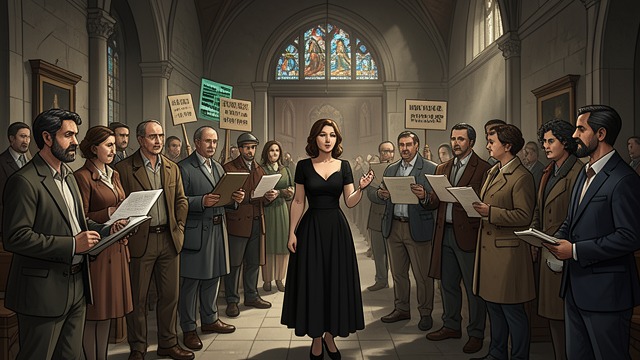
A Public Claim on Tomorrow
Grief becomes participation
Austin draws strength from Black community online and in person, in church and outside it. Protest, organizing, writing, and creative work accompany mourning.
Life asserted collectively
The community declares that Black lives matter and insists that terror will not end its participation in public life. Austin finds a way to face tomorrow through shared action rather than private optimism.
After Barack Obama's election
During the 2014 Ferguson protests
On June 17, 2015, and the following morning
The Sunday after the Charleston attack
In the weeks after the Charleston attack
