
The Enduring Choice to Live
I'm Still HereThis flow traces Austin's concluding commitment to life, intimacy, and action despite racial violence and the collapse of easy hope.
increasing Bearing strength in each event
 decreasing
Bearing strength in each eventdecreasingA Body That Can Be Hurt
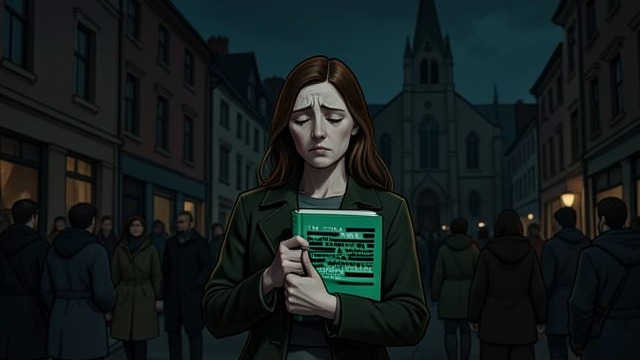
A Body That Can Be Hurt
Immunity rejected
Austin wishes that historical knowledge could protect her from grief, but the attack on a Black church hurts her again. She admits that understanding racism does not make her invulnerable.
Human rather than hardened
She insists on her humanity and her need for love and other people. Her response resists the idea that Black survival requires becoming emotionally untouched by violence.
Intimacy Demanded
Intimacy Demanded
Connection as a need
Austin rejects the notion that Black people can live without intimacy, love, and community. She demands the right to be connected rather than forced into isolation by fear.
A future insisted upon
The demand for tomorrow becomes part of the demand for life itself. Austin does not offer it as proof that racism will soon end, but as a claim she is entitled to make.
Children in the Sanctuary

Children in the Sanctuary
Young voices
Children speak Scripture in front of their church, some boldly and some with hesitation. Their different ways of speaking do not make their presence any less meaningful.
A shared promise
The congregation sees that the children are present and that the community continues around them. Austin experiences this as a living promise that God remains with a people still facing danger.
Hope as a Shadow
Hope as a Shadow
No guarantee of sunshine
Austin stops expecting hope to arrive as confidence in institutions, leaders, or rapid national change. She accepts that the future may remain dark and that her work may not produce visible results.
Fragile persistence
The shadow of hope is the willingness to act without assurance: to speak, write, love, and return to the work. It is fragile because it can die, yet it remains useful because it allows life to continue without false promises.
Living Anyway
Living Anyway
The sun's passing light
Austin can bask in moments when the sun shines but knows she cannot make them a permanent home. The warmth of progress or acceptance has not been promised as an enduring condition.
A chosen duty
She decides to abide in the shadow and continue living, demanding, and working. Her conclusion is not a claim of victory but a refusal to surrender the life and future her ancestors made possible.
After the Charleston attack
During Austin's reflection on surviving racial hatred
On Children’s Sunday after the shooting
Near the end of Austin's book
At the book's final moment
