
Death and the Hope of Release
I'm Thinking of Ending ThingsImages of suffering and the school’s fatal conclusion test whether death can be understood as an escape or a continuation of pain.
increasing Bearing strength in each event
 decreasing
Bearing strength in each eventdecreasingThe Lambs as Bodies
The Lambs as Bodies
Death made visible
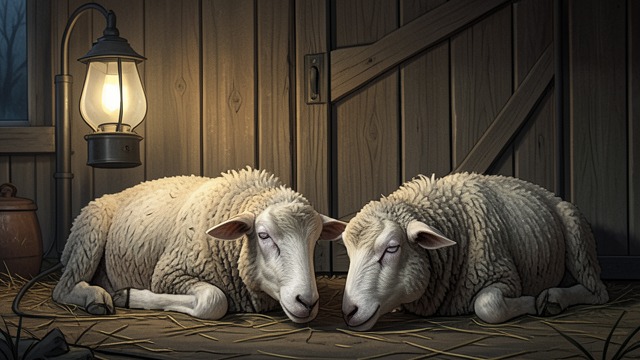
The narrator sees two dead lambs beside the barn and notices how closely their forms resemble living animals. The sight gives death a physical presence.
Loss resists abstraction
The animals are not merely food or farm routine to her. Their bodies make the difference between life and death difficult to ignore.
The Pigs and Pain
The Pigs and Pain
Hidden suffering discovered
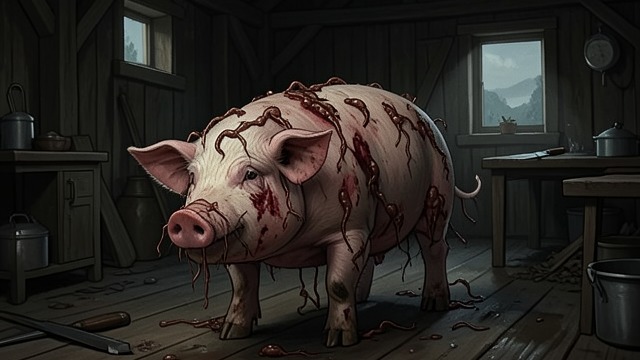
Jake describes pigs being eaten alive by maggots, their pain invisible from a distance. Their condition makes intervention necessary.
Death as uncertain mercy
The narrator understands why the animals were put down but wonders whether death truly ends suffering. The question follows her into the school.
A Question in the School
A Question in the School
Fear of endless pain
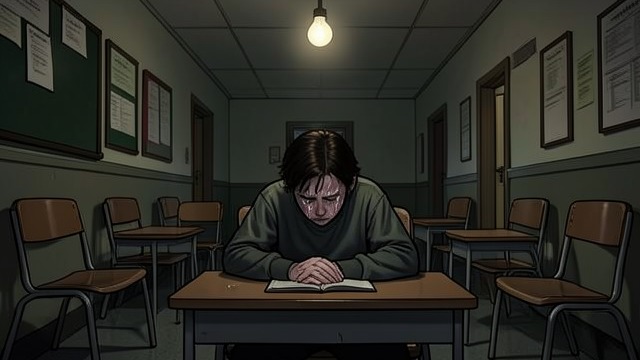
The narrator remembers the possibility that suffering might continue after death. The thought becomes more frightening while she is trapped and physically unwell.
No comforting answer
The school ordeal strips away easy beliefs that death must bring relief. Uncertainty itself becomes part of the terror.
The Death in the Closet
The Death in the Closet
A body discovered
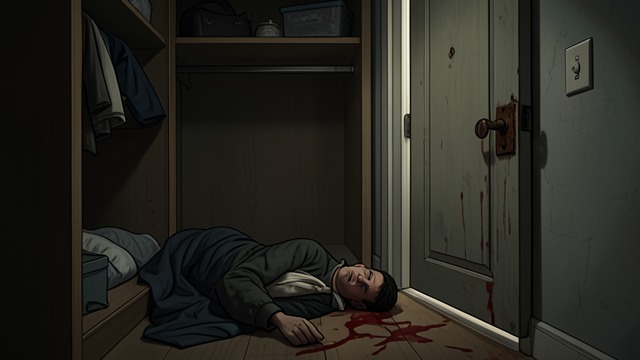
The post-event speakers discuss a man found in a small closet and describe a death involving puncture wounds. The account makes the novel’s danger concrete.
A life reduced to evidence
The body becomes the focus of investigation, while the person’s private suffering remains difficult to reconstruct. The gaps echo the novel’s uncertainty about other minds.
An Ending Without Certainty
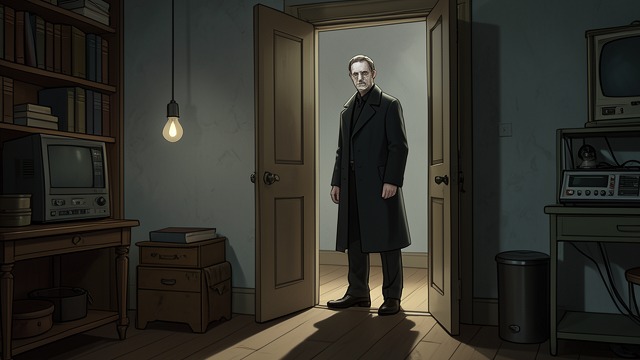
An Ending Without Certainty
A fatal choice
Jake’s final action ends the immediate ordeal but does not prove that death is relief. The earlier image of suffering remains unanswered.
The question survives
The novel closes with the emotional weight of an irreversible decision, not a universal conclusion about death. Its uncertainty resists consolation.
During the farm visit
Later in the farm tour
During the narrator’s confinement
After the school incident
At the novel’s climax
