Envelope Marked “Us” and Photographs
I'm Thinking of Ending ThingsThe Envelope Marked “Us” and Photographs is an inconspicuous object that turns a private drawer into a source of uncertainty. Found in Jake’s old bedroom, it contains a series of intimate bodily images that the narrator cannot confidently identify or explain, complicating what the narrator knows about Jake and his interest in photography.
Discovery in Jake’s Old Bedroom
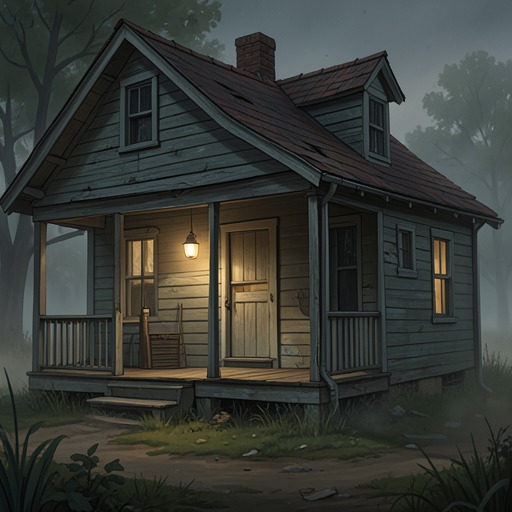
After going upstairs to explore, the narrator enters Jake’s old bedroom and searches the top drawer of the desk by the window. Among ordinary desk supplies—paper clips and notepads—is a brown envelope marked “Us.” The handwriting looks like Jake’s, though the narrator does not establish that it is his. Despite recognizing that the envelope may contain something private, the narrator opens it and looks through the contents.
The contrast between the drawer’s routine contents and the envelope gives the object its immediate force: it is not displayed as a photograph collection, but tucked among everyday stationery. The label offers an apparent clue without explaining what “Us” refers to, and the narrator’s discovery begins with curiosity rather than any settled interpretation.
The Photographs
The envelope holds about twenty or thirty close-up photographs of body parts: knees, elbows, fingers, and many toes, as well as lips, teeth, and gums. Some images are so tightly framed that they show only hair and skin; the narrator wonders whether a few marks might be pimples. Because the photographs isolate details rather than presenting recognizable people, the narrator cannot tell whether they all depict the same person.
The narrator has never seen photographs like these and considers whether they might be an art project, intended for a show, a display, or an installation. None of those possibilities is confirmed. After looking through the pictures, the narrator puts them back in the envelope, leaving both their purpose and their subjects unresolved.
Connection to Jake’s Photography
The images acquire a possible artistic context from what Jake has already told the narrator: he is interested in photography, his only activity outside school was art lessons, and he saved up for a very good camera. That background makes an art-related explanation plausible to the narrator, but it does not prove that the envelope’s contents are his work or reveal what he intended them to mean.
The envelope therefore joins a known interest to an unexplained private object without closing the gap between them. Its close framing makes bodies visible as fragments, while withholding the identity and unity that might make those fragments legible as portraits. The narrator’s inability to identify the photographed person—or determine whether there is just one—preserves the images as an unanswered question rather than a clear disclosure.