Hey, Good Lookin’
I'm Thinking of Ending Things“Hey, Good Lookin’” is the old country song that follows The narrator from a car ride with Jake to the school where she becomes trapped. Its importance lies not in its lyrics, which the narrative does not provide, but in its recurrence: heard first as part of an ordinary drive, it returns through the school’s speakers, loops until The narrator knows it by heart, and finally gives way to silence. The familiar tune becomes an audible thread between scenes, while its repetition makes the school feel increasingly sealed off from ordinary time and choice.
From the Car Radio to the School
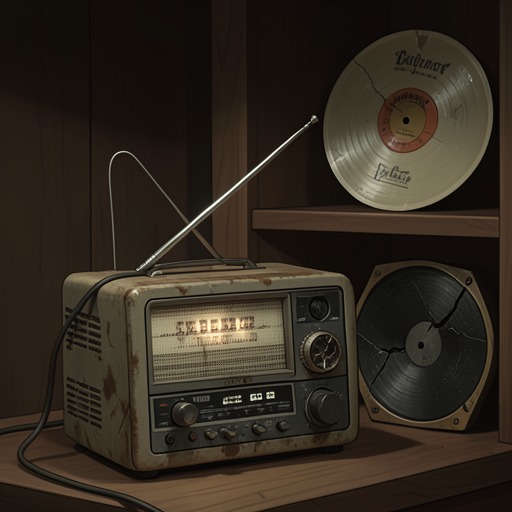
On the drive to Jake's Parents' Farm, the car radio plays “Hey, Good Lookin’.” The song is initially just part of the journey, something The narrator recognizes later when it sounds through the school’s public-address system. That connection gives the later music a precise source in her memory: this is not merely an old country song, but the same one heard during a particular trip with Jake.
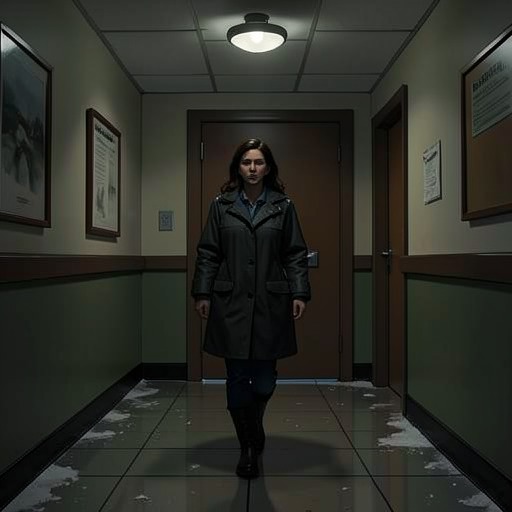
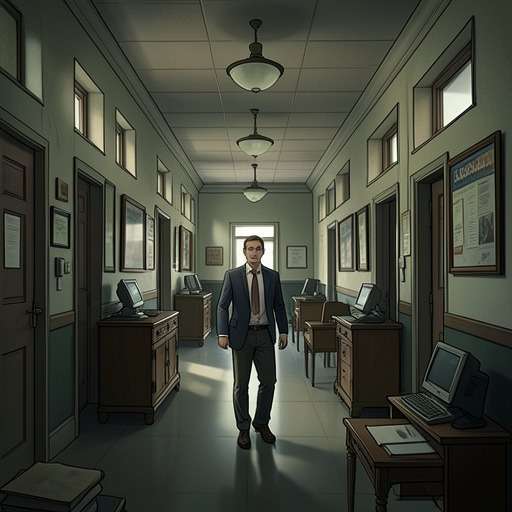
After reaching a landing in the school, The narrator finds a hallway with lockers and classrooms, drinks from a water fountain, and splashes water on her face and neck. The hall resembles the one below, and the school seems to her like a maze and a trap. Then music starts over the PA. It is not very loud, but she identifies the song immediately. The contrast is stark: a tune associated with a drive now arrives inside a building whose repeated corridors have left her disoriented and searching for a way out.
The Loop Behind the Bench
A long bench offers The narrator a place to crouch, partly concealed, with a view of the door. She watches for someone to enter while the song plays to its end. After a pause of a second or two, it begins again from the beginning. She tries to cover her ears, but can still hear it; as the second play continues, she starts to cry. The song’s low volume does not make it harmless. Its reach through the hall and its immediate repetition deny her the quiet she is trying to find.
The narrator remains behind the bench for what she estimates may be an hour, though she admits it could have been much longer. Her hip and knee go numb in the unnatural position, and time becomes difficult to measure. She counts the song’s repetitions as twenty, thirty, or perhaps a hundred; she thinks it may have grown louder, but cannot be certain. When it stops halfway through a verse, the interruption shocks her awake. She has been lying with Jake’s hat as a pillow. The song has lasted long enough for her to know all its words by heart, and she now hates both the tune and the experience of having to listen to it. Its repetition has turned recognition into an unwanted kind of learning.
A Sound Without a Visible Source
After finding Jake’s wet clothes in the changing room, The narrator leaves and hears the song again, starting from the beginning. She hears it in locker rooms, classrooms, and halls, while the speakers remain out of sight. She cannot tell whether it ever stops, or whether the same song has been playing throughout. That uncertainty extends the music beyond any one room: even when The narrator moves, she cannot locate a boundary that would separate her from it.
The wider soundscape of the story makes this uncertainty consequential without establishing that every sound has the same source. In an earlier childhood recollection, The narrator hears faint music outside after seeing a man at her window, but cannot remember it clearly or determine whether it was recorded or hummed. Later, a phone rings again, and messages from The Caller contain running water, footsteps, and what sounds like hinges and a closing door. These are distinct sounds, not identified as the song. Together, however, they show how listening in the novel can bring uncertain evidence of someone’s presence while leaving its origin unresolved.
Repetition, Silence, and Confinement
The song returns in the school’s gym, where The narrator sits on the hard floor crying and concludes that there is no way out. At another point, music begins again from the beginning, louder this time. The small closet beside a desk is empty except for wire hangers, which are pushed aside as The narrator enters and waits. Then the music stops, leaving what the narration describes as pure silence. The shift from a tune that fills the school to a sudden absence of sound marks a change in the immediate atmosphere, but it does not offer an escape: the group remains in the closet, waiting.
The song’s path is therefore built from recurrence and interruption. Its first appearance belongs to a shared drive with Jake; its later appearances accompany hiding, disorientation, and confinement. The school’s PA carries it across spaces The narrator cannot reliably map, while repeated playback makes its duration hard to distinguish from the duration of her ordeal. By the time it stops, the silence feels significant precisely because the song has been so persistent. “Hey, Good Lookin’” becomes less a background detail than a measure of how a familiar sound can change under altered circumstances: remembered as part of a journey, it returns as an inescapable feature of being trapped.