Insomnia and ongoing sleep deprivation
I'm Thinking of Ending ThingsInsomnia and ongoing sleep deprivation become a sustained condition in The narrator’s life, not a single sleepless night: for weeks, rest is broken by anxious thoughts, mysterious calls, nightmares, and long waits for morning. The resulting exhaustion makes ordinary closeness desirable but does not make sleep attainable, and, during the later ordeal at the school, fear is accompanied by a deteriorating sense of bodily stability. The account records the symptoms and The narrator’s own explanations without settling on a single cause.
A Night Made Uncertain
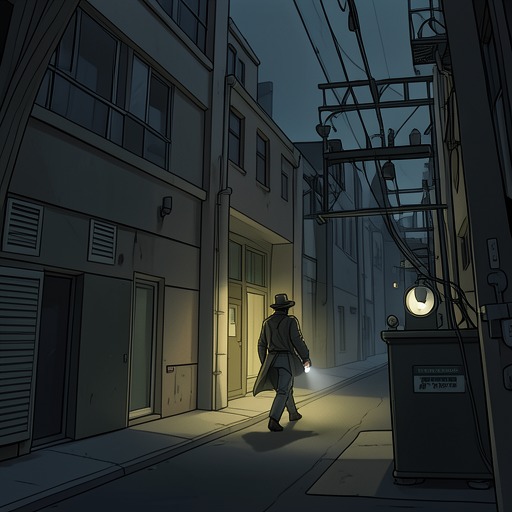
The pattern of disturbance includes both sleeplessness and episodes in which waking itself feels unreliable. Recalling a childhood night, The narrator describes waking to see a man directly outside the window and watching him for what might have been many minutes, perhaps an hour. Soft music became audible only after the man was noticed; its source remained unclear, as it might have been recorded music or humming. When the man made a gesture that might have been a wave, The narrator experienced it as menacing. The memory does not resolve whether the episode was a dream, but its fear and images remain vivid to The narrator. This recollection is not presented as proof of insomnia; it establishes an earlier association between nighttime, uncertain perception, and the feeling of being watched.
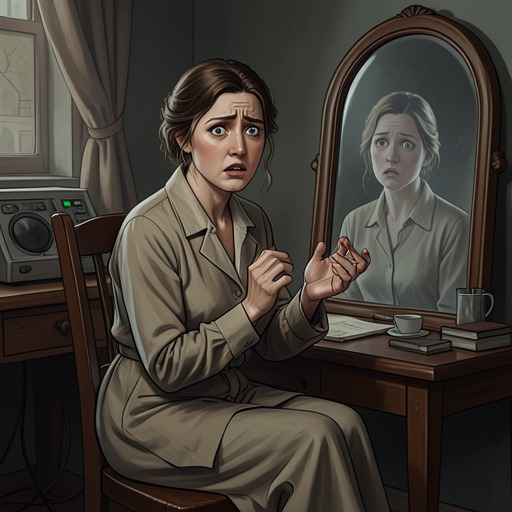
The later calls make the night feel threatening in a more repetitive way. The Caller often phones around 3:00 a.m., and the calls appear to come from The narrator’s own number. After the calls begin, The narrator reports frightening dreams and waking twice in a panic with the sensation that someone is in the apartment, close by and watching. For a few seconds, The narrator cannot move; after fully waking, The narrator goes to the bathroom, where running water sounds unusually loud in the quiet. The episodes leave The narrator’s heart pounding and body soaked with sweat; once, the pajamas had to be changed. These are described as new and frightening experiences, not as a formal diagnosis.
Calls, Interrupted Rest, and Concealment
The calls intrude on sleep even when they do not produce a conversation. On one night, The Caller makes twelve calls while The narrator sleeps, leaving no message. The narrator considers that other people might have acted on the situation, but does not contact the police: there has been no explicit threat, and attempts to answer have ended with The Caller hanging up. The pattern is disturbing partly because The Caller seems to leave cryptic messages rather than sustain an exchange.
The Caller’s presence also follows The narrator into time spent with Jake. During a movie in bed, a call from The narrator’s number appears on the phone. The narrator passes it to Jake without explaining the fear, and Jake dismisses it as an old woman dialing the wrong number. They return to the film, but The narrator sleeps poorly that night. Later, during a conversation in the car, the phone rings again. The narrator declines to answer, then receives two messages while the radio is loud: the first contains noises and running water; the second includes more running water, footsteps, and what sounds like hinges and a door closing. The narrator identifies the sounds as The Caller’s, but keeps the messages from Jake, answering his question about them with a denial. Rest is therefore disturbed not only by nighttime ringing but by the secrecy and vigilance carried into waking hours.
Exhaustion Beside Jake
The narrator’s sleeplessness persists independently of any single call. After weeks of thinking too much, The narrator lies awake while Jake sleeps nearby, during his third consecutive night staying over. The narrator likes sharing a bed and registers Jake’s breathing as unmistakably close, yet cannot sleep. The desired intimacy is not merely physical: The narrator reflects on wanting another person to know them deeply, as a chosen partner might gain access to another person’s inner life. The contrast is sharp: closeness is welcome, but it does not switch off the mind or guarantee rest.
On another sleepless night, with Jake asleep, The narrator waits for daylight to begin showing through the blinds and wishes for a way to shut the mind down like a lamp or computer. The account places this night among many recent ones. During the drive after meeting Jake’s family, The narrator says that two or three nights of long, uninterrupted sleep are needed to recover, listing spinning thoughts, bad dreams, phone calls, interruptions, and nightmares among the things to escape. The narrator has been sleeping terribly for weeks, perhaps longer. The passage presents exhaustion as accumulated time: each broken night makes the next day part of a larger deficit rather than a clean return to normal.
A Parallel in Jake’s Family
At dinner with Jake’s family, Jake’s mother describes a steady buzzing in her ears and worsening hearing. She also explains that the Whispers are not intelligible voices. The family describes nighttime as the worst period: she does not sleep much, and when she does, her sleep is not restful; the disruption affects the household as well. This account parallels The narrator’s experience of nights that offer neither quiet nor restoration, but the text does not establish that the two conditions have the same cause. Jake’s mother’s hearing problems and The narrator’s sleep disruption remain distinct experiences, brought together by their shared vulnerability to the night.
Physical Strain and Narrative Significance
The narrator’s exhaustion becomes more urgent during the snowbound school ordeal. Before the crisis reaches its height, The narrator reports a headache worsening toward a migraine and hopes for sleep and relief. Later, inside the school, The narrator describes a metallic taste growing stronger, nail biting, feeling unwell, heavy sweating, and strands of hair coming loose. The narrator suspects stress may account for the hair loss, but the cause is not confirmed. These details document mounting physical distress; they do not establish that sleep deprivation alone produced it.
Sound links the school ordeal to earlier disruptions. Music begins playing over the public-address system: Hey, Good Lookin’, the same song heard on the drive to the farm with Jake. It plays through once, pauses briefly, and starts again. Hiding partly behind a bench, The narrator tries to cover their ears and then begins to cry. The repeated song does not itself demonstrate insomnia, but its recurrence shows how sound and remembered experience can intensify the distress of an already frightening night. Together, the calls, the hours spent waiting for morning, and the body’s increasingly alarming reactions make sleep deprivation part of the story’s wider uncertainty: the distinction between safety and threat, or between a rested perception and an exhausted one, becomes harder for The narrator to trust.