Jake and the narrator’s relationship
I'm Thinking of Ending ThingsJake and the narrator’s relationship is at once a romance that never reaches the future imagined for it and a bond whose boundaries ultimately dissolve. The narrator believes the relationship cannot last and tries to leave Jake behind; the final revelations instead recast the pair as inseparable, joining their identities in the story’s concluding movement from “he” and “she” to “we.”
Beginnings and imagined possibilities
The relationship is traced back to a brief encounter at the Pub. The two talked, and Jake wrote his number on a napkin, intending to give it to her, but could not bring himself to do so. They never met again. The missed exchange leaves their connection suspended at the point of possibility: there was no second meeting, phone call, or date, only the hope that chance might bring them together again.
The narrator later imagines several ways that unrealized beginning might have continued. If she had received Jake’s number, they might have spoken, met again, and entered a relationship as two people rather than one. In that possible future, she might have visited the house where he was raised, and they might have stopped for ice cream on the way home. The sequence is explicitly counterfactual; none of these events occurred. Its importance lies in how the relationship is assembled from both remembered contact and imagined continuations, with the narrator acknowledging that the woman from the Pub would soon have forgotten the encounter.
Intimacy and divergence
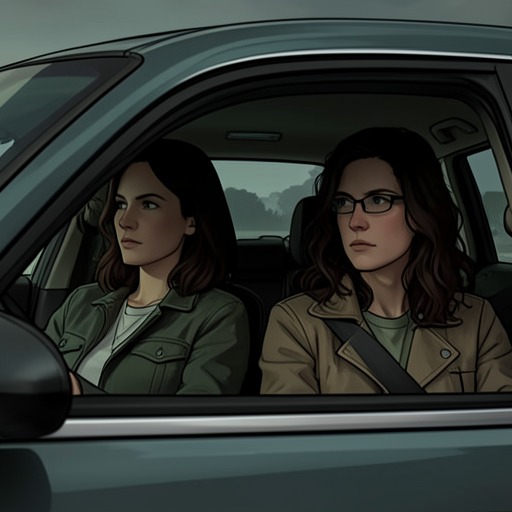
During the later school episode, Jake and the narrator are together in a car while a snowstorm continues outside. Their intimacy has made Jake feel vulnerable, and the narrator recognizes that vulnerability may explain why he becomes upset. The narrator also understands the situation from her own position: she, too, was vulnerable, yet wanted to leave and drive away. The difference between them is not a lack of awareness but a divergence in what each can bear in the moment.
Jake has seen a man watching them through a school window. The narrator initially considers how alarming that sight might have been for Jake, especially given the man’s appearance, and admits that she might also have lost her temper. At the same time, she remains focused on leaving rather than pursuing the encounter. The scene places mutual exposure beside a failure to act together: Jake goes toward the school, while the narrator stays in the car and looks after him. The later revelation that Jake himself was the man at the window changes the meaning of this remembered division, but does not erase the narrator’s earlier uncertainty about what he saw.
A future judged impossible
The narrator regards the relationship as unsustainable and believes it would not have worked out. That judgment is paired with concern for Jake: she thinks he will be fine without her, expects him to come into his own, and believes he will do something significant. She also assumes that his family does not need her, while acknowledging that the family has endured difficulties she may not fully understand. These beliefs make leaving appear, to the narrator, like a way of removing herself from Jake’s future rather than depriving him of support.
That confidence is later unsettled. The narrator’s assumptions about Jake’s family are part of a story that the ending revises: the account identifies the story about a troubled brother as made up and reveals that Jake’s parents had died long before. The narrator had imagined them safely at home, asleep, while believing Jake could continue without her. The final disclosure makes that imagined family context unreliable and sharpens the isolation at the center of their relationship.
Separation, recognition, and identity
Near the end, the narrator insists that the situation need not be final: she needs to find Jake, after which she can withdraw and begin again, and Jake can do the same. This imagined reset preserves the relationship as something that might still be restarted even after the narrator has judged it unsustainable. Yet the conclusion does not supply the separate future that this thought anticipates.
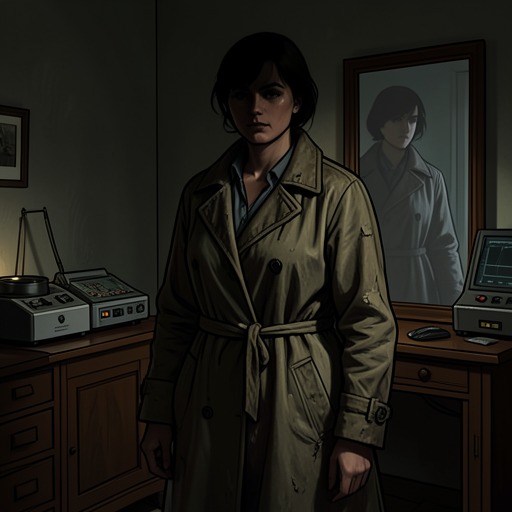
In the final revelations, Jake’s shoes are found in the locker room, and the narrator recognizes that Jake put them there before changing into rubber boots. The man at the school was Jake; the narrative then presses beyond mistaken appearance to an explicit merging of selves. The narrator also reconsiders the story about Jake’s brother and the apparent presence of his parents. These disclosures make the relationship’s separation into two independent lives increasingly difficult to maintain.
The narrator understands that Jake knew what she had only been thinking: that she was going to end it. They had not told him. The ending presents this knowledge alongside Jake’s inability to face being alone, turning the narrator’s private thought into something that has already shaped their bond. The closing language gathers Jake and the narrator into a shared “we,” no longer treating their connection simply as a relationship between two distinct people. Their story thus returns to the missed beginning at the Pub, but its final emphasis is not the romance that might have followed a exchanged number; it is the unresolved, intimate entanglement of two identities and the recognition that the narrator’s imagined separation cannot hold.