Jake's Custodian Disguise
I'm Thinking of Ending ThingsJake's Custodian Disguise makes a familiar person appear to be a menacing stranger, turning clothing and cleaning equipment into the means of a staged pursuit. First seen through the narrator's frightened, uncertain gaze, the masked figure seems to be a custodian in a deserted school. The later revelation that the figure is Jake recasts the scene: the outfit has concealed his identity while drawing the narrator farther into the building, where escape becomes part of the trap.
Appearance and Materials
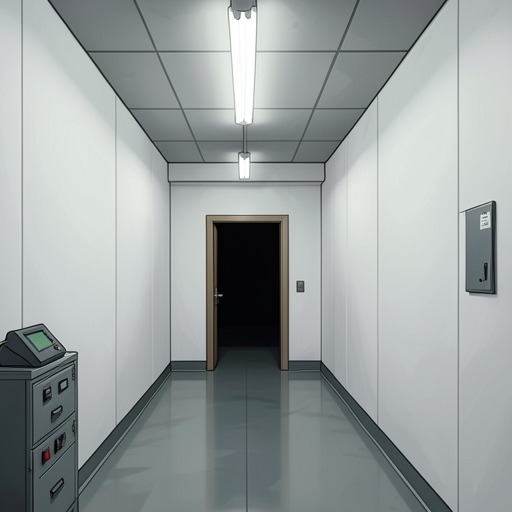
The narrator first distinguishes the figure by height and stillness: a very tall person at the far end of a hall, with something dangling from one arm. The object resolves into a broom or mop. Distance prevents a clear view, and the narrator can only tentatively make out dark-blue pants and a dark shirt that resemble work clothes. The figure's face is hidden by a mask.
The gloves make the figure's appearance more unsettling and more specific. The narrator sees yellow gloves, perhaps rubber, extending halfway up the forearms. Later, the narrator identifies them more certainly as yellow rubber gloves. Together with the mask, work clothes, and mop, they give Jake the appearance of a school cleaner while obscuring the person beneath the costume. The disguise is assembled from recognizable work-related items, but in the empty school those objects no longer read as ordinary tools or clothing: they become signs of a presence the narrator cannot identify or safely approach.
Rubber boots complete the change in appearance. The narrator later concludes that Jake removed his own shoes and put on the boots, leaving the shoes in the gym. The costume is therefore not only a mask and outer appearance; it changes what can be heard and recognized as the figure moves through the school. At the same time, the abandoned shoes remain a material clue linking the supposed stranger to Jake.
The Figure in the Hall
The disguise is introduced through restricted perception rather than a clear identification. The narrator ducks away from a window, peers back into the hall, and sees the figure facing toward them without moving. Fear makes the narrator hesitate between asking whether the figure can help and staying hidden. Even when the figure appears to be looking directly toward the narrator, distance and the mask prevent recognition.
The mop becomes part of the unsettling performance. The figure moves it across the floor in a motion the narrator compares to dancing. Then the figure disappears from the narrator's view and is seen lying facedown, arms tucked along the sides, before crawling or slithering down the hall. These abrupt changes in posture make an apparent custodian difficult to read as an ordinary worker. The narrator interprets the movements as dangerous and concludes that finding Jake and getting out of the school are urgent.
The scene's uncertainty is central to how the disguise works. The narrator does not know who the figure is, what he has done, or whether he can see them. The mask conceals a face, while the long hall and intermittent glimpses prevent a stable reading of his actions. The details of the outfit suggest a custodian, but the figure's motion unsettles that explanation; the narrator is left to navigate a threat before understanding its identity.
Clues and Recognition
The locker room begins to undo the disguise's concealment through objects Jake has left behind. The narrator finds one shoe, then the other, and carries both while moving toward the showers. The running water leads to a stall, where Jake's wet pants and shirt lie balled up beside the last stall. The narrator drops the clothes and wonders where Jake is. In the moment, the shoes and clothes are evidence of his absence, not yet a complete explanation of the masked figure.
The answer comes later, when the narrator reconstructs the sequence: Jake took off his shoes, left them in the gym, and put on rubber boots. The narrator then recognizes that the man in the school was Jake all along. The figure's apparent separation from Jake collapses. The cleaner was not an unrelated person encountered during the search; Jake had adopted the disguise and wanted the narrator to follow him into the school, where there would be no way out.
This recognition changes the meaning of the earlier details without making them disappear. The mop, mask, gloves, dark work clothes, and boots remain the visible features that frightened the narrator, but they now belong to Jake. The shoes and clothes in the locker room connect the disguised figure to the person the narrator was searching for, while the boots explain how he could move through the school under another appearance.
Disguise and the Final Encounter
The disguise persists into the final confrontation. The narrator hears the rubber boots and identifies them as Jake's boots and, in the confused language of their merging identities, as their own. When the figure stands at the door and approaches, he is still wearing something over his head and face and the yellow rubber gloves. The protective-looking costume remains between the two figures even after the narrator understands who is beneath it.
That barrier briefly opens when Jake lifts the bottom of the mask from his chin and mouth. The narrator sees his stubble and chapped, cracked lips, then puts a hand on his shoulder. The face is revealed in fragments rather than through a complete removal of the disguise. The gloves and mask therefore mark both concealment and proximity: Jake is close enough to touch, but he reaches that moment still partly covered by the persona that brought the narrator into the school.
Jake then places a metal hanger from the closet in the narrator's hand and says that he is thinking of ending things. The narrator straightens and bends the hanger so that its two pointed ends face the same direction. In this closing scene, the custodian outfit remains present as Jake approaches, but the hanger becomes the object through which the encounter moves toward its ending. The disguise's importance lies in the path it created: it transformed Jake into a threatening stranger, drew the narrator into the school, and was finally recognized at close range as part of Jake's own appearance.
Narrative Significance
Jake's Custodian Disguise organizes a reversal between appearance and identity. The narrator's first account is built from tentative visual details and fear; the later recognition supplies the missing connection between the masked figure, the rubber boots, and Jake's abandoned shoes and clothes. The reader encounters the disguise first as a source of danger and only afterward as evidence of Jake's deliberate role in bringing the narrator inside.
The costume also makes the school pursuit material rather than purely imagined. A mop, gloves, mask, clothes, boots, and shoes are individually ordinary objects, yet their arrangement allows Jake to move through the narrator's perception as someone else. When the disguise is recognized, the earlier details gain a second meaning: what had seemed to confirm the presence of a separate custodian instead records Jake's transformation and the narrator's delayed understanding.