Jake's Suicide at the School
I'm Thinking of Ending ThingsJake’s suicide at the school is the novel’s decisive convergence of concealed identity, isolation, and a question about whether life should continue. The apparent pursuit by a school custodian is revealed as Jake’s own design, and the narrator’s account then collapses the distance between the two figures: Jake asks for help, the narrator answers, and the act becomes both a death and a final, unstable joining of selves.
Causes and Background
Before the encounter, the narrator’s understanding of Jake rests on a family story in which Jake’s brother is the troubled one. In the school’s aftermath, that account is rejected as an invention: the narrator understands Jake as the troubled brother, and concludes that there was no brother at all. The story had offered a way to speak about distress at a remove; its collapse leaves Jake, rather than an absent sibling, at the center of the crisis.
The narrator also revises the apparent family support around Jake. The warmth attributed to Jake’s father when the narrator visited is recast as gratitude that someone had been kind to Jake. The account says that Jake’s parents had died long ago. These revelations do not supply a single, simple cause for the suicide, but they sharpen the picture of a life marked by loss and by the absence of the family relationships the earlier story seemed to provide.
The narrator’s reflections place that history within a wider account of human dependence. Human beings have limits and needs, the narrator recognizes, and cannot remain wholly alone. Endurance, in this view, depends on closeness with others; without it, life becomes a struggle to endure in isolation. The text therefore presents loneliness and the failure of help not as background decoration but as central conditions of the crisis. It does not reduce Jake’s death to one explanation: the narrator’s interpretation is shaped by grief, revelation, and an account of identity that is itself unstable.
The Custodian’s Pursuit and the Recognition
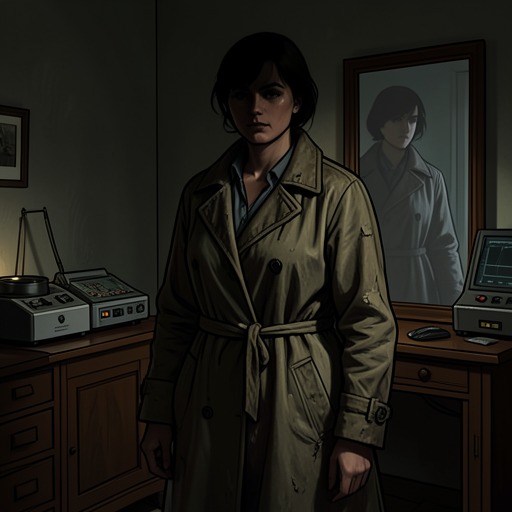
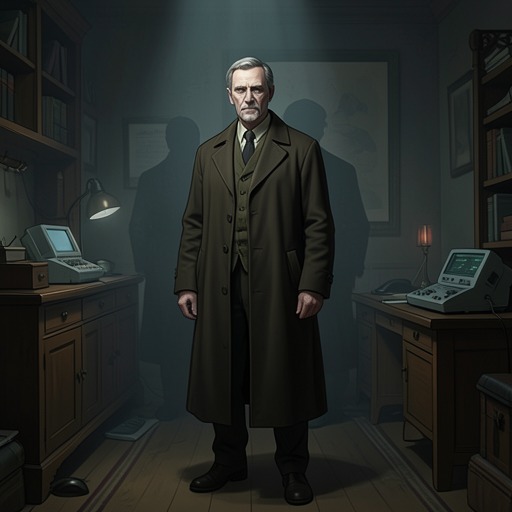
The school pursuit first appears to involve a custodian whom Jake alone sees. The narrator later concludes that there was no separate man to find: Jake wanted the narrator to follow him into the school, where the two would be trapped together. The custodian’s disguise and the pursuit thus turn the building into a deliberately arranged encounter. What had seemed like a search for another person becomes a route Jake has made for the narrator to reach him.
The recognition gathers force through concrete details. The narrator recalls Jake’s shoes left in the locker room and his change into rubber boots, then understands that Jake was the man all along. This is more than a solution to the mystery of the figure in the school. It overturns the division between pursuer and pursued, between the person who needs help and the person who has come to give it. The narrator’s account names the two as a shared presence, then breaks back into grief and tears.
The identity revelation also changes the meaning of Jake’s earlier story about his brother. The narrator now sees the story as a displacement of Jake’s own trouble, not as reliable family history. Because these disclosures emerge from the narrator’s interpretation after the pursuit, the scene makes recognition inseparable from uncertainty: the reader receives an explanation, but through a voice whose sense of self is already merging with Jake’s.
The Final Encounter
At the end of the encounter, Jake lifts the lower part of his mask, and the narrator places a hand on his shoulder. The narrator understands that they are together in the moment, rather than divided into the separate roles the pursuit had suggested. Jake puts a metal hanger from the closet into the narrator’s hand and says that he is thinking of ending things. The narrator apologizes, then acknowledges that Jake is asking for help and that the narrator has come to help him.
The narrator uses the hanger to kill Jake. The account reports the action without presenting it as a solution to the suffering that brought them there: Jake is beyond help, the narrator thinks, and help never came. The phrasing gives the act an unbearable double character. It is represented as a response to Jake’s request, yet it also confirms how completely support has failed; the only help available in the scene is inseparable from death.
Afterward, the narrator turns the decision upon themself. The narration describes this as answering the question, with the accompanying claim that no more thinking is needed. The consequences are rendered as a return from a shared presence to a single self: the narrator is alone again, and Jake is alone. The account does not present that return as freedom from loneliness. Instead, the sudden reduction from “all of us” to one person makes the apparent unity of the encounter feel temporary and devastating.
Aftermath and Narrative Significance
The novel later returns to the scene through a question about a note found near Jake’s body. The response describes it not simply as a note but as something detailed, perhaps a diary or a story. That description links the deaths to the act of narration itself. What the reader has encountered as a first-person account may also be understood as a constructed written record, and the uncertainty over its form echoes the uncertainty surrounding Jake’s brother, the custodian, and the narrator’s divided identity.
The scene’s recurring question is not whether a person can be classified as good or bad; the narrator concludes that this was the wrong question. The question that remains is whether to continue. Earlier reflections insist that people repeatedly have a choice for as long as they live, while the school sequence shows the terrible weight that the narrator assigns to that choice when no one else seems available. The contrast between the claim that there is always a choice and the felt absence of another way is left unresolved rather than softened into a moral lesson.
The suicide therefore functions both as a plot revelation and as the point where the novel’s themes become action. Jake’s concealed distress, the invented brother, the staged pursuit, and the narrator’s merging sense of self converge in one encounter. The later mention of a detailed account keeps that ending open to interpretation: the event is narrated as a shared final crisis, while the evidence of a story or diary invites the reader to reconsider who has been speaking and how much of the apparent separation between Jake and the narrator can be trusted.