Recurring headaches
I'm Thinking of Ending ThingsRecurring headaches are a physical strain that repeatedly interrupts the narrator’s ordinary routines and becomes especially pronounced during a winter drive with Jake. The pain is not given a medical explanation, but its changing intensity is described concretely: a severe headache prompts a request for Advil, and later a headache persists, worsens, and approaches migraine level. Between those moments, the narrator’s response to Jake’s careful handling of the pills briefly unsettles a possible decision to end the relationship. Pain is therefore both bodily fact and a circumstance through which attention, care, and ambivalence become visible.
First episode and Jake’s gesture
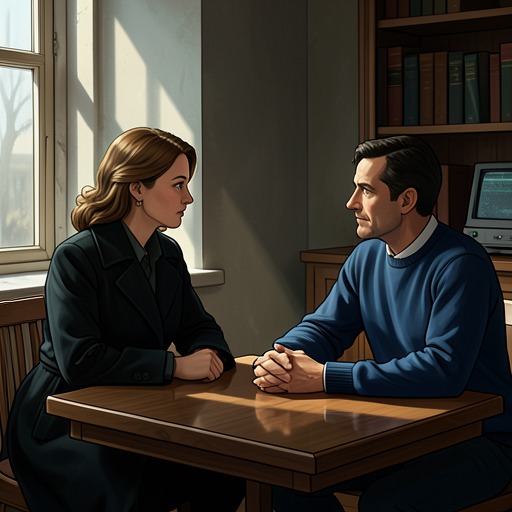
The narrator describes the headaches as a recent problem, distinguishing the episode that prompts a request for medicine as one of the bad ones. While talking by phone, the narrator asks Jake to bring a couple of Advil when he comes over. The request is repeated, but the narrator doubts he will remember, in keeping with the impression that Jake can be absent-minded and forgetful. That expectation sets up the importance of what happens when he arrives.
The narrator does not ask about the pills, partly to spare Jake embarrassment if he has forgotten. He does not mention them at first either. During their conversation, he suddenly remembers and produces a small package from his pocket. It is not simply two loose tablets: he has wrapped three pills in a ball of Kleenex and sealed it with a piece of tape. The narrator compares its shape to a large white Hershey’s Kiss. The third pill is an extra in case it is needed, and the care taken to protect the medicine matters as much as the medicine itself.
The narrator thanks him and goes to the bathroom for water, but does not explain why the package has made such an impression. The gesture is understood as a kind of consideration Jake would not have taken for himself. It also arrives at a precarious moment: the narrator reflects that a breakup might have happened that night, though even the intention to leave remains uncertain. The pills do not resolve the relationship’s underlying questions; instead, this small, specific act of care makes the narrator rethink the immediate decision.
Pain during the winter drive
Later, while travelling with Jake, the narrator has not brought up the headache again since getting into the car. The wine may have made it worse, and the air in Jake’s Parents’ Old Country House is also considered as a possible factor, but neither is established as a cause. The physical description is more certain than the explanation: the narrator holds the head with the neck taut and slightly forward, finding only partial relief from that position. Movement, a bump, or even a twitch is uncomfortable. The pain restricts posture and makes the ride a continuous negotiation with the body.
At the stop, Jake suggests getting something sweet. The narrator agrees, but clarifies that the headache is still present and that tiredness may be involved. Jake had thought it was improving; the narrator corrects that impression, reporting that it is worse and close to a migraine. When Jake asks how bad it is, the narrator understates it, saying it is not too bad. The exchange sets the narrator’s reported condition beside the answer offered to Jake: the pain is described plainly to the reader, then softened in conversation. The scene does not say that the understatement is deliberate, but the contrast leaves the severity of the experience clearer than the reassurance he receives.
Weather, setting, and expectation
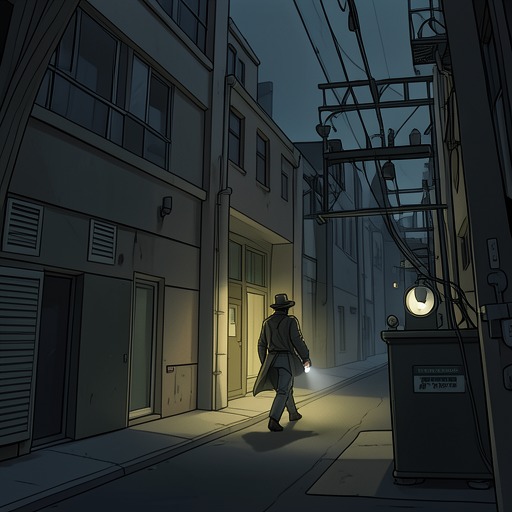
Outside the car, the cold and wind are intensifying, and the snow is beginning to swirl rather than fall straight down. The narrator finds the cold pleasant against the head and hopes to be in bed with Advil before the snowfall settles. There is already a plan for the next morning: if the headache is gone, the narrator will shovel. The storm therefore makes the immediate wish for rest concrete while placing an ordinary task on the far side of the hoped-for recovery. Jake remarks on the feel of a large storm and the freezing wind, but the narrator’s attention remains fixed on whether the pain will pass.
The stop is at the Rural Dairy Queen, which is nearly empty and close to closing. Its bright interior makes the narrator feel nauseated; the clean, prepared-for-closing tables, the metallic drone of machines and freezers, and the almost chemical smell give the place an oppressive sensory quality. The drone reminds the narrator of a dial tone. These details accompany the headache, but the account does not claim that the store’s noise or smell causes it, nor does it identify the nausea as part of the headache. Instead, the setting adds to a scene in which ordinary surroundings are registered through discomfort, while the narrator waits with Jake beneath the glowing menu.
Narrative significance and limits
The headaches recur across different kinds of intimacy: first in the apartment, where Jake’s act of bringing medicine becomes unexpectedly meaningful, and later in the car, where the narrator’s bodily distress is not fully conveyed to him. The contrast is not between a caring Jake and an uncaring one; the packaged pills show attention, while the drive shows that even close company does not make the narrator’s experience automatically legible. Care can be offered without the narrator naming the full extent of the need.
The account stays with sensation and uncertainty rather than settling on a diagnosis. It records a recent pattern, a particularly bad episode, a worsening headache approaching migraine, a posture that offers only partial relief, and a moment of comfort in the cold. Wine and the air in the old house are possibilities raised by the narrator, not confirmed explanations. This restraint keeps the headaches grounded as lived experience: they alter movement, plans, appetite, and conversation, while leaving their cause unresolved.