Solitude, isolation, and human connection
I'm Thinking of Ending ThingsSolitude, isolation, and human connection are bound together in the novel as both a refuge and a limit. The narrator initially imagines being alone as a gentler way to live, free of small talk and interruption; inside the school, that preference meets its frightening opposite: confinement with no one to help. The contrast turns connection from a social convenience into a condition of endurance, and finally into part of the question of whether life can be continued.
Solitude as a Chosen Refuge
The narrator’s attraction to solitude is practical as well as emotional. Reflecting on a night custodian’s work, the narrator imagines the appeal of completing tasks alone, at a self-directed pace, without students, interruptions, or the expectation of conversation. The imagined arrangement extends beyond work: living alone as well as working mostly alone might make life feel easier and more natural. Solitude appears to offer control over the terms of contact, not simply an absence of other people.
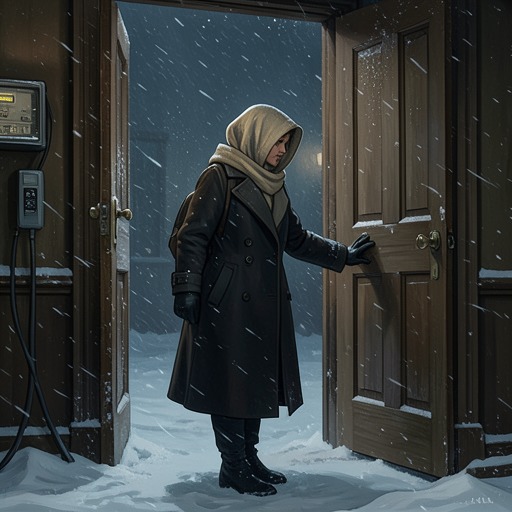
That account is not presented as a settled truth. The narrator acknowledges spending substantial time alone and cherishing it, while also recognizing that Jake thinks the solitude has become excessive and may be right. The distinction matters: solitude can be sought as relief, but its value depends on context. When the narrator is in a freezing car near the school and Jake is gone inside, the narrator insists that being alone is unwanted in that place and moment. The same person who prefers solitude elsewhere wants Jake back and wants the frightening situation to end. The reversal makes isolation less an identity or preference than a condition shaped by safety, choice, and circumstance.
Confinement and the Failure of Self-Reliance
Inside the school, the narrator’s isolation becomes physical and apparently inescapable. The music seems to recur through the classrooms, halls, and locker rooms; after wandering and crawling through the building, the narrator concludes there is no way out. The repeated song and the familiar school do not provide orientation or comfort. Instead, the building’s recognizable spaces become a closed circuit in which fear persists. The narrator’s questions about how this confinement happened and why it happened to them register not just confusion about events, but the extremity of being left alone inside them.
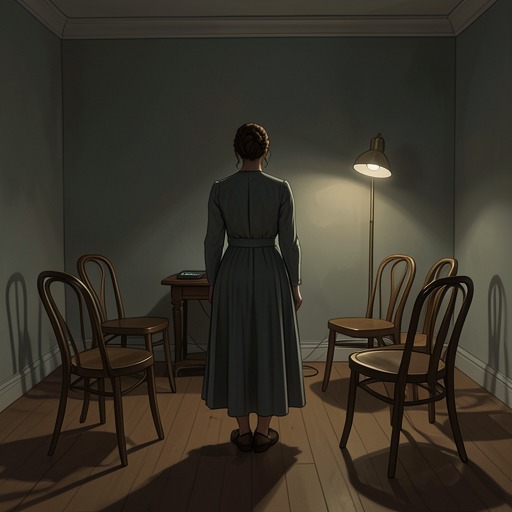
The narrator tries to make contact with a world outside the school by mentally returning to an ordinary room: a blue chair beside a bookshelf, a lamp, and familiar blue shoes worn indoors. The details offer a fragile counterweight to darkness, silence, and the song. The narrator reasons that the room still exists even when they are not there, and that focusing on it makes it real. This mental act demonstrates both resourcefulness and its limit. Memory can supply an image of a place beyond confinement, but it cannot open an exit or provide another person’s presence.
The account of fear reinforces that limit. Fear is not treated as a brief shock that naturally fades; it can remain and spread unless another feeling replaces it. The narrator’s effort to focus on remembered objects occurs within that continuing state, not after it has passed. The contrast between a concrete remembered room and the school’s oppressive silence shows the mind reaching for stability while the body remains trapped. Solitary endurance is therefore not simply a matter of courage: the narrator presents it as a struggle made worse by having no one to share or interrupt it.
Connection as the Infrastructure of Endurance
Near the end, the novel states the social dimension of this predicament directly. The narrator questions the ideal of enduring anything through individual strength, arguing that endurance is possible only when a person is not alone. Closeness with others is described as part of life’s infrastructure; without it, existence contracts into mere endurance. This shifts the meaning of strength. Persistence is not dismissed, but the text rejects the idea that a person should be able to sustain themselves indefinitely without support.
The narrator then presses the argument to its most severe form: what can someone do after trying to live entirely alone, when no one else is ever there? Time itself—days, weeks, years, a lifetime—takes on another meaning under that condition. Love and empathy remain imaginable and potentially experienceable, but the question is with whom. The absence of a recipient makes emotional capacities insufficient on their own. The passage frames continuing or not continuing as a decision that returns because isolation has not been answered by a reliable human presence.
The claim that interaction and connection are compulsory sharpens the distinction between chosen solitude and imposed separation. Solitude may be sustaining for a time; the narrator even observes that it cannot sustain itself forever, except in the sense that it may persist indefinitely. That bitter qualification refuses an easy resolution. A person can remain isolated without that isolation becoming healthy or self-sufficient. The text’s emphasis is not that every moment alone is harmful, but that human need cannot be abolished by preferring independence.
Recognition, Relationship, and the Final Question
Connection also means being known. The narrator proposes that a relationship may be recognized as real when someone previously unconnected comes to know a person in a way that person never expected or believed possible. This account makes intimacy more than proximity: its force lies in an encounter that alters what can be known about the self. It also stands in tension with the narrator’s earlier wish to avoid small talk and other people’s demands. The desire for privacy is real, but so is the possibility that another person’s attention can disclose a self inaccessible in solitude.
The ending brings this account of connection into the narrator’s interpretation of Jake. The narrator concludes that the story about Jake’s troubled brother was made up, that Jake himself was the troubled one, and that there was no brother. The parents, previously part of the family story, are understood as having died long ago. These revelations make Jake’s isolation more than a temporary separation from the narrator: the account suggests a life shaped by concealed suffering and missing family support. The narrator’s statement that Jake is beyond help, followed by the assertion that help never came, gives the absence of connection a grave consequence without reducing it to a single explanation.
The narrator also understands that Jake knew about the intention to end the relationship, although it had not been spoken aloud. That recognition unsettles the boundary between private thought and interpersonal knowledge: the narrator had thought the decision remained unshared, yet Jake somehow knew. In the final reflections, the question of whether people are good or bad is rejected as the wrong question. What remains is the choice of whether to go on. The narrator’s recollection of a missed chance to offer someone a number at the pub adds a specific counterfactual to that final decision: perhaps an earlier connection might have changed what followed, but the narrator could not make it. The novel does not turn that possibility into certainty. Instead, it leaves the missed connection beside the unanswerable weight of the present choice, underscoring how urgently the need for another person can matter and how little a wished-for alternative can repair once the moment has passed.