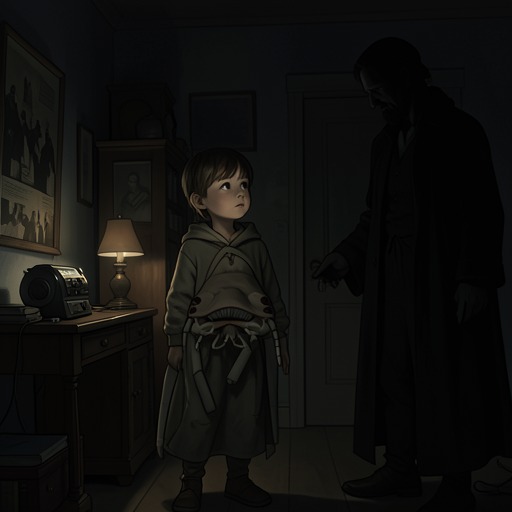
There’s grace in doing the right thing
I'm Thinking of Ending ThingsThere’s grace in doing the right thing is a recurring expression that frames choice as both a human capacity and a responsibility. In the school’s final crisis, it moves from a general claim about making a human decision to a direct insistence that everyone still has a choice, giving the idea ethical weight amid suffering and uncertainty.
The Claim and Its First Form
The expression first appears as part of a meditation on ordinary human limits and the decisions that remain available within them. The narrator asks what counts as a day or a night, then places the possibility of doing the right thing beside the assertion that people always have a choice. That choice is not presented as a rare, decisive privilege: it recurs every day and belongs to everyone encountered in life.
The passage gives the claim a collective scope. The question facing each person is described as the same, something people may try to ignore but must consider repeatedly for as long as they live. In this framing, moral agency is not a solution to human fragility; it is a continuing demand made within it.
Repetition at the School
Later, the expression returns in a more hesitant form: “There’s grace in doing the right thing, in making a choice. Isn’t there?” The question tag unsettles the assurance. Grace is offered as a possibility, but the narrator’s uncertainty makes clear that the statement is not a comfortable maxim or a guarantee that choosing will relieve pain.
The final recurrence strips away the earlier elaboration: “There is a choice. We all have a choice.” Its short, declarative sentences turn the theme into an urgent insistence. The words arrive as the narrator considers what gives life significance and asks why people wait instead of making things happen. The repetition therefore binds the idea of choice to the crisis unfolding in the school, without making that crisis easy to resolve.
Ethical and Narrative Significance
Across its appearances, the expression shifts from reflection to doubt to insistence. Its central tension is that a choice can remain available even when the people facing it are frightened, fragile, and suffering. The language does not specify a single right answer; it emphasizes the burden and persistence of deciding.
The passage’s recurring emphasis on choice also changes the force of the surrounding questions. The narrator’s thought about what is being awaited follows the claim that everyone has a choice, while the closing image of tears and approaching boots keeps that claim within a moment of immediate distress. The expression thus serves as a moral refrain rather than a resolution: it asserts agency at the point where the narrative makes its cost most difficult to ignore.