Full-Moon Transformation Constraint
I'm the Werewolf in my ClassThe Full-Moon Transformation Constraint governs the relationship between the full moon and Sebastian Wolfe’s bodily transformation. It first appears as an involuntary crisis on his sixteenth birthday, then becomes a force he can recognize and eventually choose to yield to. The moon therefore functions not merely as a supernatural signal but as a recurring limit on Sebastian’s ordinary life, a summons into the pack’s world, and the pressure through which his divided identity is finally brought into a new synthesis.
Definition and First Manifestation
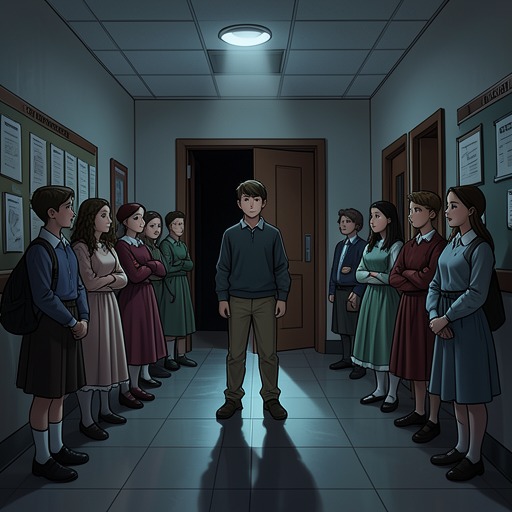
The constraint is established when Sebastian’s sixteenth birthday coincides with the appearance of the full moon. His unusually rapid facial-hair growth is an early physical sign, though neither Sebastian nor his family initially explains it. At school, he becomes pale and nauseated, feels burning at the back of his neck, and stumbles toward the woods behind the school. There, his bones seem to shift and coarse dark hair begins to grow from his skin. The change is frightening because it is both physical and inexplicable: Sebastian initially denies that it can be real, even as his body contradicts him.
The full moon then becomes the visible trigger for the first completed transformation. As the first school bell rings and the moon emerges from behind a cloud, Sebastian throws back his head and produces a howl that is not human. His birthday, conventionally associated with celebration and entry into a new stage of life, is thus recast as an involuntary threshold. The constraint binds age, lunar timing, and bodily revelation together: at sixteen, Sebastian cannot remain securely within the ordinary human identity he has known.
The immediate aftermath reinforces the cost of the transformation. Sebastian is found unconscious at the edge of the woods by his friends and remains out for about an hour. At school, Nurse Chen reports that his friends had noticed him acting strangely throughout the morning. His raw throat and pounding head preserve physical traces of the episode, while the adults around him interpret the incident through the safer language of illness and concern. The moon has altered Sebastian’s life before he understands the rule that governs it.
The Moon as a Call into the Pack
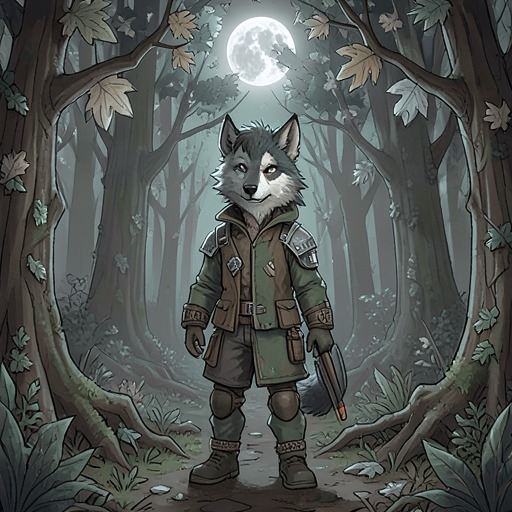
Once Sebastian learns that the changes and heightened senses are connected to his werewolf nature, the full moon no longer operates only as an enemy of self-control. It becomes an attraction he cannot ignore. On a later full-moon night, he is drawn to his window, watching the moon rise over the trees; before he can dissuade himself, he climbs out and silently drops to the ground. The physical pull turns private knowledge into action, carrying him from the family home toward Crescent Hill Park.
At the meeting place, Lily Chen welcomes him to the pack while five teenage werewolves gather in the moonlight. Their glowing eyes and shared condition transform the moonlit setting from a scene of isolation into one of recognition. Sebastian experiences a sense of belonging he has never previously known. The same lunar force that first separated him from ordinary classmates now leads him toward people who can name and accept what he is.
The pack’s welcome does not make the constraint harmless. A hostile howl interrupts the gathering, and Ethan explains that something significant is approaching. When Ethan and the others shift into wolf form, Sebastian feels the moon’s pull and the surge of power in his veins. This time he closes his eyes and allows the wolf inside him to take over. His transformation is still governed by an external lunar pressure, but his response has changed from terror and denial to deliberate acceptance. In wolf form, his senses become sharper: he can smell the fear and excitement of the others and hear their rapid heartbeats. The moon initiates his entry into pack life, while the pack gives that involuntary force a social meaning.
Recurrence and Escalation
The constraint returns during the Halloween season with greater danger because the relevant full moon is a rare blue moon, the second full moon in a single month. Earlier in the day, Sebastian and the pack use costumes to help him appear ordinary at school, allowing him to exist as both a werewolf and a normal teenager in plain sight. For several hours he experiences the relief of ordinary student life through classes, compliments, candy exchanges, and the Halloween atmosphere.
At sunset, however, the lunar condition reasserts itself. Tension creeps into Sebastian’s muscles, the pull of the moon grows stronger, and the costume begins to feel claustrophobic while students gather for the Halloween dance. Outside, beneath the low, heavy full moon, he removes his mask and finds his senses on high alert, detecting sounds and scents unavailable to humans. The contrast is precise: the costume can conceal his outward form, but it cannot restrain the bodily rule. Human performance lasts only until the moon’s pressure becomes stronger than disguise.
The night also places the lunar constraint within a larger emergency. The rogues are no longer merely passing through; Ethan explains that they want territory and are seeking something hidden in Crescent Hill. Lily later warns Sebastian that the rogues have entered Crescent Hill High and may have realized that he is connected to the artifact. The school fire alarm and Lily’s urgent attempt to remove him from the building show ordinary institutional order giving way to supernatural crisis. When another howl sounds, Sebastian stops trying to remain at the dance and says, "Let's go," already feeling the change ripple through his body. The full moon does not simply force a private transformation; it presses him to choose between the human gathering behind him and the pack’s dangerous mission.
The Clock-Tower Transformation
The constraint reaches its most consequential form at the Crescent Hill Clock Tower. Sebastian races there with the pack while the Halloween dance fades behind him, carrying the unresolved wish to bridge his two worlds. At the top of the tower, Ethan and the pack are fighting vicious rogue werewolves, and a small wooden box is embedded in the giant clock face. The artifact becomes the object around which the lunar struggle is concentrated.
When a rogue lunges for the box, Sebastian shifts in midair and collides with the attacker. Later, as another rogue lunges toward Mia, she clutches the wooden box to her chest while the full moon shines through the clock face and bathes the room in silver light. Sebastian’s blood has spilled onto the floor, and the moon, the artifact, and his blood converge in accordance with the prophecy. The established lunar trigger is therefore joined by inheritance, artifact power, and immediate danger; the transformation is no longer merely a recurring change of shape but a decisive response to a threat against Mia and the pack’s objective.
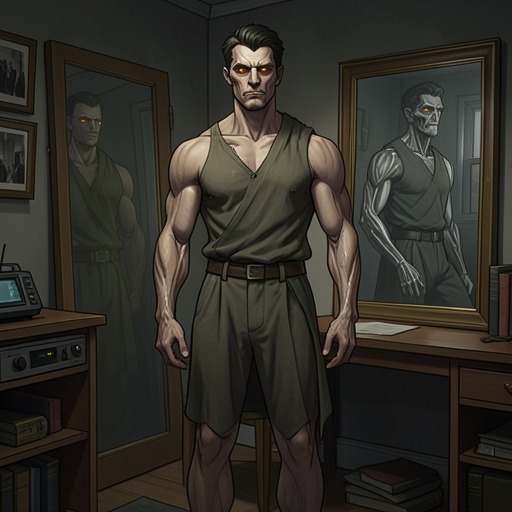
Sebastian’s body becomes something new. He is described as neither only a wolf nor only a boy, but a synthesis of both. With a roar that exceeds either category, he slams into the rogue with enough force to send both of them through the clock face. The full moon has previously exposed a hidden nature and summoned him into pack membership; here it intensifies that nature into hybrid power. Yet the consequence is peril rather than effortless victory: Sebastian falls through the broken clock face with the rogue, uncertain whether he will survive or what the new power will demand.
Consequences and Significance
Across its recurrences, the Full-Moon Transformation Constraint changes from an unexplained bodily violation into a pattern Sebastian can read, anticipate, and partly direct. The first full moon leaves him unconscious and frightened. The next draws him willingly to Crescent Hill Park, where the pack recognizes him. The blue moon at Halloween forces him to abandon the appearance of normality and join the defense of the community. At the clock tower, lunar power participates in a transformation that integrates his human and wolf identities rather than leaving them as opposing states.
The rule also organizes the story’s movement between institutions and forms of belonging. Sebastian is treated as a vulnerable student after being found in the woods, concealed as an ordinary teenager through a Halloween costume, threatened when rogues enter the school, and finally affirmed by the pack during combat. The moon repeatedly interrupts the structures meant to keep life normal, but each interruption brings Sebastian closer to an identity that others can share with him. Its pressure produces separation before it enables reintegration.
The final emotional consequence is expressed after the battle, when Sebastian’s future remains uncertain but no longer feels frightening in the same way. The recurring lunar crisis has led through pain, secrecy, recruitment, danger, and hybridization to a sense of belonging. The concluding feeling that it is like coming home gives the constraint its deepest narrative meaning: the full moon is the force that first makes Sebastian an outsider, yet it ultimately helps him recognize the supernatural self and community to which he belongs.