Halloween
I'm the Werewolf in my ClassHalloween functions in the story as both a school holiday and a supernatural threshold. During the day, costumes, candy, friendship, and embarrassment allow Sebastian Wolfe to inhabit ordinary teenage life; after sunset, the full moon and an approaching confrontation transform that apparent normality into a dangerous passage toward revelation. The holiday’s decisive significance lies in this double movement: Halloween gives Sebastian a way to hide his werewolf identity in plain sight, yet it also becomes the night when concealment fails and his new nature reaches its most powerful form.
A Holiday Under Pressure
The weeks before Halloween leave Sebastian exhausted. Secret pack meetings, late-night searches through family records, and the effort to preserve a normal routine at school have stretched him thin; the bags beneath his eyes have become permanent, and his grades are slipping even though Mia is trying to help him study. On Halloween morning, he has been awake for much of the night with Ethan and Lily, examining an old map of Crescent Hill found inside one of his great-grandfather’s journals. The holiday therefore begins not as carefree anticipation but as an interruption imposed on an already urgent investigation.
The ordinary demands of Halloween immediately expose the strain between Sebastian’s two lives. Alex texts him to remember his costume and threatens, in a jokingly exaggerated way, to disown him as a friend if he arrives at school without one. Sebastian realizes that the supernatural crisis has made him forget the school’s costume contest, and his attempt to find something in his closet fails. His mother calls from downstairs because he is about to be late, leaving him to go to school without a costume and expecting ridicule from his friends. The domestic birthday atmosphere earlier in the story, marked by his mother’s chocolate chip pancakes and her reminder that he is sixteen, contrasts with this later holiday morning, when family routine continues while Sebastian carries secrets that his household life cannot openly contain.
Costumes and Concealment
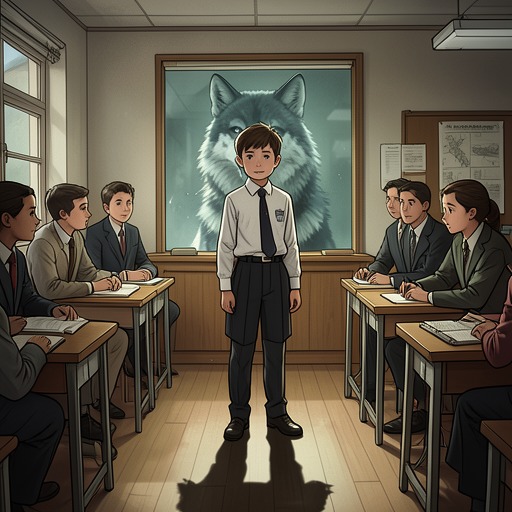
The halls of Crescent Hill High are filled with superheroes, monsters, and students dressed as bedsheet ghosts. Sebastian tries to disappear among them, but Alex quickly notices that he has no costume. She is dressed as Wonder Woman, while Mia arrives as an unusually convincing Hermione Granger, and Sebastian is momentarily overwhelmed by Mia’s appearance as well as by the social pressure of the celebration. The scene retains the recognizable comedy of a high-school Halloween, yet Sebastian’s discomfort has a second cause: he is already living inside the monster that the other students are only pretending to represent.
Ethan and Lily solve the immediate problem by giving Sebastian a costume and pushing him toward a bathroom before first period. Inside the stall, he discovers that it is deliberately cheesy and excessive: a werewolf outfit unlike the sleek, realistic costumes worn by Ethan and the others. Alex and Mia laugh when he emerges, and the embarrassment becomes a form of protection rather than exposure. The costume turns his secret identity into a joke that can be seen without being believed. Ethan’s approval helps Sebastian understand what his packmates have done: they have given him a method of hiding in plain sight, allowing him to appear both as a werewolf and as a normal teenager through the same clever disguise.
For several hours, Halloween offers Sebastian a temporary restoration of ordinary adolescence. Classes continue, students exchange candy, and classmates compliment one another’s costumes. The supernatural identity that had made every school day strange can be folded into the holiday’s accepted playfulness. The disguise does not erase the danger or make Sebastian human again, but it lets him move through school without forcing the truth into the open. Halloween thus creates an unusual reversal in which the most conspicuous costume is also the safest one.
The Blue Moon and the Turning Point
The holiday’s atmosphere changes as the sun sets and long shadows cover the school grounds. Tonight is a full moon, but not an ordinary one: it is a rare blue moon, the second full moon in a single month. Sebastian begins to feel the familiar tension in his muscles, and the costume that had helped him blend into school life suddenly feels restrictive and claustrophobic. At the Halloween dance, surrounded by dim, colorful lights and gathered students, he can no longer treat the moon as distant background. Its pull grows stronger, pressing the supernatural world through the surface of the celebration.
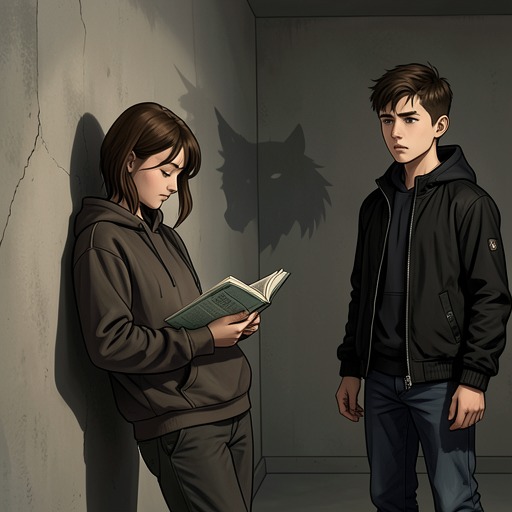
Mia notices that something is wrong and asks whether he is all right. Sebastian’s response is not given as a simple return to normality; instead, the pack’s emergency becomes impossible to postpone. Lily reaches him and urgently pulls him toward a side exit, warning that the rogues are at the school. She explains that they may have discovered Sebastian’s connection to the artifact and that he must be taken out of the building. The Halloween dance, which had provided a brief illusion of safety, becomes the threshold through which Sebastian leaves civilian school life and returns to the pack’s conflict.
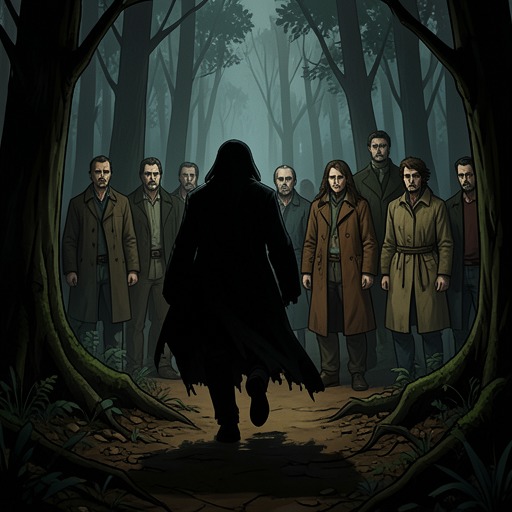
The transition is marked by sound and movement. The noise of the dance fades as the pack disappears into the night, replaced by wolf howls and paws striking the earth. Halloween has not merely supplied the setting for an attack; it has staged the collision between two kinds of performance. Students have been pretending to be monsters for amusement, while Sebastian and the pack have been disguising a real supernatural condition. Once the rogues arrive, the distinction between costume and body, game and danger, collapses.
From Masquerade to Revelation
The night’s danger culminates at the Crescent Hill Clock Tower, where a rogue lunges toward Mia as she clutches the wooden box containing the artifact. Ethan and the others are too far away to help, while the full moon shines through the clock face and bathes the room in silver light. Sebastian’s blood spills onto the floor, and the moon, the artifact, and his blood converge in accordance with the prophecy. The holiday’s symbolic language of masks and transformations becomes literal: Sebastian can no longer rely on a costume to contain what he is becoming.
Sebastian answers the attack with a transformation beyond the categories that have defined him. He becomes neither simply a wolf nor simply a boy, but a synthesis of both. With a roar described as more than wolf and more than human, he leaps at the rogue and drives them through the clock face. His body and power cross the boundary that the earlier costume had only imitated. The result is not a controlled return to ordinary life but a violent plunge through the clock tower into the cool night air, with the ground rushing upward and Sebastian uncertain whether he will survive or understand the meaning of his new strength.
Halloween therefore contains two transformations in succession. The first is comic and social: a deliberately exaggerated costume lets Sebastian conceal the truth by displaying a harmless version of it. The second is physical and consequential: the blue moon, the artifact, the prophecy, and Sebastian’s spilled blood produce a hybrid transformation that changes the stakes of the story. What begins as a contest of costumes ends with the destruction of a boundary between human and wolf.
Aftermath and Lasting Meaning
The holiday’s immediate consequence is not a return to uncomplicated normality. Sebastian’s transformation makes the supernatural conflict more visible and places him at the center of the struggle over the artifact. Halloween has moved him from secret recruitment and guarded experimentation into an act witnessed by Mia, Ethan, and Lily, after which his identity cannot remain merely private. The attack also confirms that the rogues are willing to enter the school environment and pursue the artifact through Sebastian’s connection to it.
Yet Halloween does not end only in danger. After the later crisis, Mia remains with Sebastian in the hospital when a nurse clears everyone else from the room. Sebastian prepares to discuss everything, but Mia kisses him first and tells him that she has wanted to do so for a long time, whether he is a werewolf or not. Her response gives the night’s transformations an emotional counterpart: the person closest to Sebastian does not reject the identity that has separated him from ordinary life. As he falls asleep, the future remains uncertain and filled with challenges and mysteries, but it no longer seems frightening. The feeling is described as coming home.
In this structure, Halloween becomes a ritual of passage. Sebastian begins the day burdened by exhaustion, secrecy, and the fear of failing at ordinary teenage expectations. He is temporarily reintegrated into school through a costume supplied by his friends, then separated from that world when Lily warns him about the rogues and the blue moon draws him toward the night. He returns from the crisis changed, more powerful, and newly recognized by the people who matter to him. The holiday’s final significance is therefore not the costume contest or the dance, but the movement from disguise to acceptance: Halloween allows Sebastian to discover that his two selves can be joined, and that belonging may survive the revelation of what he really is.