Lan Yue
I'm the Werewolf in my ClassThe blue moon is the rare second full moon in a single month, and its appearance marks the most dangerous and transformative night in Sebastian Wolfe’s story. It magnifies the pull already associated with the full moon, converts an ordinary Halloween celebration into a supernatural threshold, and joins the moon, the artifact, Sebastian’s blood, and the prophecy at the moment his identity changes permanently.
Definition and First Transformation
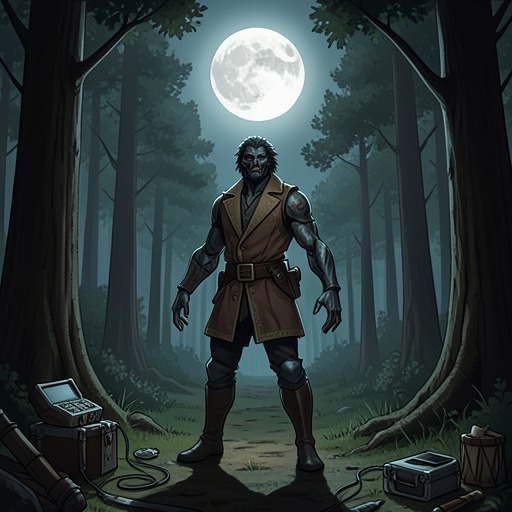
The blue moon is introduced as an exceptional full moon rather than an ordinary lunar recurrence. On Sebastian Wolfe’s sixteenth birthday, the full moon is already linked to his first transformation: his bones seem to shift, coarse dark hair sprouts from his skin, and he throws back his head and howls in a voice that is no longer human. That birthday establishes the moon as a force that exposes a bodily inheritance Sebastian has not understood.
The later blue moon intensifies this pattern. By Halloween, Sebastian is no longer merely discovering that his body can transform; he recognizes the moon’s pull as a recurring danger that must be managed. Its rarity gives the night additional pressure, because the full moon is described as not just any full moon but the second full moon of the month. The lunar event therefore functions both as a natural time marker and as a supernatural trigger.
Halloween and the Threshold of Change
The blue moon transforms the school’s Halloween dance from a temporary return to normality into a threshold between ordinary teenage life and open supernatural conflict. Earlier that day, Ethan and Lily disguise Sebastian in an intentionally exaggerated werewolf costume. The costume lets him hide in plain sight, appearing to be both a werewolf and a normal high-school student, and for several hours he experiences the relief of seeming ordinary.
At sunset, however, the blue moon reverses that fragile security. Tension returns to his muscles, the costume begins to feel claustrophobic, and the growing lunar pull makes concealment increasingly impossible. The contrast is central to the moon’s role: the costume is a human-made disguise, while the blue moon is an external force that draws out what the disguise cannot contain. Mia notices Sebastian’s distress at the dance, placing their developing intimacy beside the bodily threat he is trying to suppress.
Connection to the Clock-Tower Battle
The blue moon reaches its greatest narrative importance during the confrontation in the Crescent Hill Clock Tower. As a rogue lunges toward Mia while she clutches the wooden box containing the artifact, moonlight shines through the clock face and bathes the room in silver light. Sebastian sees the immediate danger to Mia, the distance separating Ethan and the other pack members from the fight, and the moon overhead in the same charged instant.
The scene joins four forces: the blue moon’s supernatural pressure, the artifact’s presence, Sebastian’s blood spilling onto the floor, and the prophecy that has previously pointed toward their convergence. The moon does not act alone, but it provides the temporal and visual condition in which these elements become one. Sebastian’s response is a leap rather than a calculated decision. His roar is described as more than wolf and more than human, and his body becomes something neither category can explain by itself.
Sebastian’s transformed body is a perfect synthesis of boy and wolf. He slams into the rogue with enough force to send both of them through the clock face, beginning the plunge from the tower. The blue moon thus accompanies the story’s decisive transformation and the immediate physical consequence of that transformation: Sebastian must survive a fall after using the new power to protect Mia and stop the attack.
Consequences and Meaning
The blue moon changes the meaning of Sebastian’s lycanthropy. His first full-moon transformation is frightening and involuntary, beginning with pain, confusion, and disbelief at the edge of the woods behind school. During the blue moon, the transformation still carries danger, but it becomes purposeful. Sebastian directs the power toward protecting Mia and confronting the rogue, demonstrating that his supernatural nature can be integrated rather than merely endured.
The lunar event also binds private identity to communal recognition. Ethan’s proud nod and Lily’s triumphant smile witness Sebastian’s new form at the instant it appears, while Mia’s awestruck expression confirms that the transformation is visible to the people whose acceptance matters most. After the battle, Mia remains with Sebastian in the hospital and kisses him, explicitly accepting him whether he is a werewolf or not. By the final note that being with his new future feels like coming home, the blue moon has come to signify not only danger but passage: it marks Sebastian’s movement from fearful isolation toward a life in which his divided nature can belong.