The Wolfe Family Revelation
I'm the Werewolf in my ClassThe Wolfe Family Revelation is the disclosure that transforms Sebastian Wolfe’s sixteenth birthday from an unsettling day of unexplained physical changes into the beginning of a new inherited identity. After his first transformation leaves him horrified and confused, his parents explain the Wolfe family curse, the family’s history of first transformations at sixteen, and the need to balance ordinary human life with werewolf nature. The event gives a name and lineage to Sebastian’s altered body, but it does not make the future simple: control will be difficult, secrecy remains necessary, and the revelation immediately places him between his family’s guarded isolation and the wider werewolf world.
Causes and Background
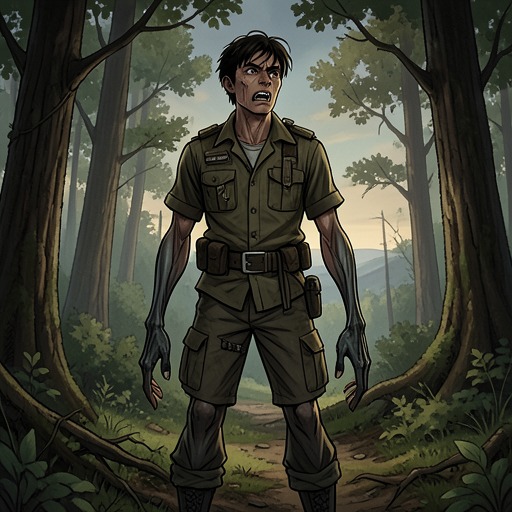
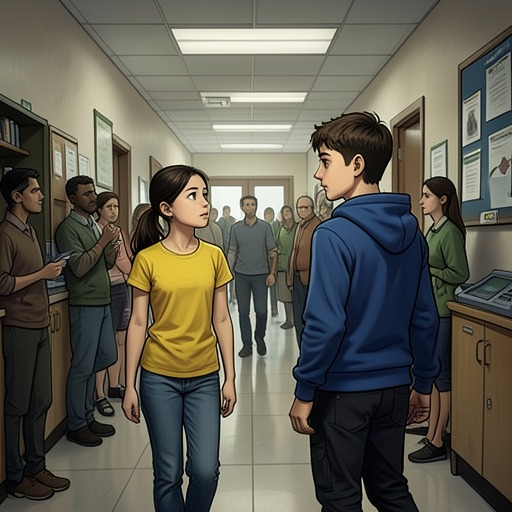
The revelation follows a sequence of symptoms that Sebastian cannot interpret. On his birthday, his mother celebrates his sixteenth year with chocolate chip pancakes, while his father watches him with an unsettling seriousness and asks how he feels. Earlier changes have already made Sebastian self-conscious: facial hair has begun growing faster than he expects, and his body reacts with unfamiliar intensity. At school, nausea, burning skin, blurred vision, and shifting bones drive him toward the woods, where coarse dark hair sprouts from his hands. When the full moon appears, he throws back his head and produces a howl that is unmistakably nonhuman.
The family disclosure therefore answers a crisis already written into Sebastian’s body. His parents are waiting for him at home with serious expressions, signaling that the conversation is deliberate rather than accidental. For the first time, the unexplained sensations, the transformations, and the heightened senses are gathered into one explanation: Sebastian belongs to a family marked by a werewolf curse, and his sixteenth birthday has activated the inherited pattern his parents feared.
What the Family Reveals
Over the course of an hour, Sebastian’s parents explain the Wolfe family curse and the rule that the first transformation occurs at sixteen. They also describe the struggle of maintaining a human life while living with werewolf nature, making clear that the condition is not a single frightening incident but an ongoing dual existence. Sebastian’s transformations in his room and in the woods are identified as his first transformations, not isolated illnesses or accidents.
His father warns that the changes will initially be unpredictable, but promises that Sebastian will learn to control them and that the family will help. This assurance gives the revelation a practical dimension: the family is not merely naming a curse; it is introducing a process of training, adaptation, and responsibility. Sebastian’s fear is thus met with both a threat and a method. The wolf inside him may be powerful and unstable, but it is not presented as beyond understanding.
The parents also reveal that other werewolf families exist. The Wolfes generally keep to themselves because secrecy is safer, establishing concealment as a collective survival practice rather than merely Sebastian’s personal embarrassment. Their silence has been protective, but it has also left him unprepared for the first signs of transformation. The family’s guardedness explains why Sebastian has entered the werewolf world without a vocabulary for what is happening to him.
Emotional and Familial Consequences
The disclosure is painful partly because Sebastian’s parents admit that they wanted to tell him sooner but hoped the curse might have skipped him. Their hope explains the delay without removing its cost. Sebastian has had to confront the first changes alone, interpreting them as something unreal and denying them even as his body becomes impossible to ignore. The revelation supplies parental support only after terror has already forced the secret into the open.
Sebastian responds with stunned silence and a rush of questions, including whether there are others like him. He thinks of Lily’s invitation to meet at Crescent Hill Park, but chooses not to tell his parents about it. That omission is his first clear act of ownership over the secret. Although the family has now explained his heritage, Sebastian does not surrender every decision to them; he asks for time to process the information and chooses what to disclose.
His mother’s final assurance that the family loves him regardless of what he is gives the event its emotional anchor. The curse changes Sebastian’s circumstances, but it does not cancel his place within the household. He leaves the conversation still overwhelmed, yet no longer entirely alone: the family offers knowledge, help, and unconditional attachment even as its history becomes a source of new uncertainty.
From Family Secret to Pack Belonging
The revelation immediately changes Sebastian’s relation to the world beyond his home. Drawn by the full moon, he climbs from his bedroom window and walks to Crescent Hill Park, where Lily is waiting with five other teenagers whose eyes glow in the darkness. Her welcome identifies him as a new member of a hidden community, and the group’s presence confirms that his father’s statement about other werewolf families was only the beginning of what Sebastian can discover.
The meeting becomes an experiential counterpart to the parental explanation. At home, Sebastian receives history and warning; in the park, he receives recognition. When the teenagers transform, including Ethan becoming a massive silver-gray wolf, Sebastian confronts the werewolf nature as a shared practice rather than a private curse. He feels the pull of the moon and allows the wolf within him to take over, experiencing a world in which smell, sound, fear, and excitement become sharply perceptible. The family revelation makes this transition intelligible, while the pack makes it socially meaningful.
That belonging remains complicated. The pack soon faces the threat of rogues, who later appear at Crescent Hill High because they believe Sebastian is connected to an artifact. The revelation has therefore expanded Sebastian’s identity and also exposed him to dangers associated with it. His new knowledge links him to a community, a contested supernatural world, and responsibilities that ordinary school life cannot contain.
Narrative Significance
The event functions as the story’s threshold between involuntary metamorphosis and conscious participation. Before it, Sebastian explains away his condition with excuses, including low blood sugar and a stomachache, because he does not understand what he is concealing. After it, he can begin learning control, recognize other werewolves, and choose whether to enter the pack. The revelation does not resolve the conflict; it supplies the terms under which the later transformations, the rogue threat, and Sebastian’s eventual synthesis of human and wolf can be understood.
Its significance also lies in the contrast between inherited identity and chosen belonging. Sebastian cannot choose the Wolfe family curse or the age at which it first manifests, but he can choose how to respond to the knowledge, whom to trust, and whether to accept the community that recognizes him. The story later presents him as more than either a boy or a wolf, a synthesis made possible because the family revelation first names the divided nature he must learn to integrate.
By the end of the larger sequence, Sebastian wakes after the clock-tower plunge to find that his friends are safe, the artifact is secure, and Mia knows the truth about him. The emotional direction of the story has shifted from concealment to shared knowledge. His final sense that it feels like coming home echoes the earlier family assurance and the pack’s welcome: the revelation begins with a frightening inheritance, but it ultimately becomes the foundation for a wider belonging.