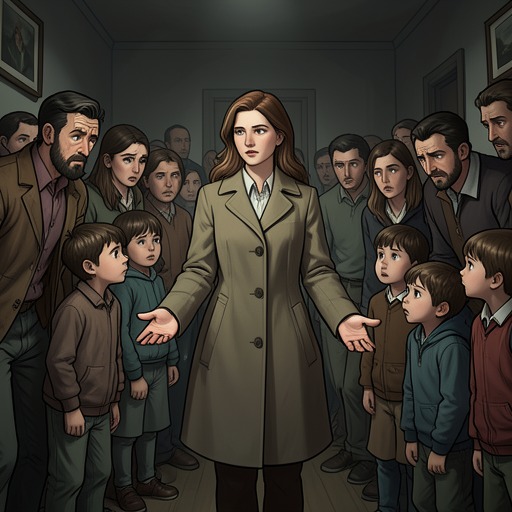
Forced Orphanage Acquisition Confrontation
I’m Very Happy After Marrying the CEO Husband According to the AgreementThe Forced Orphanage Acquisition Confrontation is the decisive moment when the orphanage’s survival becomes inseparable from the children’s safety and Dean Mum’s right to choose their future. What is presented as a benevolent plan to move vulnerable children into a better-funded institution gradually reveals itself as an attempt to obtain control of a place filled with Dean Mum’s memories. Shen Tang’s arrival, refusal, and promise of protection transform her from a visitor bringing supplies into the orphanage’s active defender.
Causes and Background
Shen Tang arrives at the orphanage carrying so many clothes, snacks, learning materials, and toys that the purchases require truck delivery. Her exuberant arrival is immediately interrupted by the crowd outside the gates, where Dean Mum sits on the ground, crying while hugging a child. The orphanage is already under pressure because only a dozen-plus children remain, most with significant disabilities; the children who could be adopted have largely found homes, while those left behind are especially vulnerable to abandonment and mistreatment.
The proposed closure is framed as a practical merger. The official-looking person in charge says the orphanage is too small and claims that the children could receive better care at the larger orphanage next door, with superior surroundings, medical resources, and facilities. Yet the justification relies on assurances rather than a transparent process. When Shen Tang asks which authority issued the order, requests a written notice, and demands to know how anyone can guarantee that the children will not be bullied after the move, the representative offers no verifiable answer beyond his own description of the other institution.
The pressure works because the children do have illnesses and require care. Dean Mum understands that proper treatment could matter enormously, and she briefly admits that she would accept closure if better treatment for the children were genuinely guaranteed. The apparent humanitarian choice changes as soon as the representative produces a purchasing contract. Closure would mean the orphanage ceased operating while remaining, in principle, under its own identity; acquisition would transfer the place to someone else. The document therefore exposes the material stake beneath the language of welfare: the issue is not merely where the children will live, but who will control the orphanage and the memories attached to it.
What Happens at the Gate
Dean Mum’s reaction is immediate once she skims the contract. She realizes that the visitors do not merely want the orphanage shut down; they want to buy it. Because the institution contains her fondest memories, the proposed purchase feels like an appropriation of her life as well as a threat to the children. She refuses to agree. Shen Tang reads the document but cannot determine whether its terms conceal legal traps, so she tries to photograph it and send it to professionals for examination. The representative blocks her, insisting that the contract cannot be leaked, a small procedural gesture that makes the supposed offer look less like an open agreement than a controlled exercise of pressure.
The standoff continues outside the entrance while onlookers gradually lose interest and disperse, leaving only the two opposing groups. The representative grows impatient and urges Shen Tang to sign, claiming that the matter will then be settled and that he will not deceive them. Shen Tang answers with an opposing demand: he should take his contract and his people away, after which she will pretend the incident never happened. His response makes clear that withdrawal is not really being offered; he scoffs at the idea that they would simply leave the orphanage alone.
Dean Mum, frightened, considers yielding because she does not want Shen Tang to be dragged into the dispute. Shen Tang cuts off that hesitation with a serious assurance that she will not let anything happen to Dean Mum. The statement is not an abstract expression of sympathy. It places Shen Tang physically and morally between the orphanage and the people attempting to take it, and it turns the confrontation into a promise of personal protection.
The pressure also becomes openly coercive. A yellow-haired man provokes Shen Tang by making an insulting gesture, and Xiao Yu immediately kicks him. The police present then threaten to take the defenders away, treating Xiao Yu’s response as the visible offense while claiming not to have heard what caused it. The episode demonstrates the instability of formal procedure in the confrontation: the presence of police does not automatically protect the weaker side, because authority can focus on the retaliatory act and disregard the provocation that produced it.
Participants and Power Relations
Shen Tang is the central resisting force, but the conflict gathers several different kinds of vulnerability around her. Dean Mum holds the emotional and custodial connection to the orphanage, while the children—especially those with disabilities—depend on the adults around them for protection and medical care. Their limited ability to advocate for themselves is precisely what makes the language of institutional improvement so persuasive and so dangerous. The children can be represented as beneficiaries of a better environment while being excluded from any meaningful decision about the place they call home.
The representative uses official appearance, superior information, and the contract itself as instruments of authority. He presents the acquisition as inevitable instruction from above, refuses to provide a written notice, and prevents Shen Tang from obtaining outside legal review of the document. His method combines a consequentialist appeal—better treatment for disabled children—with the practical reality that the people at the gate are asking Dean Mum to surrender control before the promised benefits have been independently established.
Shen Tang’s resistance follows a different ethical logic. She does not deny that the children need treatment, nor does she reject the possibility that another institution might possess better facilities. Instead, she refuses to treat uncertain promises as a substitute for consent and evidence. Her questions expose the gap between care as a stated objective and acquisition as the demanded result. In that gap, the confrontation’s central conflict becomes visible: the children’s welfare is used to justify a transfer of power, while the people who know the children best are pressured to accept guarantees they cannot verify.
Consequences and Narrative Significance
The confrontation converts the orphanage from a sentimental refuge into a contested institution. Before the visitors arrive, Shen Tang’s relationship with the place is expressed through gifts, affection, and the children’s delight at seeing her. At the gate, those personal gestures meet contracts, official claims, police intervention, and the threat of removal. The truck full of supplies consequently acquires a sharper meaning: material generosity can comfort the children, but it cannot by itself secure their home. Protection requires scrutiny of documents, resistance to coercion, and the willingness to confront people who possess greater institutional power.
The episode also establishes why the orphanage’s crisis cannot be dismissed as a simple argument over property. Dean Mum’s memories, the children’s disabilities, the possibility of bullying after a merger, and the absence of reliable written authorization all make the proposed purchase a question of belonging and safety. A place that appears inefficient when judged only by size may nevertheless provide forms of patient, individualized care that cannot be measured by facilities alone. The orphanage’s small scale is treated by the representative as evidence of inadequacy; Shen Tang’s questions insist that it may instead be part of what makes the children known and protected.
As a dramatic conflict, the scene moves from apparent administrative benevolence to exposed coercion. The promised better care encourages Dean Mum to waver, the purchasing contract reveals the hidden objective, the refusal to permit scrutiny limits informed consent, and the police response shows how quickly the defenders can be recast as troublemakers. Shen Tang’s decision to stand with Dean Mum gives the sequence its decisive turn. The acquisition is not accepted, the orphanage is not quietly absorbed, and the threat remains active—but the people inside are no longer facing it passively. The confrontation thus becomes the opening assertion that the children’s future cannot be negotiated through secrecy, pressure, or force.