Shen Tang's Orphaned State
I’m Very Happy After Marrying the CEO Husband According to the AgreementShen Tang's Orphaned State is not merely a biographical detail but a governing condition of her identity. Having grown up in an orphanage, Shen Tang learns early that other people cannot be treated as permanent shelter. That lesson produces a guarded independence: she expects abandonment, relies on her own capacity, and reacts with unusual force when someone offers the ordinary care she was denied. The state therefore links her material past to her adult choices in entertainment, friendship, work, and intimacy.
Childhood Without a Family
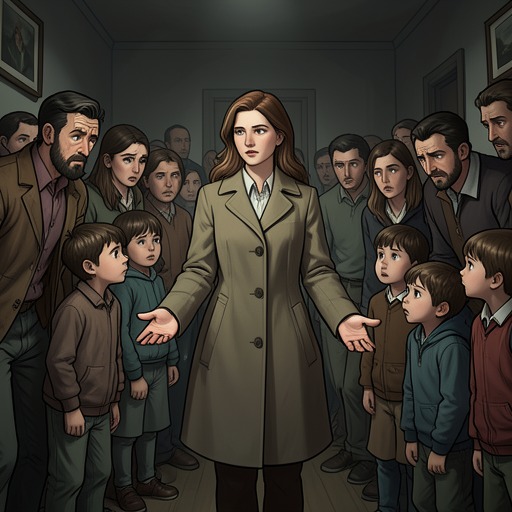
Shen Tang's childhood is associated with the orphanage and with the practical insecurity of growing up among children who could turn against one another. When she reflects on the difficulties of orphanage life, she recalls that children there also formed groups to bully or gang up on others. The memory gives emotional weight to her conclusion that those who depend on mountains collapse when the mountains fall and those who depend on people are abandoned when people leave. For Shen Tang, the saying is not decorative wisdom; it is a rule learned through experience. She therefore regards dependence as dangerous and self-reliance as the safer form of survival.
Her early circumstances also appear in a small recollection about her childhood fascination with butterflies. As a child, she wanted to change her name to Butterfly Princess, but the matron refused. The episode is playful rather than tragic, yet the matron's presence quietly confirms the institutional setting in which Shen Tang was raised: an adult caretaker could make decisions about her life, but that care did not amount to the secure family belonging she lacked.
Adult Self-Reliance
The orphaned state remains active when Shen Tang enters the entertainment industry. In the present life she is a Z-list celebrity surrounded by relentless rumors and degrading labels, while her company's public-relations team pairs her indiscriminately with male celebrities to exploit attention. The industry treats scandal as publicity and her public image as a marketable resource, but Shen Tang is prepared to leave the business rather than continue striving inside a system that has made her a target. Her willingness to withdraw is tempered by practical responsibilities: Wang Brother reminds her that she once wanted to earn enough money to buy a house and improve her siblings' living conditions. Her ambitions are thus not simply about fame; they are tied to creating material security for the people connected to her.
Even when she remains in the public eye, Shen Tang turns vulnerability into controlled labor. During a livestream intended to help farmers sell agricultural products from remote mountainous regions, black fans flood the room and the rising hostility sharply increases the stream's popularity. Shen Tang maintains a professional smile while being insulted, calculating that the revenue split will still benefit her. The performance shows how her orphaned state intersects with economic realism: humiliation is endured because money can provide something more reliable than public affection.
Care, Friendship, and Chosen Attachment
Because Shen Tang is accustomed to doing without dependable care, domestic kindness affects her disproportionately. Tao Sister prepares a sumptuous low-fat breakfast, and Shen Tang eats too much because the food is so good, undermining her attempt to lose weight. Remembering a previous life in which breakfast consisted of a sandwich or a couple of buns, she squeezes out tears and silently gives thanks for the transformation in her circumstances. Her response is not only gratitude for a meal. It is grief for the deprivation that made such an ordinary breakfast feel miraculous. She even wonders whether Tao Sister could accompany her after the two-year marriage period ends, revealing a desire to preserve a source of dependable care beyond the contractual arrangement.
Her friendships likewise develop through repeated acts rather than inherited kinship. Miao Miao messages Shen Tang to play King of Glory, and Shen Tang joins after waiting for Miao Miao to finish another match. Later, Shen Tang discovers Gu Huaian online at King rank and is pulled directly into his room for a game. In another match, she is teamed with two girls who play mage and support and a boy who has three jungler heroes available; the boy begins scolding almost immediately. These gaming encounters turn a competitive platform into a social space where Shen Tang can meet allies, test trust, and confront hostility without surrendering her identity to the entertainment industry's gossip machinery.
The contrast is especially sharp when a jungler insults her after she asks for help while being repeatedly attacked in the bottom lane. Shen Tang is already frustrated by a score of zero to three, yet the abuse does not erase her willingness to speak directly or continue playing. Her social world is therefore divided between relationships formed through mutual participation, such as her connection with Miao Miao, and hostile environments in which strangers attempt to reduce her to a sexualized stereotype.
Rules Around Intimacy and Control
Shen Tang's orphaned state also helps explain the practical distance written into her marriage arrangements. The supplementary agreement requires that, except when necessary, she remain at least three meters away from Party A and prohibits physical contact except when necessary. Shen Tang accepts the restriction without difficulty, even imagining that thirty meters would be acceptable. Distance offers safety because it prevents intimacy from becoming an obligation before trust exists. At the same time, the rule turns domestic life into a regulated arrangement: the household may become livelier after her arrival, but the contract still formally governs the space between the spouses.
Her daily routines show other forms of self-management. After sleeping until noon, she attempts exercise on a yoga mat while browsing Weibo, then abandons her main account after encountering a stream of private messages cursing her and creates a smaller account instead. She can retreat from one hostile audience and construct another, but the need to manage exposure remains. The same pattern appears in her professional life, where strict closed management on set prohibits mobile phones and controls when crew members may communicate. Shen Tang repeatedly navigates institutions that regulate her body, time, speech, and visibility.
Narrative Significance
The orphaned state gives Shen Tang a distinctive position between isolation and attachment. She does not assume that affection will last, yet she is deeply moved by food, companionship, and practical concern when they arrive without coercion. Her instinct is to depend on herself, but the plot repeatedly places her before people who make dependence appear less dangerous: Tao Sister through care, Miao Miao through friendship, and others through sustained presence. This tension prevents orphanhood from functioning as a static label. It becomes the emotional logic behind Shen Tang's resistance to humiliation, her concern for housing and family welfare, her cautious acceptance of intimacy, and her readiness to recognize chosen relationships as a form of family.