
Participation Is Not Entertainment
I'd Like to Apologize to Every Teacher I Ever HadDanza’s teaching experiments refine the distinction between keeping students amused and making them active participants in their own learning.
increasing Bearing strength in each event
 decreasing
Bearing strength in each eventdecreasingA Teacher Performs

A Teacher Performs
Attention sought
Danza tells stories, jokes, and personal anecdotes whenever class becomes uncomfortable. He equates a lively audience with a successful lesson.
A mentor names the problem
David Cohn points out that students’ voices are too quiet beside the teacher’s. The critique challenges Danza to value learning rather than applause.
The Myth Rap

The Myth Rap
Modeling a risk
Danza performs a creation myth as a rap, making himself vulnerable to student laughter. The students respond warmly and begin to imagine making their own work.
Participation follows
Pairs write and perform myths, drawing on humor and invention. The teacher’s performance succeeds because it leads students into doing the intellectual work themselves.
Literature as a Scavenger Hunt
Literature as a Scavenger Hunt
Review redesigned
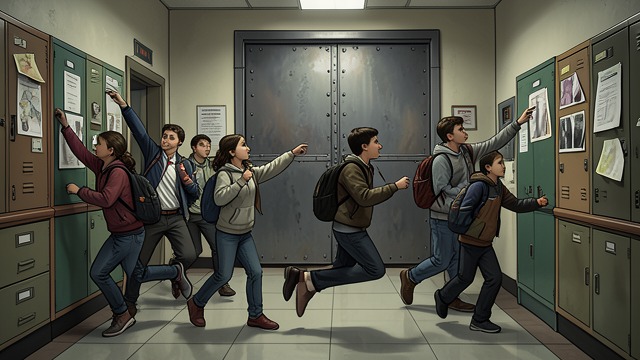
Danza builds stations around characters, mood, figurative language, and details from Of Mice and Men. Students move through the school in teams and compete to solve each challenge.
Learning becomes visible
The students’ excitement makes preparation observable. Their later exam results show that activity can support retention rather than simply distract from academic content.
Shakespeare in Student Language
Shakespeare in Student Language
Translation as interpretation
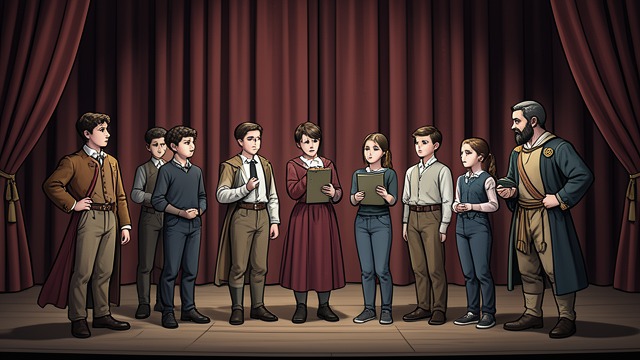
Danza invites students to rephrase scenes from Julius Caesar in their own language. Their performances make difficult dialogue less intimidating without removing the original text.
Understanding revealed
Students demonstrate knowledge through acting and explanation. The exercise shows that engagement can preserve rigor when students must make meaning rather than merely watch.
The Final Exam as Evidence

The Final Exam as Evidence
Learning measured broadly
Danza gives a comprehensive exam despite the school’s lack of a required finals week. He wants evidence of what students retained beyond standardized-test measures.
A meaningful result
No student fails, and essays repeat lessons from class in students’ own handwriting. The exam gives Danza a more personal measure of learning than an entertainment response could provide.
The first weeks of school
September, during the mythology unit
October, before the first novel exam
November, during the Julius Caesar unit
The final days of the school year
