Tony Danza–Alex relationship
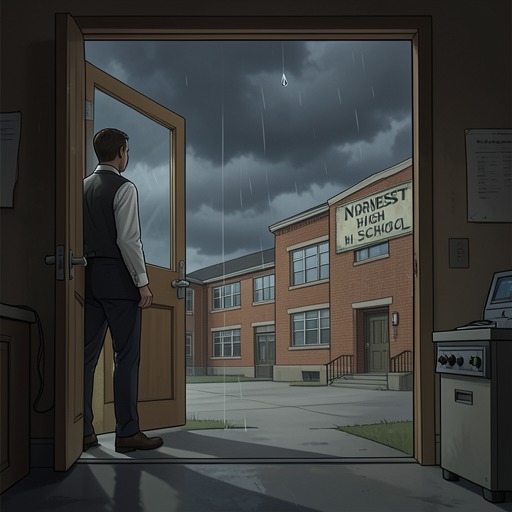
I'd Like to Apologize to Every Teacher I Ever HadThe Tony Danza–Alex relationship begins in the ordinary traffic of Northeast High School and becomes one of Danza’s most lasting student connections. Poetry gives Alex a way to make grief and inner conflict visible, and Danza responds not only by encouraging his talent but by helping him find audiences, opportunities, and support beyond the classroom. Their bond survives Danza’s departure from the school, though Alex’s changing foster placements make clear that care and commitment cannot guarantee a simple or settled outcome.
An Acquaintance Becomes a Confidence
Alex first enters Danza’s room before school as a tenth grader who is not in his class. Danza recognizes him from the hallways: during the first semester, they had nodded to one another, and a joking attempt at a handshake had turned into a familiar fist-bump greeting. Now Alex pauses to look at the poetry posters on the wall, where student poems sit alongside biographies and images. Danza lets him browse before asking about his interest in writing. The exchange marks a change in their acquaintance: Alex is no longer only the boy who passes through the corridor, but a student choosing to share something of himself.
Alex says that he writes mostly about his father, who was killed in a car accident. Danza tells him that he, too, lost his father, while recognizing that he was older when it happened. When Alex also reveals that his mother was stabbed to death, Danza’s response becomes physical: he crosses the room and embraces him. Alex accepts the bear hug, although Danza cannot tell whether he welcomes it or merely tolerates it. That uncertainty matters. The encounter establishes closeness without suggesting that a teacher’s sympathy can erase the distance between their experiences.
Alex says that he and his sister live in a foster home with his stepuncle. Danza asks to read his writing, and Alex agrees. The following day he brings an overfilled binder of poems. The work is prolific and, in Danza’s judgment, accomplished; its subjects include bullying, sorrow, teen suicide, and helplessness. I’m an Oxymoron, a long poem about Alex’s conflicting feelings, unsettles Danza but also carries a hopeful ending. The writing gives Danza a more detailed view of the student than casual hallway contact could provide, while giving Alex a means to communicate difficult experience without having to explain it all in conversation.
Poetry as Encouragement and Public Recognition
Danza encourages Alex’s ambition to compete in poetry slams. They discuss the confidence performance requires, and Danza helps him work on enunciation and stage presence. Alex soon becomes a regular at the half-sandwich club, extending their connection beyond the initial conversation and the exchange of poems. The mentorship is practical: Danza treats Alex’s writing not just as something to praise, but as a skill that can be developed and performed.
On Earth Day, Alex brings Danza a poem about the environment and asks whether Ms. DeNaples might let him recite it over the school intercom. Danza privately doubts that the request will succeed, but encourages Alex to ask rather than discouraging him in advance. Ms. DeNaples not only approves the poem but invites him to deliver the morning announcements, an unusual opportunity for a tenth grader. Danza coaches him to stand straight and breathe before taking the microphone. Alex begins the announcements in a grave, composed manner, and the office staff listens closely. The moment makes his writing audible across the school: an individual student’s work is briefly given the reach and authority of the school’s public voice.
When Alex finishes, the office erupts in cheers. Teachers congratulate him and ask to copy the poem for their classes. As he and Danza leave, a girl Alex likes hugs him and praises the reading. This recognition extends beyond adult approval; for Alex, the performance also brings a welcome moment of peer attention. Danza’s encouragement has helped create the conditions for that moment, but Alex supplies the poem and stands at the microphone himself.
The success develops into a broader literary identity. Alex becomes, in effect, Northeast High School’s poet laureate, competes in the Philly Youth Poetry contest, and travels with the team to Los Angeles to compete with street poets from around the country. He also writes poetry for UnLitter Us, a local public-service campaign encouraging Philadelphians to clean up their city. Danza sees poetry as something that lifts Alex and helps him get to and through school. His support of Alex therefore becomes part of a larger conviction that arts education matters, especially for students whose strengths may not be recognized through athletics, mathematics, science, or conventional school leadership.
Separation, Camp, and a New Set of Risks
Near the end of the school year, Alex’s home circumstances deteriorate. He has been moved to yet another foster home and separated from his sister. Danza begins contacting people who might help. Kelly Gould, Danza’s assistant, arranges a free four-week stay at her family’s summer camp in the Poconos. By the time Alex is preparing to leave, the necessary paperwork is complete, and the camp offers a temporary world apart from foster care. Danza asks him to send a poem from the mountains, carrying their shared language of writing into the next stage of Alex’s life.
The camp becomes more than a temporary placement. Alex meets a boy his age who becomes his best friend; both are poets, and they write together, record their work, and post it on YouTube. When the boy’s parents visit, they grow fond of Alex and agree to become his foster parents. After camp, Alex moves into their home in Bucks County, and in the fall attends the same school as his new foster brother. The apparent resolution brings Danza one of the happiest moments of his life when he later visits Philadelphia and sees Alex with the family. Yet Danza also urges Alex to show through his own effort that the family’s decision to take him in was worthwhile. He wants the placement to last and does not want Alex to be moved again.
That hopeful arrangement does not hold. The friendship between the boys sours, and conflict within the family also develops, though not because of Alex. Danza tries to help from a distance, speaking with Alex by phone and hearing his distress. Alex misses Northeast and is no longer speaking to his friend. After consulting Alex’s social worker, the foster mother and others decide that Alex will move in with his twenty-three-year-old brother, who is married and has an apartment near the school. Alex later says he is happy to be back at his old school. The change restores a familiar place, but it also makes plain that the camp and new family were not a permanent fairy-tale ending.
A Continuing Mentorship with Limits
Danza acknowledges that Alex’s vulnerability activates his own adoption fantasy. When Alex says that he wishes he lived with Danza, the teacher does not turn that wish into a promise of family; he settles instead for becoming Alex’s unofficial mentor. Alex seems to be doing well back in Philadelphia, but finishes his junior year with a C average, and the news that he has a girlfriend brings Danza both excitement for him and concern. The relationship continues in a more modest form: Danza helps arrange for Alex to return to the Poconos camp the following summer and checks in with him every Sunday, while recognizing that he can do only so much.
The mentorship also has a specific ending at Northeast. On Danza’s last day, Alex is among the students still in the room, and Danza reminds him of their deal: he will be checking on Alex, and Alex should do well for his own sake, not merely to qualify for a trip or please his mentor. Alex asks whether he will see Danza in Los Angeles, and Danza affirms their plan. Their farewell includes a fist-bump and a bear hug, gestures that recall the playful hallway greeting and the earlier embrace after Alex disclosed his losses. What began as cautious contact has become affection and an expectation of continued connection.
Danza’s later reflections locate Alex’s story within the emotional cost of teaching. He remains in touch with students after leaving Northeast and continues to follow the turns in Alex’s life, but does not claim to control them. He describes the effort to engage students as requiring engagement with their lives, problems, and futures; that involvement makes teaching rewarding and more difficult than he expected. Alex’s changing placements give that insight its sharpest form. The relationship endures not because Danza can provide a final rescue, but because he keeps showing up as a mentor while facing the boundary between care and responsibility. For both men, poetry, regular contact, and remembered promises become ways to sustain a connection across school, foster homes, and separation.