Tony Danza—Daniel relationship
I'd Like to Apologize to Every Teacher I Ever HadTony Danza’s relationship with Daniel comes into focus at the close of the school year, when praise, obligation, and separation meet in a nearly empty classroom. Danza tells Daniel that his talent is real, asks him to sustain the work he has done, and leaves him with the expectation that he will keep going after the class disperses. Their final exchange gives the relationship its defining shape: encouragement is affectionate, but it also asks Daniel to take responsibility for his own future.
Identity and Context
The relationship is a teacher-student bond formed during Danza’s year at Northeast High School. The available account does not describe its beginning in detail; instead, it presents Daniel through a small number of end-of-year moments that suggest an established familiarity. Daniel calls him “Mr. D.,” speaks comfortably about the classroom, and remains among the last students with him after the school’s commencement ceremony. Danza, in turn, addresses Daniel personally rather than treating him as one name in a graduating class.
That intimacy sits within a larger transition for Danza. He had left a successful television career for real teaching, while also confronting his age, his separation from his wife, and the demands of being away from his children. Near the end of the year, he admits uncertainty about whether he wants to care so intensely about anything again. The book does not say that Daniel alone determines Danza’s decision about teaching; it does place their final exchange within a year in which Danza has become invested in students and must face what it means to leave them.
Talent and Recognition
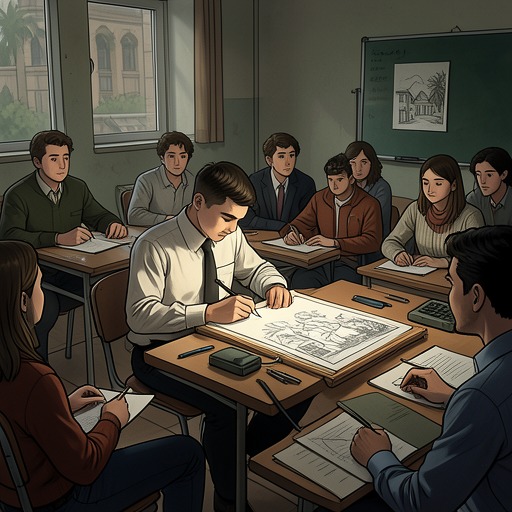
In the last classroom scene, Daniel proudly holds portraits of Shakespeare and an older man from his poetry-contest recital. The images give Danza a concrete occasion to say what he has told Daniel throughout the year: “I really did mean it all the times this year I told you that you’re talented. Seriously talented.” The emphasis on having said it repeatedly matters. Danza presents recognition not as a sudden, ceremonial compliment, but as a judgment he has sustained across the school year and now wants Daniel to believe.
Daniel does not answer the praise by discussing the portraits or his ability. Instead, he looks at the walls and remarks, “The room looks different, Mr. D.” The shift from talent to the altered classroom makes the ending tangible: the room that had held the year’s work is being cleared. Alex also notices how much had been on the walls, and his whistle underscores the visible emptiness. Daniel’s attention to the changed space places his exchange with Danza inside a shared awareness that their daily setting is about to disappear.
Expectations and Family
Danza’s final advice to Daniel links schoolwork to family. He tells Daniel that he expects him to maintain the kind of work he has done that year and urges him to make his mother proud. Daniel answers, “I have no choice,” adding that she is bigger than he is. The joke keeps the exchange informal and familiar, but it also brings Daniel’s mother into the teacher’s appeal: Danza frames Daniel’s continued effort as something that matters beyond the classroom.
The advice is not left as a general exhortation. Danza has just affirmed that Daniel is talented, then turns that affirmation into a specific expectation: keep working. The two parts qualify each other. Praise recognizes what Daniel can do; the request to continue makes clear that talent is not a substitute for effort. Daniel’s reply answers with humor rather than a solemn promise, preserving the ease between them while acknowledging the family obligation Danza has invoked.
Parting and Significance
Alex laughs at Daniel’s response, and Danza immediately brings him into the same moment, reminding him that he, too, has made a deal and that Danza will check on him. Danza then clarifies that Alex should work for his own sake, not simply for a trip. Though that exchange is directed to Alex, it frames the farewell with Daniel: Danza’s care for his students includes both warmth and an insistence that their choices belong to them. The book does not record Daniel making a separate promise or describe what he does after the school year.
After the remaining students help strip the classroom of their work, Daniel and Alex are among those who remain with Danza. The boys walk him outside and help load his rental car; they exchange fist bumps and bear hugs before Danza gets in and they are suddenly gone. The physical gestures make the farewell reciprocal: the students are not merely recipients of their teacher’s attention but participants in the leave-taking. Danza then describes feeling alone as the school takes on its vacant summer appearance. Against that emptiness, his final appeal to Daniel—to keep working and make his mother proud—stands as a compact expression of the relationship: personal recognition joined to an expectation that will outlast the classroom.